ВУЗ: Не указан
Категория: Не указан
Дисциплина: Не указана
Добавлен: 19.05.2021
Просмотров: 839
Скачиваний: 2
СОДЕРЖАНИЕ
2.1 Mass Media and Its Messages
Cultural Messages and the Media
Challenges to the Direct Effects Theory
Marshall McLuhan’s Influence on Media Studies
Uses and Gratifications Theory
2.3 Methods of Researching Media Effects
2.4 Media Studies Controversies
Problems with Methodology and Theory
Active versus Passive Audience
Arguments against Agenda-Setting Theory
Arguments against Uses and Gratifications Theory
Arguments against Spiral of Silence Theory
Arguments against Cultivation Analysis Theory
Exercises
-
Celebrities can represent cultural values and principles when they are portrayed in the media. The same celebrity can represent very different things depending on the form of media and its portrayal of that person. Find a celebrity magazine, such as People or Us Weekly, either online or in print, and choose one of the celebrities mentioned. Then, answer the following questions:
-
How is this celebrity portrayed in the magazine?
-
What kind of roles does the celebrity take in other forms of media, such as television or film?
-
How do these portrayals associate with specific cultural values?
-
-
Explain how the media has affected culture. Be sure to discuss the following topics and to provide examples of each.
-
Propaganda and persuasion
-
Behavior
-
Cultural messages
-
-
How has new media affected literacy and information consumption? How is this different from older forms of media
2.2 Media Effects Theories
Learning Objectives
-
Identify the basic theories of media effects.
-
Explain the uses of various media effects theories.
Early media studies focused on the use of mass media in propaganda and persuasion. However, journalists and researchers soon looked to behavioral sciences to help figure out the possible effect of mass media and communications on society. Scholars have developed many different approaches and theories to figure this out. Other scholars challenge whether research can ever untangle the relationship of media and effects. You can refer to these theories as you consider for yourself the media’s effect on individuals and culture.
In one of the earliest formulations of media effects, widespread fear that mass-media messages could outweigh other stabilizing cultural influences, such as family and community, led to what is known as the direct effects model of media studies. This model, prevalent in the 1920s and 1930s, assumed that audiences passively accepted media messages and would exhibit predictable reactions in response to those messages. For example, following the radio broadcast of War of the Worlds in 1938 (which was a fictional news report of an alien invasion), some people panicked and believed the story to be true.
Challenges to the Direct Effects Theory
The results of the People’s Choice Study challenged this model. Conducted in 1940, the study attempted to gauge the effects of political campaigns on voter choice. Researchers found that voters who consumed the most media had generally already decided for which candidate to vote, while undecided voters generally turned to family and community members to help them decide. The study thus discredited the direct effects model and influenced a host of other media theories. [1] These theories do not necessarily give an all-encompassing picture of media effects but rather work to illuminate a particular aspect of media influence.
Marshall McLuhan’s Influence on Media Studies
As noted in Chapter 1 "Media and Culture", during the early 1960s, English professor Marshall McLuhan wrote two books that had an enormous effect on the history of media studies. Published in 1962 and 1964, respectively, the Gutenberg Galaxy and Understanding Media both traced the history of media technology and illustrated the ways these innovations had changed both individual behavior and the wider culture. Understanding Media introduced the phrase that McLuhan has become known for: “The medium is the message.” This notion represented a novel take on attitudes toward media—that the media themselves are instrumental in shaping human and cultural experience.
His bold statements about media gained McLuhan a great deal of attention as both his supporters and critics responded to his utopian views about the ways media could transform 20th-century life. McLuhan spoke of a media-inspired “global village” at a time when Cold War paranoia was at its peak and the Vietnam War was a hotly debated subject. Although 1960s-era utopians received these statements positively, social realists found them cause for scorn. Despite—or perhaps because of—these controversies, McLuhan became a pop culture icon, mentioned frequently in the television sketch-comedy program Laugh-In and appearing as himself in Woody Allen’s film Annie Hall.
The Internet and its accompanying cultural revolution have made McLuhan’s bold utopian visions seem like prophecies. Indeed, his work has received a great deal of attention in recent years. Analysis of McLuhan’s work has, interestingly, not changed very much since his works were published. His supporters point to the hopes and achievements of digital technology and the utopian state that such innovations promise. The current critique of McLuhan, however, is a bit more revealing of the state of modern media studies. Media scholars are much more numerous now than they were during the 1960s, and many of these scholars criticize McLuhan’s lack of methodology and theoretical framework.
Despite his lack of scholarly diligence, McLuhan had a great deal of influence on media studies. Professors at Fordham University have formed an association of McLuhan-influenced scholars. McLuhan’s other great achievement is the popularization of the concept of media studies. His work, perhaps ironically, brought the idea of media effects into the public arena and created a new way for the public to consider the influence of media on culture. [2]
Agenda-Setting Theory
In contrast to the extreme views of the direct effects model, the agenda-setting theory of media stated that mass media determine the issues that concern the public rather than the public’s views. Under this theory, the issues that receive the most attention from media become the issues that the public discusses, debates, and demands action on. This means that the media are determining what issues and stories the public thinks about. Therefore, when the media fail to address a particular issue, it becomes marginalized in the minds of the public. [3]
When critics claim that a particular media outlet has an agenda, they are drawing on this theory. Agendas can range from a perceived liberal bias in the news media to the propagation of cutthroat capitalist ethics in films. For example, the agenda-setting theory explains such phenomena as the rise of public opinion against smoking. Before the mass media began taking an antismoking stance, smoking was considered a personal health issue. By promoting antismoking sentiments through advertisements, public relations campaigns, and a variety of media outlets, the mass media moved smoking into the public arena, making it a public health issue rather than a personal health issue. [4] More recently, coverage of natural disasters has been prominent in the news. However, as news coverage wanes, so does the general public’s interest.
Figure 2.7
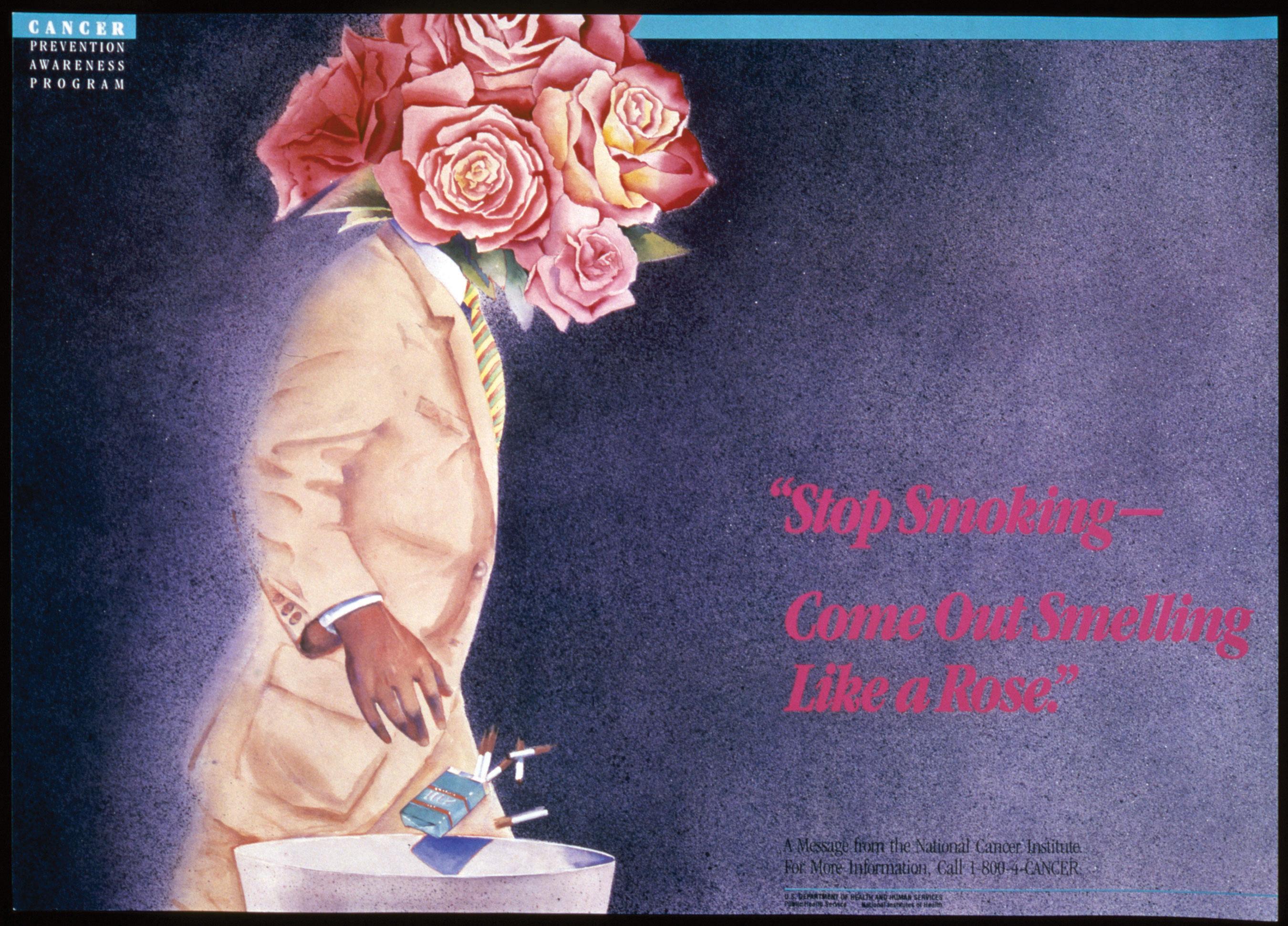
Through a variety of antismoking campaigns, the health risks of smoking became a public agenda.
Media scholars who specialize in agenda-setting research study the salience, or relative importance, of an issue and then attempt to understand what causes it to be important. The relative salience of an issue determines its place within the public agenda, which in turn influences public policy creation. Agenda-setting research traces public policy from its roots as an agenda through its promotion in the mass media and finally to its final form as a law or policy. [5]
Uses and Gratifications Theory
Practitioners of the uses and gratifications theory study the ways the public consumes media. This theory states that consumers use the media to satisfy specific needs or desires. For example, you may enjoy watching a show like Dancing With the Stars while simultaneously tweeting about it on Twitter with your friends. Many people use the Internet to seek out entertainment, to find information, to communicate with like-minded individuals, or to pursue self-expression. Each of these uses gratifies a particular need, and the needs determine the way in which media are used. By examining factors of different groups’ media choices, researchers can determine the motivations behind media use. [6]
A typical uses and gratifications study explores the motives for media consumption and the consequences associated with use of that media. By studying how and why people watch Dancing With the Stars while using Twitter, scholars suggest people are using the Internet as way to be entertained and to connect with friends. Researchers have identified a number of common motives for media consumption. These include relaxation, social interaction, entertainment, arousal, escape, and a host of interpersonal and social needs. By examining the motives behind the consumption of a particular form of media, researchers can better understand both the reasons for that medium’s popularity and the roles that the medium fills in society. A study of the motives behind a given user’s interaction with Facebook, for example, could explain the role Facebook takes in society and the reasons for its appeal.
Uses and gratifications theories of media are often applied to contemporary media issues. The analysis of the relationship between media and violence that you read about in preceding sections exemplifies this. Researchers employed the uses and gratifications theory in this case to reveal a nuanced set of circumstances surrounding violent media consumption, as individuals with aggressive tendencies were drawn to violent media. [7]
Symbolic Interactionism
Another commonly used media theory, symbolic interactionism, states that the self is derived from and develops through human interaction. This means the way you act toward someone or something is based on the meaning you have for a person or thing. To effectively communicate, people use symbols with shared cultural meanings. Symbols can be constructed from just about anything, including material goods, education, or even the way people talk. Consequentially, these symbols are instrumental in the development of the self.
This theory helps media researchers better understand the field because of the important role the media plays in creating and propagating shared symbols. Because of the media’s power, it can construct symbols on its own. By using symbolic interactionist theory, researchers can look at the ways media affects a society’s shared symbols and, in turn, the influence of those symbols on the individual. [8]
One of the ways the media creates and uses cultural symbols to affect an individual’s sense of self is advertising. Advertisers work to give certain products a shared cultural meaning to make them desirable. For example, when you see someone driving a BMW, what do you think about that person? You may assume the person is successful or powerful because of the car he or she is driving. Ownership of luxury automobiles signifies membership in a certain socioeconomic class. Equally, technology company Apple has used advertising and public relations to attempt to become a symbol of innovation and nonconformity. Use of an Apple product, therefore, may have a symbolic meaning and may send a particular message about the product’s owner.
Media also propagate other noncommercial symbols. National and state flags, religious images, and celebrities gain shared symbolic meanings through their representation in the media.
Spiral of Silence
The spiral of silence theory, which states that those who hold a minority opinion silence themselves to prevent social isolation, explains the role of mass media in the formation and maintenance of dominant opinions. As minority opinions are silenced, the illusion of consensus grows, and so does social pressure to adopt the dominant position. This creates a self-propagating loop in which minority voices are reduced to a minimum and perceived popular opinion sides wholly with the majority opinion. For example, prior to and during World War II, many Germans opposed Adolf Hitler and his policies; however, they kept their opposition silent out of fear of isolation and stigma.
Because the media is one of the most important gauges of public opinion, this theory is often used to explain the interaction between media and public opinion. According to the spiral of silence theory, if the media propagate a particular opinion, then that opinion will effectively silence opposing opinions through an illusion of consensus. This theory relates especially to public polling and its use in the media. [9]
Media Logic
The media logic theory states that common media formats and styles serve as a means of perceiving the world. Today, the deep rooting of media in the cultural conciousness means that media consumers need engage for only a few moments with a particular television program to understand that it is a news show, a comedy, or a reality show. The pervasiveness of these formats means that our culture uses the style and content of these shows as ways to interpret reality. For example, think about a TV news program that frequently shows heated debates between opposing sides on public policy issues. This style of debate has become a template for handling disagreement to those who consistently watch this type of program.
Media logic affects institutions as well as individuals. The modern televangelist has evolved from the adoption of television-style promotion by religious figures, while the utilization of television in political campaigns has led candidates to consider their physical image as an important part of a campaign. [10]
Cultivation Analysis
The cultivation analysis theory states that heavy exposure to media causes individuals to develop—or cultivate—an illusory perception of reality based on the most repetitive and consistent messages of a particular medium. This theory most commonly applies to analyses of television because of that medium’s uniquely pervasive nature. Under this theory, someone who watches a great deal of television may form a picture of reality that does not correspond to actual life. Televised violent acts, whether those reported on news programs or portrayed on television dramas, for example, greatly outnumber violent acts that most people encounter in their daily lives. Thus, an individual who watches a great deal of television may come to view the world as more violent and dangerous than it actually is.
Cultivation analysis projects involve a number of different areas for research, such as the differences in perception between heavy and light users of media. To apply this theory, the media content that an individual normally watches must be analyzed for various types of messages. Then, researchers must consider the given media consumer’s cultural background of individuals to correctly determine other factors that are involved in his or her perception of reality. For example, the socially stabilizing influences of family and peer groups influence children’s television viewing and the way they process media messages. If an individual’s family or social life plays a major part in her life, the social messages that she receives from these groups may compete with the messages she receives from television.
Key Takeaways
-
The now largely discredited direct effects model of media studies assumes that media audiences passively accept media messages and exhibit predictable reactions in response to those messages.
-
Credible media theories generally do not give as much power to the media, such as the agenda-setting theory, or give a more active role to the media consumer, such as the uses and gratifications theory.
-
Other theories focus on specific aspects of media influence, such as the spiral of silence theory’s focus on the power of the majority opinion or the symbolic interactionism theory’s exploration of shared cultural symbolism.
-
Media logic and cultivation analysis theories deal with how media consumers’ perceptions of reality can be influenced by media messages.
Exercises
-
Media theories have a variety of uses and applications. Research one of the following topics and its effect on culture. Examine the topic using at least two of the approaches discussed in this section. Then, write a one-page essay about the topic you’ve selected.
-
Media bias
-
Internet habits
-
Television’s effect on attention span
-
Advertising and self-image
-
Racial stereotyping in film
-
-
Many of the theories discussed in this section were developed decades ago. Identify how each of these theories can be used today. Do you think these theories are still relevant for modern mass media? Why?
2.3 Methods of Researching Media Effects
Learning Objectives
-
Identify the prominent media research methods.
-
Explain the uses of media research methods in a research project.
Media theories provide the framework for approaching questions about media effects ranging from as simple as how 10-year-old boys react to cereal advertisements to as broad as how Internet use affects literacy. Once researchers visualize a project and determine a theoretical framework, they must choose actual research methods. Contemporary research methods are greatly varied and can range from analyzing old newspapers to performing controlled experiments.
Content Analysis
Content analysis is a research technique that involves analyzing the content of various forms of media. Through content analysis, researchers hope to understand both the people who created the content and the people who consumed it. A typical content analysis project does not require elaborate experiments. Instead, it simply requires access to the appropriate media to analyze, making this type of research an easier and inexpensive alternative to other forms of research involving complex surveys or human subjects.
Content analysis studies require researchers to define what types of media to study. For example, researchers studying violence in the media would need to decide which types of media to analyze, such as television, and the types of formats to examine, such as children’s cartoons. The researchers would then need to define the terms used in the study; media violence can be classified according to the characters involved in the violence (strangers, family members, or racial groups), the type of violence (self-inflicted, slapstick, or against others), or the context of the violence (revenge, random, or duty-related). These are just a few of the ways that media violence could be studied with content-analysis techniques. [1]
Archival Research
Any study that analyzes older media must employ archival research, which is a type of research that focuses on reviewing historical documents such as old newspapers and past publications. Old local newspapers are often available on microfilm at local libraries or at the newspaper offices. University libraries generally provide access to archives of national publications such as The New York Times or Time; publications can also increasingly be found in online databases or on websites.
Older radio programs are available for free or by paid download through a number of online sources. Many television programs and films have also been made available for free download, or for rent or sale through online distributors. Performing an online search for a particular title will reveal the options available.
Resources such as the Internet Archive (www.archive.org) work to archive a number of media sources. One important role of the Internet Archive is website archiving. Internet archives are invaluable for a study of online media because they store websites that have been deleted or changed. These archives have made it possible for Internet content analyses that would have otherwise been impossible.
Surveys
Surveys are ubiquitous in modern life. Questionaires record data on anything from political preferences to personal hygiene habits. Media surveys generally take one of the following two forms.
A descriptive survey aims to find the current state of things, such as public opinion or consumer preferences. In media, descriptive surveys establish television and radio ratings by finding the number of people who watch or listen to particular programs. An analytical survey, however, does more than simply document a current situation. Instead, it attempts to find out why a particular situation exists. Researchers pose questions or hypotheses about media and then conduct analytical surveys to answer these questions. Analytical surveys can determine the relationship between different forms of media consumption and the lifestyles and habits of media consumers.
Surveys can employ either open-ended or closed-ended questions. Open-ended questions require the participant to generate answers in their own words, while closed-ended questions force the participant to select an answer from a list. Although open-ended questions allow for a greater variety of answers, the results of closed-ended questions are easier to tabulate. Although surveys are useful in media studies, effective use requires keeping their limitations in mind.
Social Role Analysis
As part of child rearing, parents teach their children about social roles. When parents prepare children to attend school for example, they explain the basics of school rules and what is expected of a student to help the youngsters understand the role of students. Like the role of a character in a play, this role carries specific expectations that differentiate school from home. Adults often play a number of different roles as they navigate between their responsibilities as parents, employees, friends, and citizens. Any individual may play a number of roles depending on his or her specific life choices.
Social role analysis of the media involves examining various individuals in the media and analyzing the type of role that each plays. Role analysis research can consider the roles of men, women, children, members of a racial minority, or members any other social group in specific types of media. For example, if the role children play in cartoons is consistently different from the role they play in sitcoms, then certain conclusions might be drawn about both of these formats. Analyzing roles used in media allows researchers to gain a better understanding of the messages that the mass media sends. [2]
Depth Interviews
The depth interview is an anthropological research tool that is also useful in media studies. Depth interviews take surveys one step further by allowing researchers to directly ask a study participant specific questions to gain a fuller understanding of the participant’s perceptions and experiences. Depth interviews have been used in research projects that follow newspaper reporters to find out their reasons for reporting certain stories and in projects that attempt to understand the motivations for reading romance novels. Depth interviews can provide a deeper understanding of the media consumption habits of particular groups of people. [3]
Rhetorical Analysis
Rhetorical analysis involves examining the “styles” used in media and attempting to understand the kinds of messages those styles convey. Media styles refer to form, presentation, composition, use of metaphors, and reasoning structure. Rhetorical analysis reveals the messages not apparent in a strict reading of content. Studies involving rhetorical analysis have focused on media such as advertising to better understand the roles of style and rhetorical devices in media messages. [4]
Focus Groups
Like depth interviews, focus groups allow researchers to better understand public responses to media. Unlike a depth interview, however, a focus group allows the participants to establish a group dynamic that more closely resembles that of normal media consumption. In media studies, researchers can employ focus groups to judge the reactions of a group to specific media styles and to content. This can be a valuable means of understanding the reasons for consuming specific types of media.
Figure 2.8

Focus groups are effective ways to obtain a group opinion on media.
Experiments
Media research studies also sometimes use controlled experiments that expose a test group to an experience involving media and measure the effects of that experience. Researchers then compare these measurements to those of a control group that had key elements of the experience removed. For example, reseachers may show one group of children a program with three incidents of cartoon violence and another control group of similar children the same program without the violent incidents. Researchers then ask the children from both groups the same sets of questions, and the results are compared.
Participant Observation
In participant observation, researchers try to become part of the group they are studying. Although this technique is typically associated with anthropological studies in which a researcher lives with members of a particular culture to gain a deeper understanding of their values and lives, it is also used in media research.
Media consumption often takes place in groups. Families or friends gather to watch favorite programs, children may watch Saturday morning cartoons with a group of their peers, and adults may host viewing parties for televised sporting events or awards shows. These groups reveal insights into the role of media in the lives of the public. A researcher might join a group that watches football together and stay with the group for an entire season. By becoming a part of the group, the researcher becomes part of the experiment and can reveal important influences of media on culture. [5]
Researchers have studied online role-playing games, such as World of Warcraft, in this manner. These games reveal an interesting aspect of group dynamics: Although participants are not in physical proximity, they function as a group within the game. Researchers are able to study these games by playing them. In the book Digital Culture, Play, and Identity: A World of Warcraft Reader, a group of researchers discussed the results of their participant observation studies. The studies reveal the surprising depth of culture and unwritten rules that exist in the World of Warcraft universe and give important interpretations of why players pursue the game with such dedication. [6]