ВУЗ: Не указан
Категория: Не указан
Дисциплина: Не указана
Добавлен: 13.10.2020
Просмотров: 1649
Скачиваний: 1

Regional overviews
II
77
United States of America and Peru reported more than
50 convictions for trafficking in persons per year. Some
countries in Central America and in the Caribbean did
not report a single conviction, while the rest of the coun-
tries registered below or around 10 convictions per year.
When comparing the number of suspects to the number
of convictions, the latter are about 10 per cent of the
former. There is a large discrepancy between the number
of cases of trafficking that are investigated by the police
and the number of persons who are convicted in the first
instance. On average, about 40 per cent of the prosecuted
persons are convicted in the first instance. The United
States reports a share of federal convictions to prosecu-
tions of about 70 per cent, which is the largest reported
share in the region.
TRAFFICKING IN PERSONS IN
SOUTH ASIA, EAST ASIA AND
THE PACIFIC
•
Origin area for victims trafficked across the world.
•
Many female victims, and many children detected.
•
Forced labour is prominently detected.
•
Most offenders come from within the region.
One of the key features of this region in terms of traffick-
ing in persons is that it is a significant origin region for
victims who are trafficked across much of the world. East
Asian victims, in particular, have been widely detected
outside East Asia. The broad dispersion of East Asian vic-
tims has been evident for several years, and has also been
highlighted in previous editions of this Report.
As a destination of trafficking, South Asian countries are
mainly affected by domestic trafficking or trafficking from
the neighboring countries. Most of the victims detected
in this subregion are trafficked within national borders.
However, South Asian victims are largely detected in the
Middle East and increasingly detected in North and Cen-
tral America and the Caribbean. They also comprise a
significant share of the victims detected in Western and
Central Europe.
Profile of the offenders
The broad geographical dispersion of East Asian traffick-
ing victims is reflected in prosecution and conviction sta-
tistics. These show that East Asian traffickers have been
convicted in 15 countries in several regions. Regions con-
victing significant numbers of East Asians include (in
addition to East Asia) Western and Central Europe, where
they account for some 4 per cent of the total number of
convicted persons, and Africa and the Middle East, where
they account for some 10 per cent, particularly in the
Middle East. East Asians have also been convicted in the
Americas. Moreover, South Asians are convicted in large
numbers in the Middle East.
Looking at the citizenships of those convicted of traffick-
ing in persons in South Asia, East Asia and the Pacific,
the vast majority of traffickers come from this region.
Almost all are local citizens convicted in their own coun-
tries (97 per cent). About 3 per cent of the offenders con-
victed in this region are foreigners, and almost all of them
come from the same subregion. This can be explained by
the fact that most of the trafficking bound for this region
originates from the same area.
Very few people from Europe and Central Asia, North
Africa and the Middle East, or the Americas have been
convicted in Asia, in spite of the fact that these areas are
significant destinations for Asian victims. This suggests
that trafficking flows are either maneuvered in the origin
countries, or trafficking networks operating in the desti-
nation countries recruit local traffickers to ‘collect’ victims
from their origins.
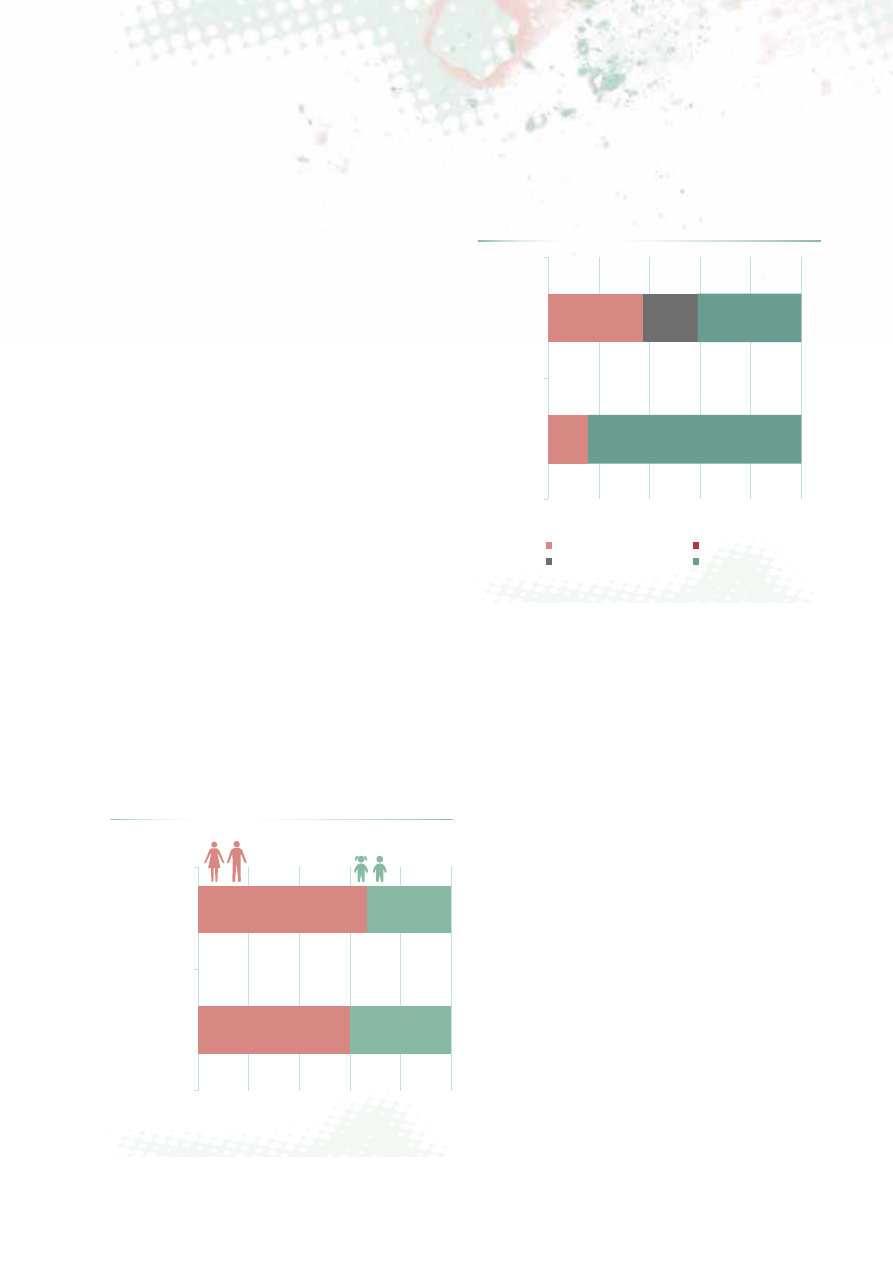
Regarding the gender profiles of offenders, in East Asia
and the Pacific, it seems that women and men are pros-
ecuted in relatively equal proportions, depending some-
what on the country concerned.
The limited information on the profile of the persons
convicted does not permit a comprehensive analysis on
the gender distribution of the offenders.
FIG. 57:
Prosecutions for trafficking in
East Asia and the Pacific,
by gender,
2010-2012
Source: UNODC elaboration on national data.
46
%
54
%
GLOBAL REPOR
T ON
TRAFFICKING IN PERSONS
2014
78
Similar problems also hinder such an analysis for South
Asia. Here, very little information is available on the
gender profile of offenders. There is no information from
prosecutions or convictions, however, received informa-
tion indicates that women are involved. A bit more than
40 per cent of the persons investigated for trafficking in
persons in India were females. The corresponding share
was 26 per cent in Nepal.
Profile of the victims
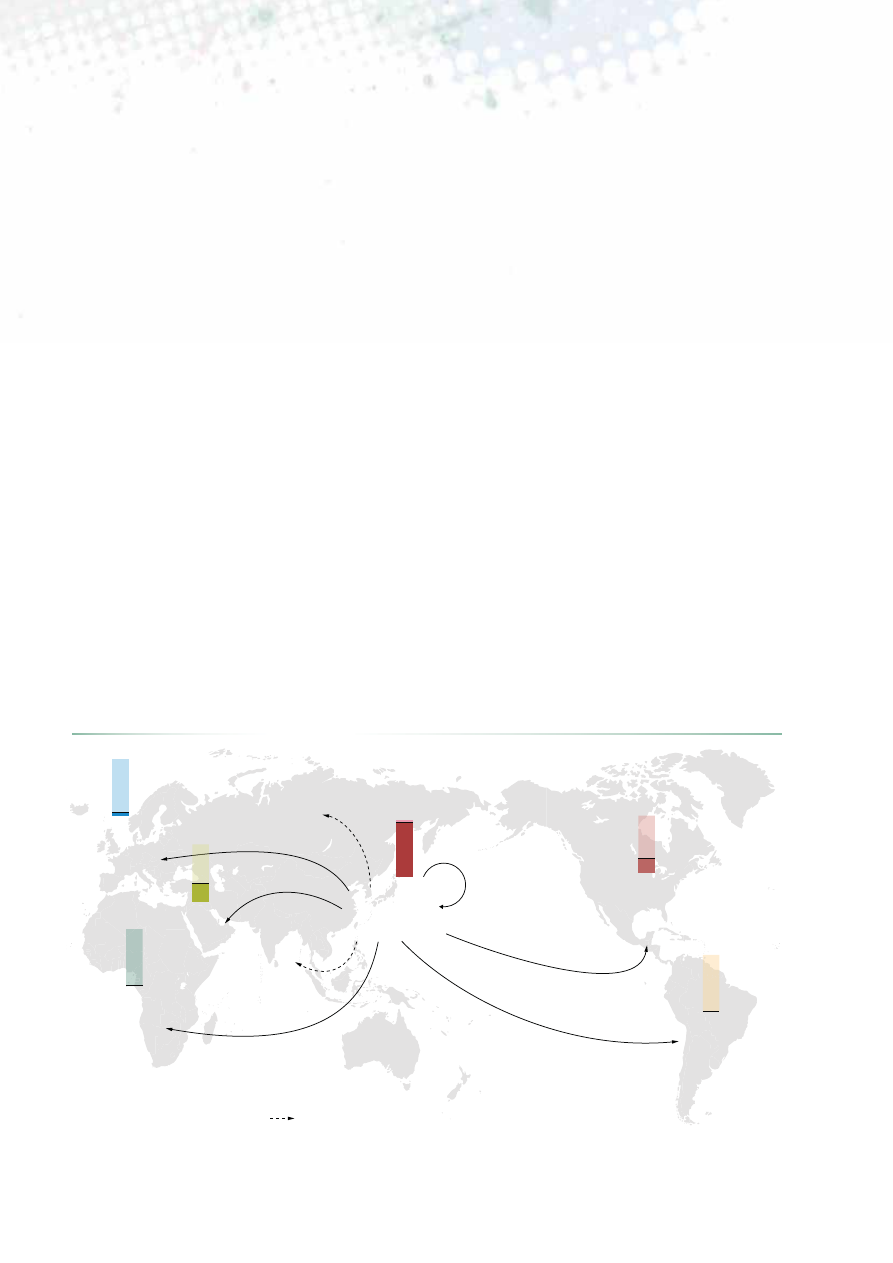
The vast majority of the victims detected in Asia are
females, either adults or underage girls. Trafficking of
males accounts for about 17 per cent of the total number
of victims detected in this region, which is somewhat
lower than the global average. Moreover, trafficking in
children is reported relatively frequently here.
Looking at South Asia, the share of child victims detected
here is second only to the share recorded in Sub-Saharan
Africa. Bangladesh reports a high level of child trafficking,
while in Nepal, women remain the most frequently
reported victims of trafficking. Unfortunately, the data
concerning other countries is incomplete, rendering a
rather partial subregional picture.
In East Asia and the Pacific, the profile of the victims
varies according to the specific area under consideration,
though female victims are most frequently detected. In
Australia and Japan, adult women make up the bulk of
the detected victims, whereas in countries in the Mekong
basin, the share of child victims is relatively high.
A significant majority of the detected victims trafficked
in South Asia are exploited in labour. Forced labour is the
most frequently detected form in East Asia and the Pacific,
although the breakdown of forms of exploitation there
also reveals large shares of trafficking for sexual exploita-
tion as well as ‘mixed’ exploitation which may include
unknown proportions/combinations of sexual exploita-
tion, forced labour and/or forced marriages.
Very little further information regarding the gender profile
of the victims in this region is available. The vast majority
(more than 7 in 10) of the victims trafficked for forced
labour in East Asia and the Pacific are females. No infor-
mation is available on this for South Asia.
Two of the case briefs from the court cases submitted by
Member States dealt with domestic servitude. Both cases
were submitted by Brunei Darussalam, and both involved
women from South-East Asia whose original employment
as domestic servants turned into trafficking cases. Moreo-
ver, both cases involved two defendants, in each case, one
man and one woman (a married couple in one of the
cases). The victims did not receive their wages, and they
were locked up, deprived of food and/or severely physi-
cally abused.
FIG. 58:
Age profiles of detected victims in
South Asia,
East Asia and the Pacific,
by subregion,
2010-2012
Source: UNODC elaboration on national data.
0%
20%
40%
60%
80%
100%
South Asia
East Asia
and the Pacific
60%
40%
67%
33%
CHILDREN
ADULTS
FIG. 59:
Forms of exploitation detected in
South Asia,
East Asia and the Pacific,
by subregion, 2010-2012
Source: UNODC elaboration on national data.
0%
20%
40%
60%
80%
100%
Sexual exploitation
Organ removal
Others
Forced labour
42% 4%
54%
54% 5%
41%
South Asia
East Asia
and Pacific
38%
21%
41%
15%
85%

Regional overviews
II
79
Trafficking flows
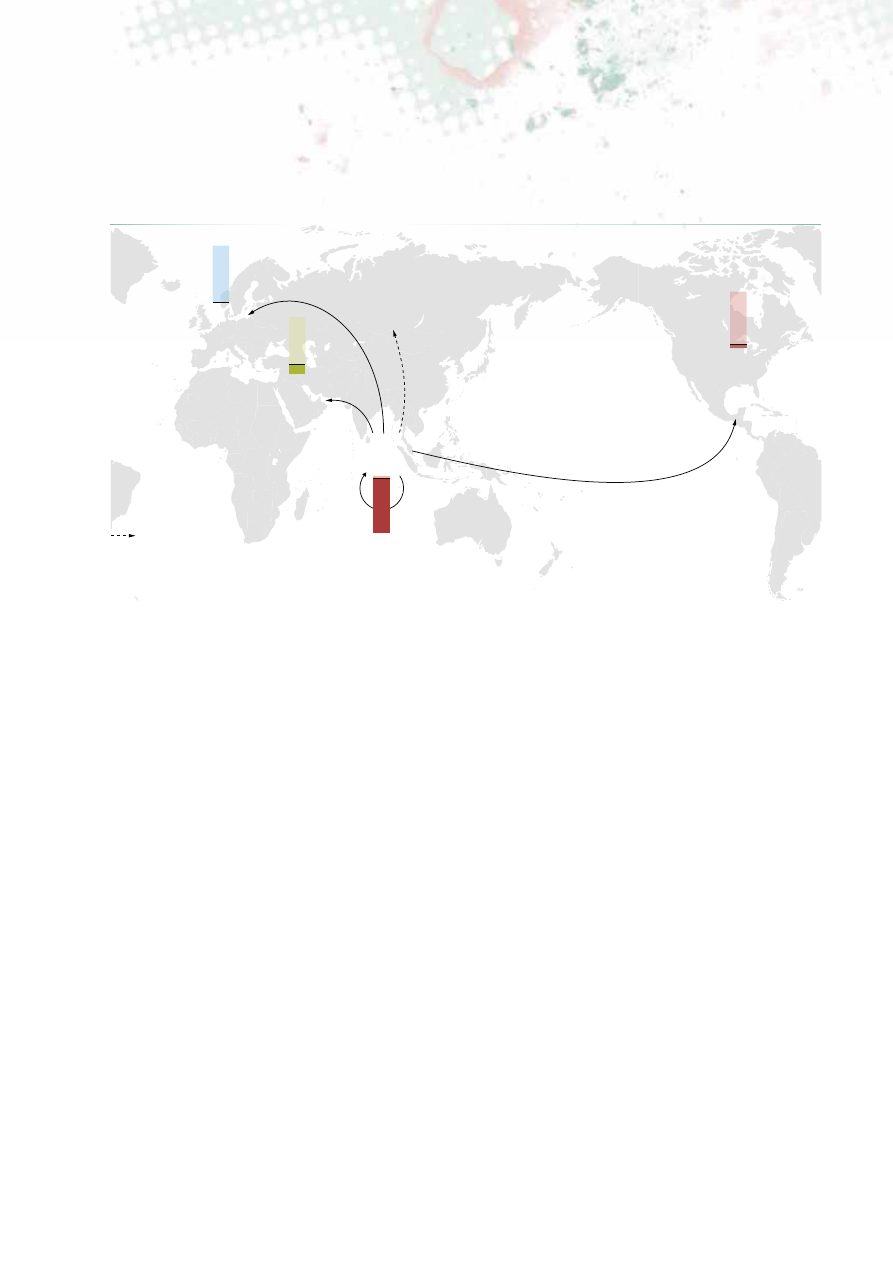
The main destinations for victims from the subregion of
East Asia and the Pacific (outside of the subregion) are
North America and the Middle East, and to a lesser extent
Western Europe. Victims from East Asia and the Pacific
are also being detected in Sub-Saharan Africa and episodi-
cally in South America and Eastern Europe. Victims do
not originate from one country only, but from many of
the countries in South-East Asia.
Victims from South Asia are also trafficked relatively
widely outside their subregion, albeit in smaller numbers
and to fewer locations than East Asians. Victims from
South Asia have been detected in or repatriated from 37
countries in all regions of the world. These victims, origi-
nating from nearly all the countries in the subregion,
account for some 18 per cent of the total number of
detected victims in the Middle East. They also comprise
significant shares of the victims detected in North and
Central America and the Caribbean (where detections of
South Asians appears to be increasing compared to the
2007-2010 period) and Western Europe.
Although the region is a significant origin region for vic-
tims of transregional trafficking, as for most other parts
of the world, the vast majority of the victims detected
within South Asia, East Asia and the Pacific are either
domestically trafficked or trafficked within the same sub-
region. This is true for both the region’s subregions, South
Asia, as well as East Asia and the Pacific. All countries in
the region are origins and destinations simultaneously,
with the exceptions of Australia and Japan, which are des-
tination countries for victims from all over the region.
Countries in South Asia report having detected mainly
victims trafficked within the national borders; that is,
domestic trafficking. In addition, India also detected vic-
tims from other countries in the subregion, particularly
Nepal and Bangladesh. Victims trafficked from other areas
– for example Eastern Europe - have also been detected
in India, but only sporadically.
The situation is similar in East Asia and the Pacific, where
most victims are trafficked domestically or from neigh-
bouring countries. Thailand detects a significant number
of victims from the greater Mekong area. Victims from
the Mekong area and the poorer countries in South-East
Asia are often trafficked to the richer countries. Addition-
ally, a small number of victims trafficked from Eastern
Europe has been detected during the reporting period.
MAP 17:
Destinations of trafficking victims originating in East Asia and the Pacific,
proportion
of the total number of detected victims at destinations,
2010-2012 (or more recent)
Source: UNODC elaboration on national data.
South
Asia
6%
Western
and Central
Europe
Eastern Europe
and Central Asia
East Asia
and the Pacific
97%
33%
North
Africa and
the Middle
East
3%
Sub-Saharan
Africa
25%
North America,
Central America
and the Caribbean
1%
South
America
Flows of less than 1% of detected victims at destination
Sciences Po - Atelier de cartographie, 2014
GLOBAL REPOR
T ON
TRAFFICKING IN PERSONS
2014
80
South
Asia
96%
18%
North
Africa and
the Middle
East
7%
North America,
Central America
and the Caribbean
1%
Western
and Central
Europe
Eastern Europe
and Central Asia
Flows of less than
1% of detected victims
at destination
Sciences Po - Atelier de cartographie, 2014
Response to trafficking in persons
Most of the countries in South Asia, East Asia and the
Pacific have legislation that criminalizes all aspects listed
in the Trafficking in Persons Protocol. While only a few
countries still have partial legislation, the large popula-
tions in these countries is an element of concern, as dis-
cussed in the global overview.
The historical dynamics of this vast region show once
more how the entry into force of the Trafficking in Persons
Protocol was a turning point in the fight against traffick-
ing in persons. Before December 2003, just four countries
had a specific offence on trafficking in persons in line with
international standards. Half of the countries did not
criminalize this crime as such, and 40 per cent had partial
legislation that mainly focused on trafficking of women
or trafficking for sexual exploitation. Thus, trafficking for
forced labour or trafficking in men were not yet consid-
ered as crimes in several countries.
Five years later, the number of countries with comprehen-
sive legislation quintupled. The improvements were
mainly reported from South-East Asian countries as well
as countries in the Pacific, with some island states adopt-
ing the definition of trafficking of the Trafficking in Per-
sons Protocol. The countries that lacked proper legislation
in 2008 were mainly within the continental East Asia as
well as South Asia and some island states in the Pacific.
The number of convictions in this part of the world is
higher than in other regions, with many countries report-
ing more than 50 convictions per year. However, three
factors should be taken into consideration in this regard.
First of all, many Asian countries have large populations.
While in some countries, thousands of traffickers are con-
victed, in proportion to the population, the number of
convictions by population in the region is on average 0.15
convictions per 100,000 population.
Secondly, most of the convictions are recorded in coun-
tries that still have partial legislation. Many traffickers still
do not face the risk of punishment since the crime they
commit is not considered as such by the national
authorities.
Thirdly, for many countries in this region (22 per cent)
data on convictions is not available. So, the regional aver-
age is actually biased as a result of the absence of proper
information on the criminal justice response.
On the basis of this partial data, according to UNODC
calculations, for every 10 persons suspected by the police
MAP 18:
Destinations of trafficking victims originating in South Asia, proportion of the total
number of detected victims at destinations,
2010-2012
Source: UNODC elaboration on national data.

Regional overviews
II
81
of committing human trafficking activities, 2 will face
conviction in the first instance. While the result is above
the global average, the partiality of the information should
be considered.
TRAFFICKING IN PERSONS IN
AFRICA AND THE MIDDLE EAST
•
Scarce data from both subregions.
•
Trafficking flows and patterns very different in the two
subregions.
•
In Sub-Saharan Africa, domestic trafficking promi-
nently detected.
•
Child trafficking - of both boys and girls - commonly
reported in Sub-Saharan Africa, whereas almost all
victims detected in North Africa and the Middle East
are adults.
•
Trafficking of children into armed combat significantly
detected in Sub-Saharan Africa.
The two subregions that comprise the region of Africa
and the Middle East - that is, Sub-Saharan Africa, and
North Africa and the Middle East - report very different
trafficking patterns and flows. The economic disparities
between these areas – particularly the Middle East and
Sub-Saharan Africa - may explain these differences.
Profile of the offenders
Data on the gender profiles of offenders is scarce. From
Sub-Saharan Africa, Nigeria and South Africa reported
high shares of female involvement, nearly 50 per cent,
during the reporting period. In the Middle East, the role
of male traffickers is much more prominent, and the share
of females among those prosecuted or convicted for traf-
ficking in persons ranges around 25 per cent.
The citizenship profiles of offenders is another pattern
where the two subregions differ completely. These differ-
ences are mainly related to the fact that Sub-Saharan
Africa is primarily a destination of domestic and intrare-
gional trafficking, whereas the Middle East is largely a
destination of transregional trafficking.
Most of the persons convicted of trafficking in persons in
Sub-Saharan Africa are citizens of the country where they
were convicted. Only some 2.5 per cent of the total
number of convicted offenders are Sub-Saharan Africans
FIG. 60:
Historical evolution of the legislation in the Americas,
2003-2014
Source: UNODC elaboration on national data.
2003
NO OFFENCE
17
MOST / ALL
FORMS
4
PARTIAL
OFFENCE
14
NO OFFENCE
6
MOST / ALL
FORMS
22
PARTIAL
OFFENCE
7
2008
NO OFFENCE
2
MOST / ALL
FORMS
28
PARTIAL
OFFENCE
5
2012
NO OFFENCE
1
MOST / ALL
FORMS
31
PARTIAL
OFFENCE
3
2014
TOTAL NUMBER OF COUNTRIES CONSIDERED, N:35