ВУЗ: Не указан
Категория: Не указан
Дисциплина: Не указана
Добавлен: 17.04.2021
Просмотров: 1240
Скачиваний: 2

A History of Pharmacy
in Pictures
Taken From the book:
"Great Moments in Pharmacy"
By George A. Bender
Paintings By Robert A. Thom
Copyright ©Parke, Davis & Company 1965
Library of Congress Catalog Number: 65-26825
Reproduced on these pages by the WSU College of Pharmacy with special permission of Parke, Davis &
Company
If you are interested in using these pictures, please contact the copyright holder.
College of Pharmacy History
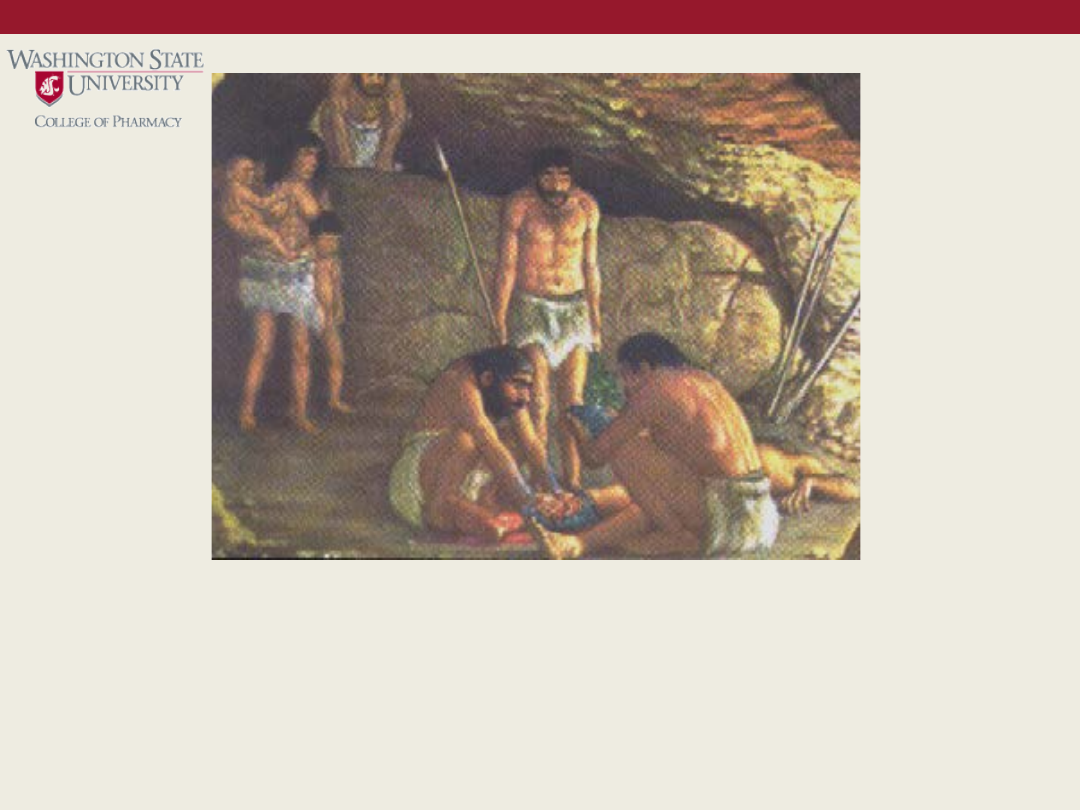
1. Before the Dawn of History
From beginnings as remote and simple as these came the proud profession of Pharmacy. Its
development parallels that of man. Ancient man learned from instinct, from observation of birds
and beasts. Cool water, a leaf, dirt, or mud was his first soothing application. By trial, he
learned which served him best. Eventually, he applied his knowledge for the benefit of others.
Though the cavemen's methods were crude, many of today's medicines spring from sources
as simple and elementary as those which were within reach of early man.
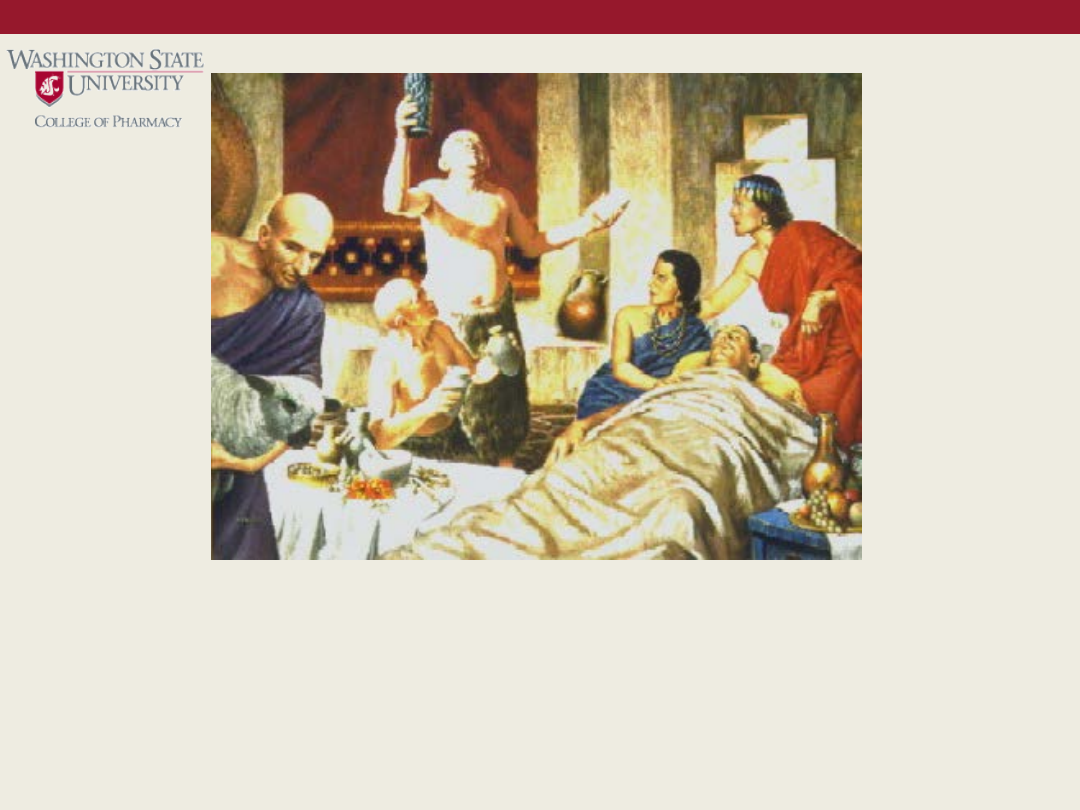
2. Pharmacy in Ancient Babylonia
Babylon, jewel of ancient Mesopotamia, often called the cradle of civilization, provides the
earliest known record of practice of the art of the apothecary. Practitioners of healing of this era
(about 2600 B.C.) were priest, pharmacist and physician, all in one. Medical texts on clay
tablets record first the symptoms of illness, the prescription and directions for compounding,
then an invocation to the gods. Ancient Babylonian methods find counterpart in today's modern
pharmaceutical, medical, and spiritual care of the sick.
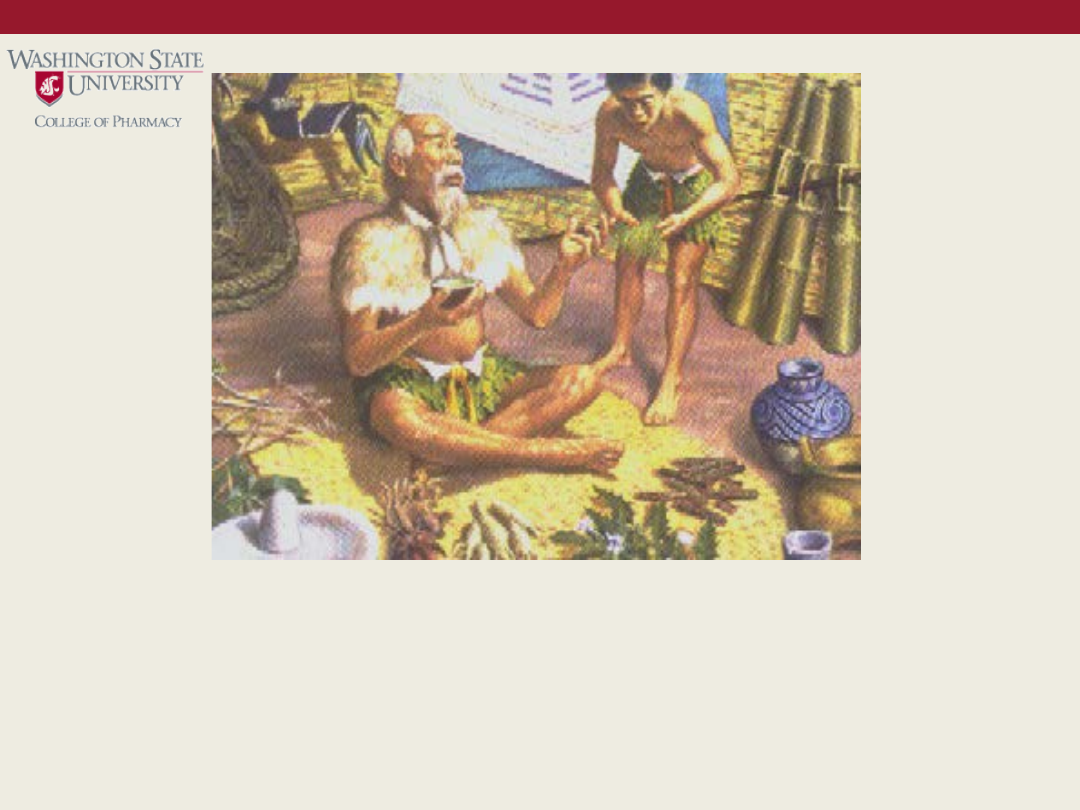
3. Pharmacy in Ancient China
Chinese Pharmacy, according to legend, stems from Shen Nung (about 2000 B.C.), emperor
who sought out and investigated the medicinal value of several hundred herbs. He reputed to
have tested many of them on himself, and to have written the first Pen T-Sao, or native herbal,
recording 365 drugs. Still worshiped by native Chinese drug guilds as their patron god, Shen
Nung conceivably examined many herbs, barks, and roots brought in from the fields, swamps,
and woods that are still recognized in Pharmacy today. In the background is the "Pa Kua," a
mathematical design symbolizing creation and life. Medicinal plants include podophyllum,
rhubarb, ginseng, stramonium, cinnamon bark, and, in the boy's hand, ma huang, or Ephedra.
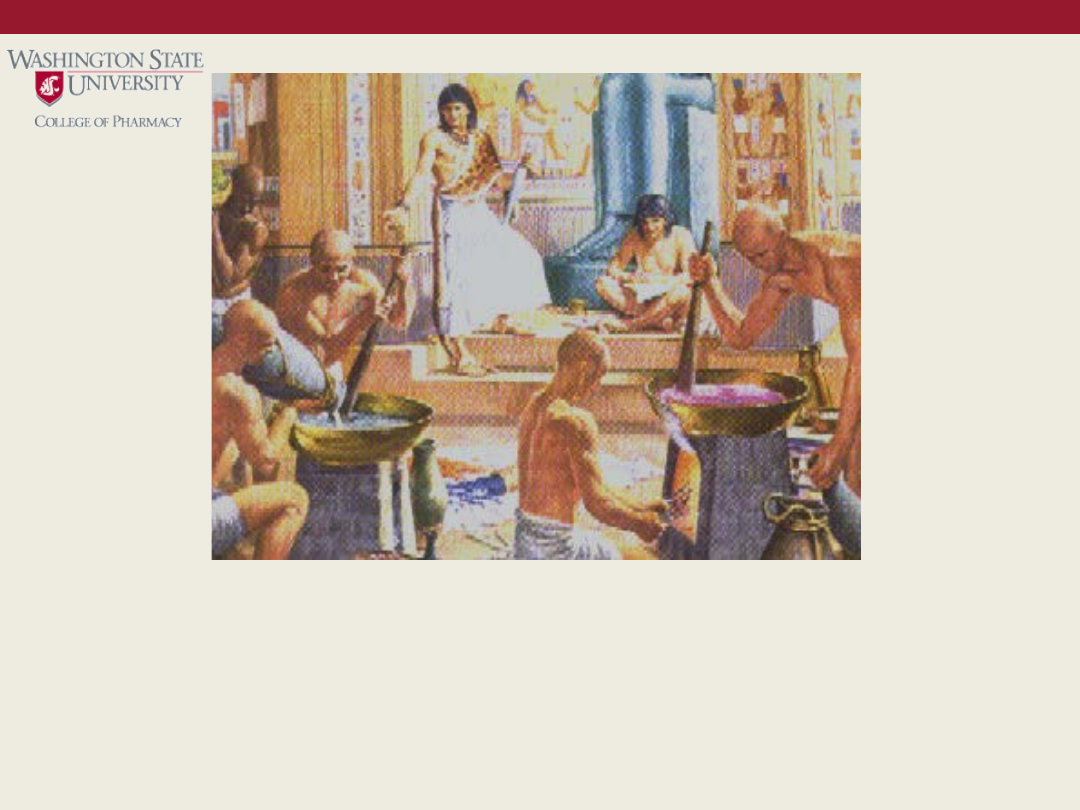
4. Days of the Papyrus Ebers
Though Egyptian medicine dates from about 2900 B.C., best known and most important
pharmaceutical record is the "Papyrus Ebers" (1500 B.C.), a collection of 800 prescriptions,
mentioning 700 drugs. Pharmacy in ancient Egypt was conducted by two or more echelons:
gatherers and preparers of drugs, and "chiefs of fabrication," or head pharmacists. They are
thought to have worked in the "House of Life." In a setting such as this, the "Papyrus Ebers"
might have been dictated to a scribe by a head pharmacist as he directed compounding
activities in the drug room.