ВУЗ: Не указан
Категория: Не указан
Дисциплина: Не указана
Добавлен: 17.04.2021
Просмотров: 1239
Скачиваний: 2
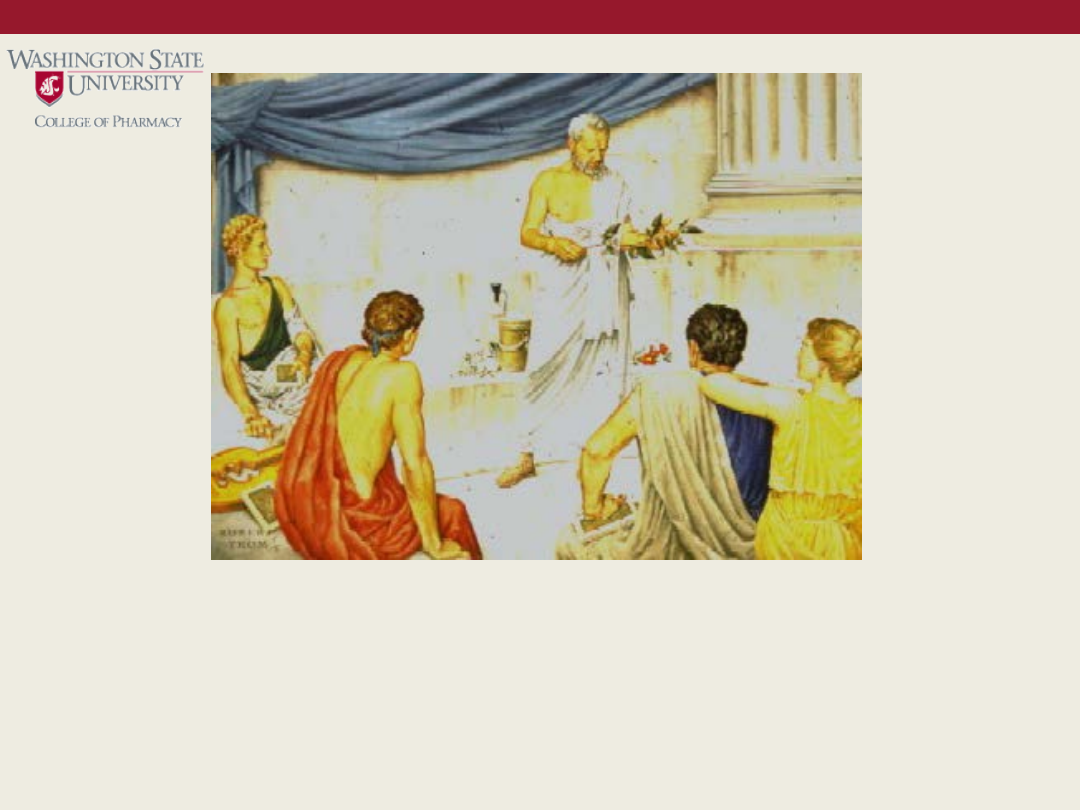
5. Theophrastus – Father of Botany
Theophrastus (about 300 B.C.), among the greatest early Greek philosophers and natural
scientists, is called the "father of botany." His observations and writings dealing with the
medical qualities and peculiarities of herbs are unusually accurate, even in the light of present
knowledge. He lectured to groups of students who walked about with him, learning of nature by
observing her treasurers at firsthand. In his hands he holds a branch of belladonna. Behind
him are pomegranate blooms, senna, and manuscript scrolls. Slabs of ivory, coated with
colored beeswax, served the students as "slates." Writing was cut into the surface with a
stylus.
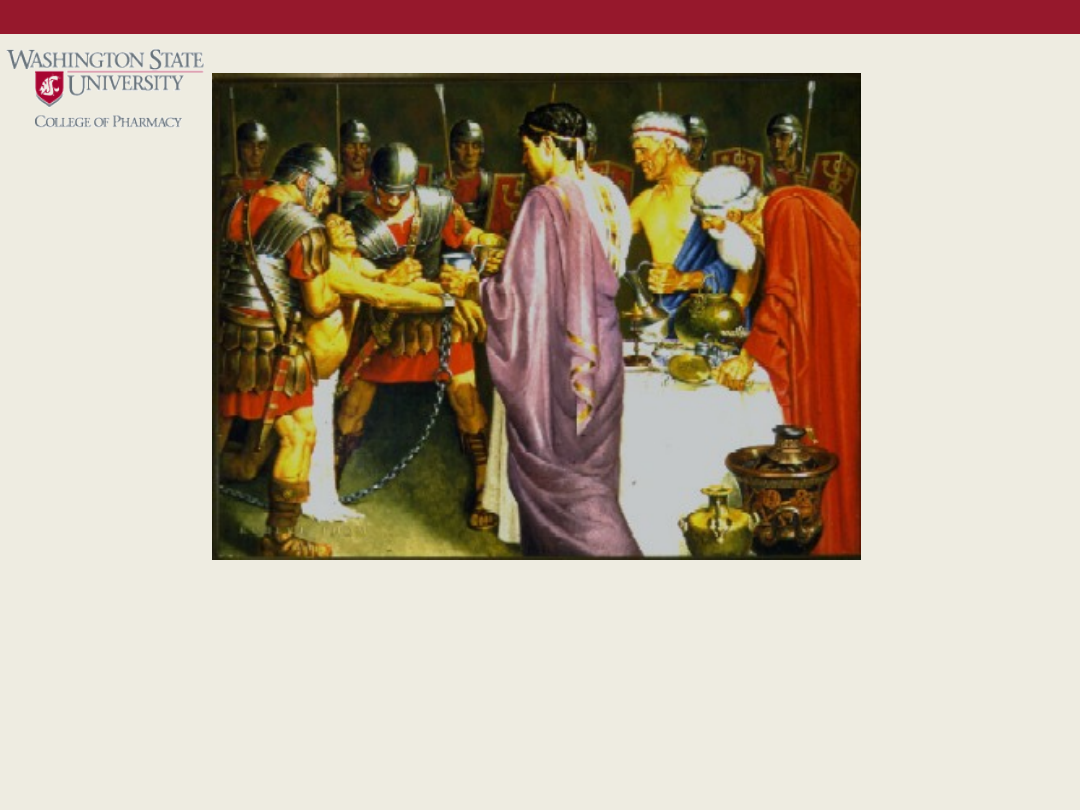
6. The Royal Toxicologist – Mithridates VI
Mithridates VI, King of Pontus (about 100 B.C.), though he battled Rome for a lifetime, found
time to make not only the art of poisoning, but also the art of preventing and counteracting
poisoning, subjects of intensive study. Unhesitatingly, he used himself as well as his prisoners
as "guinea pigs" on which to test poisons and antidotes. Behind him are rhizotomists, offering
fresh, flowering aconite, ginger, and gentian. At lower right is a crater - a two-piece forerunner
of the champagne bucket. His famed formula of alleged panantidotal powers, "Mithridatum,"
was popular for over a thousand years.
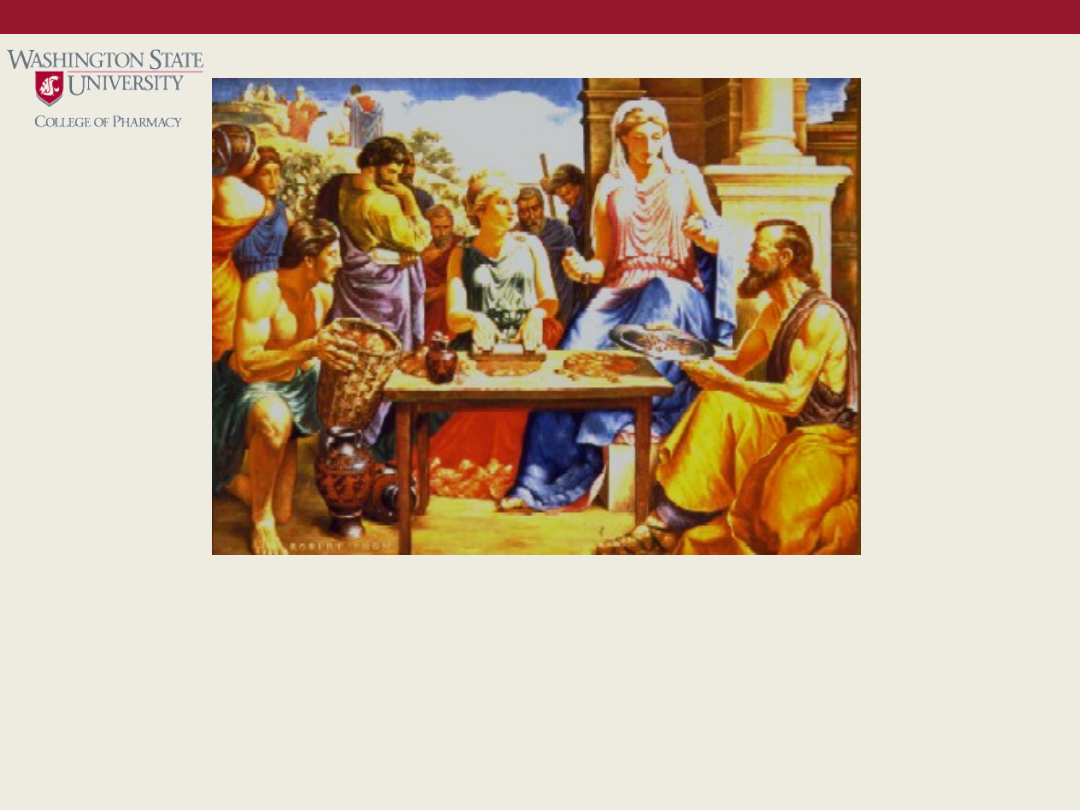
7. Terra Sigillata – An Early “Trademarked” Drug
Man learned early of the prestigious advantage of trademarks as a means of identification of
source and of gaining customers' confidence. One of the first therapeutic agents to bear such a
mark was Terra Sigillata (Sealed Earth), a clay tablet originating on the Mediterranean island
of Lemnos before 500 B.C. One day each year clay was dug from a pit on a Lemnian hillside in
the presence of governmental and religious dignitaries. Washed, refined, rolled to a mass of
proper thickness, the clay was formed into pastilles and impressed with an official seal by
priestesses, then sun-dried. The tablets were then widely distributed commercially.
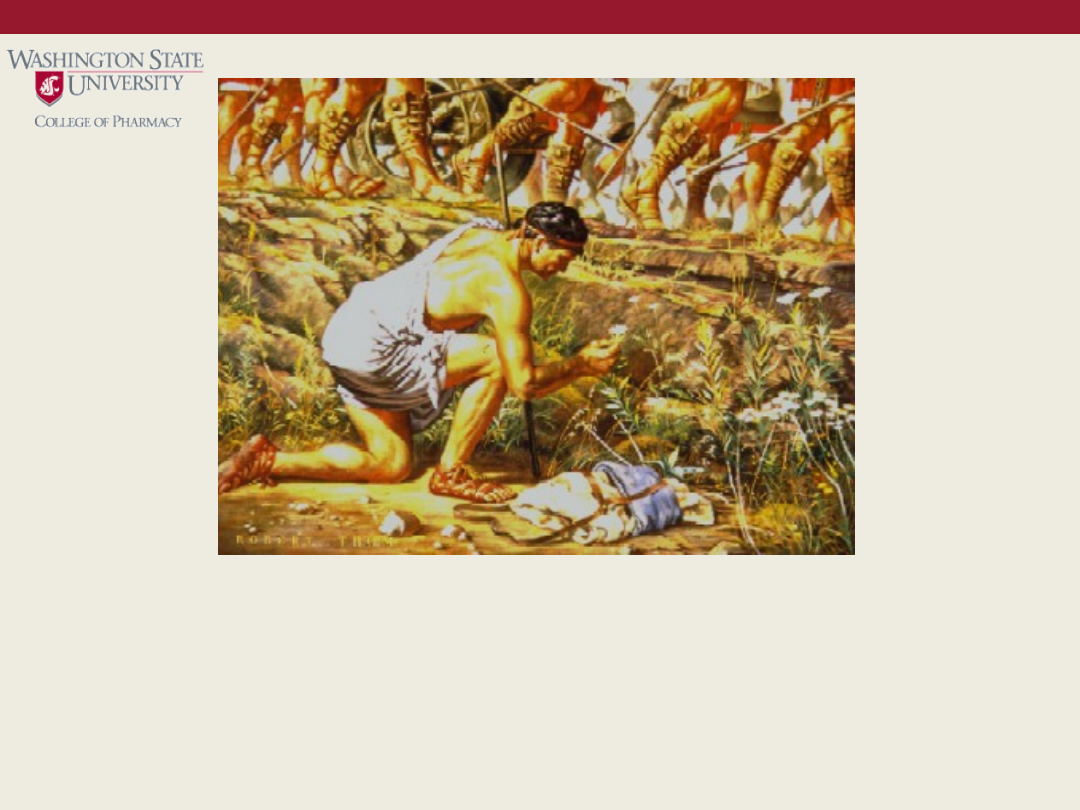
8. Dioscorides – A Scientist Looks at Drugs
In the evolution of all successful and enduring systems of knowledge there comes a time when
the observations of many men, or the intensive studies of one, transcend from the level of
trade or vocation to that of a science. Pedanios Dioscorides (first century A.D.), contributed
mightily to such a transition in Pharmacy. In order to study materia medica, Dioscorides
accompanied the Roman armies throughout the known world. He recorded what he observed,
promulgated excellent rules for collection of drugs, their storage and use. His texts were
considered basic science as late as the sixteenth century.
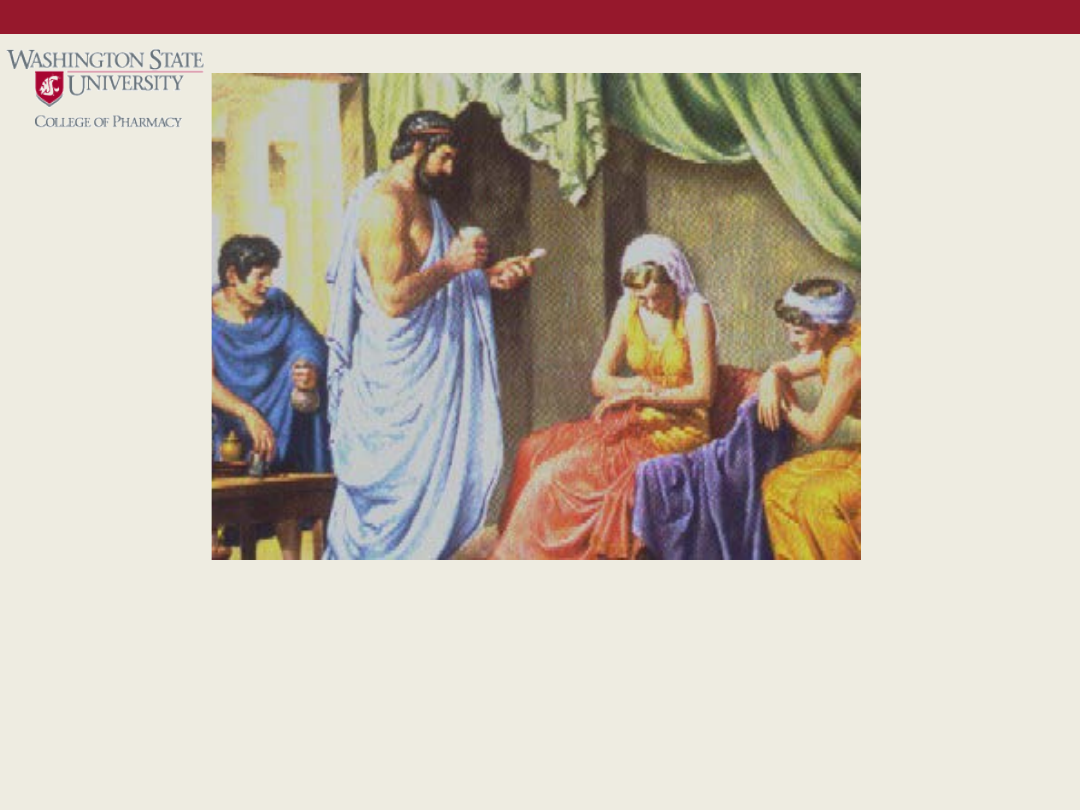
9. Galen – Experimenter in Drug Compounding
Of the men of ancient times whose names are known and revered among both the professions
of Pharmacy and Medicine, Galen, undoubtedly, is the foremost. Galen (130-200 A.D.)
practiced and taught both Pharmacy and Medicine in Rome; his principles of preparing and
compounding medicines ruled in the Western world for 1,500 years; and his name still is
associated with that class of pharmaceuticals compounded by mechanical means - galenicals.
He was the originator of the formula for a cold cream, essentially similar to that known today.
Many procedures Galen originated have their counterparts in today's modern compounding
laboratories.