ВУЗ: Не указан
Категория: Не указан
Дисциплина: Не указана
Добавлен: 17.04.2021
Просмотров: 1243
Скачиваний: 2
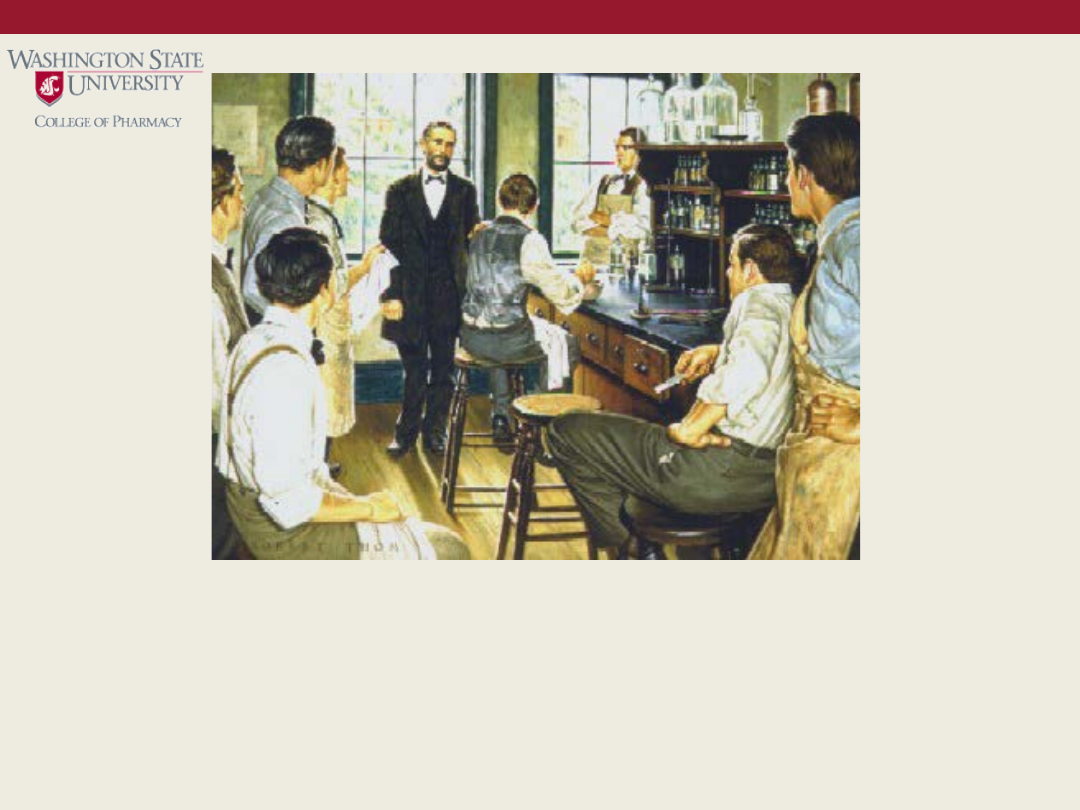
30. A Revolution in Pharmaceutical Education
When Dr. Albert B. Prescott launched the pharmacy course at the University of Michigan in
1868, critical attention was aroused because he abandoned the traditional requirement of
pregraduation apprenticeship. At the 1871 convention of the American Pharmaceutical
Association, he was denied credentials and ostracized. However, the Michigan course
pioneered other major changes: laboratory pharmacy, a definite curriculum that included basic
sciences, and a program that demanded students' full-time attention. During the next thirty
years, Dr. Prescott had the satisfaction of seeing his once revolutionary innovations generally
adopted by pharmaceutical faculties.
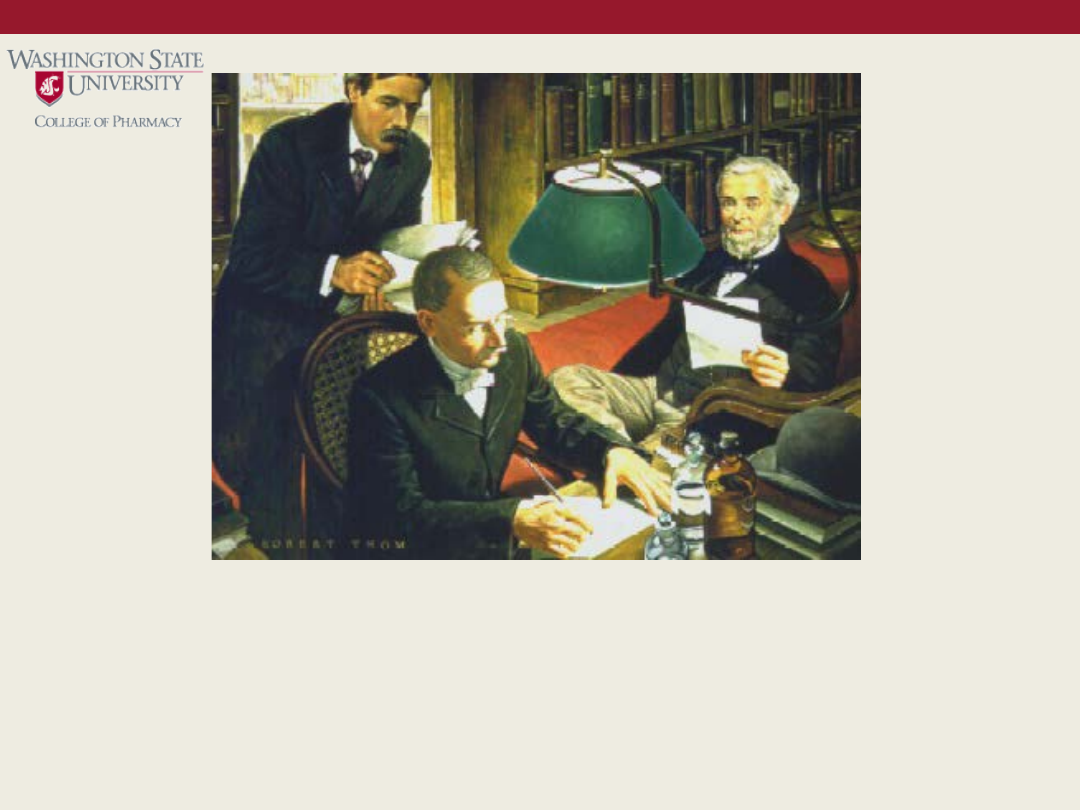
31. The Pharmacopeia Comes of Age
The first "United States Pharmacopoeia" (1820) was the work of the medical profession. It was
the first book of drug standards from a professional source to have achieved a nation's
acceptance. In 1877, the "U.S.P." was in danger of dissolution due to the lack of interest of the
medical profession. Dr. Edward R. Squibb, manufacturing pharmacist as well as physician,
took the problem to The American Pharmaceutical Association convention. Pharmacists
formed a "Committee on Revision" chairmanned by hospital pharmacist Charles Rice, assisted
by pharmacist-educator Joseph P. Remington, and by Dr. Squibb, their indefatigable
collaborator. The "U.S. Pharmacopoeia" surged to new importance.
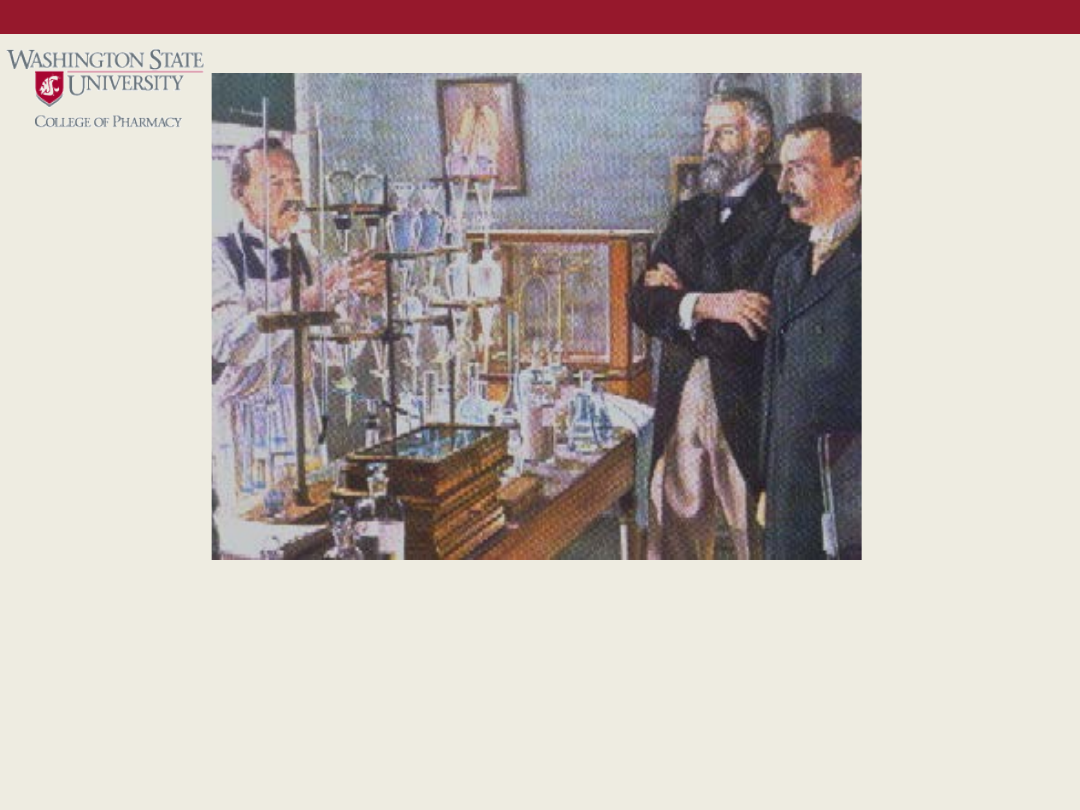
32. The Standardization of Pharmaceuticals
Despite the professional skill and integrity of 19th-century pharmacists, seldom did two
preparations of vegetable drugs have the same strength, even though prepared by identical
processes. Plant drugs varied widely in active alkaloidal and glucosidal content. The first
answer to this problem came when Parke, Davis & Company introduced standardized "Liquor
Ergotae Purificatus" in 1879. Dr. Albert Brown Lyons, as the firm's Chief Chemist, further
developed methods of alkaloidal assay. Messrs. Parke and Davis recognized the value of his
work, and in 1883, announced a list of twenty standardized "normal liquids." Parke-Davis also
pioneered in developing pharmacologic and physiologic standards for pharmaceuticals.
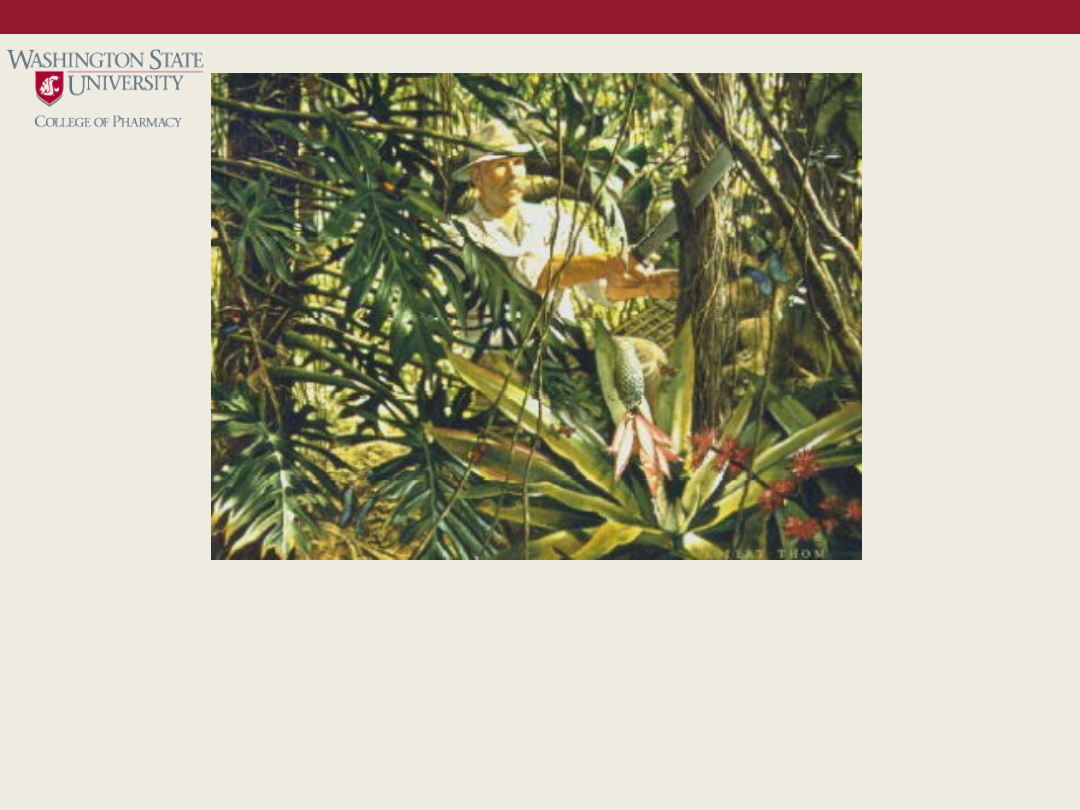
33. Wresting the Jungle’s Secrets
Expeditions in search of new medicinal plants probably are as old as Pharmacy. Scientific
adventurers, such as Henry Hurd Rusby (1855-1940), opened vast new horizons for the
advancement of Pharmacy and Medicine, late in the nineteenth century. Sent by Parke, Davis
& Company in 1884 to Peru for supplies of coca leaves, Dr. Rusby crossed the Andes and
journeyed down the Amazon to the Atlantic amid incredible hardships. He returned with 45,000
botanical specimens. Among them were many new drug plants, including cocillana bark,
pharmaceutical preparations of which are still important to Medicine. Dr. Rusby later became
Dean of the College of Pharmacy of Columbia University.
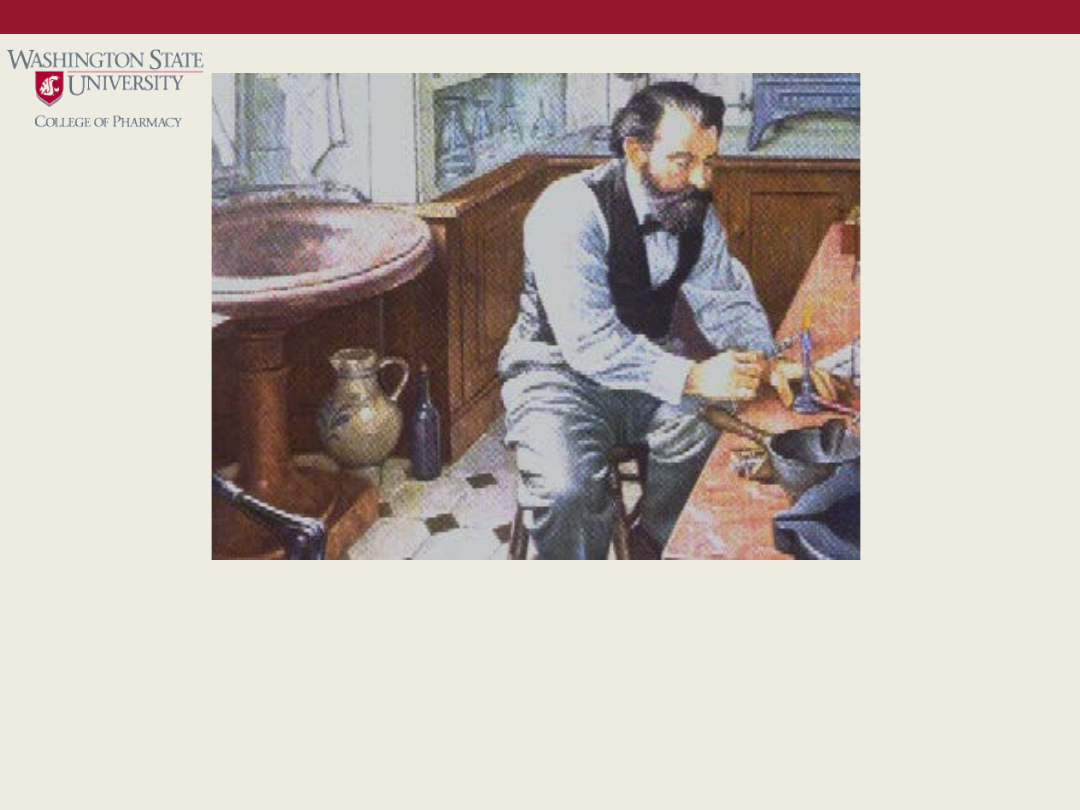
34. Stanislas Limousin – Pharmacal Inventor
One of those men singularly gifted in combining scientific knowledge with technical skill and
with inventive genius was the french retail pharmacist, Stanislas Limousin (1831-1887). Among
the many devices which he introduced to Pharmacy and Medicine were the medicine dropper;
the system of coloring poisons (such as corrosive sublimate); and wafer cachets (which found
favor prior to mass production of the gelatin capsule). His greatest contributions, however,
were the development and perfection of apparatus for the inhalation and therapeutic
administration of oxygen; and invention of glass ampoules that could be sealed and sterilized
for preservation of solutions for hypodermic use.