ВУЗ: Не указан
Категория: Не указан
Дисциплина: Не указана
Добавлен: 17.04.2021
Просмотров: 1241
Скачиваний: 2
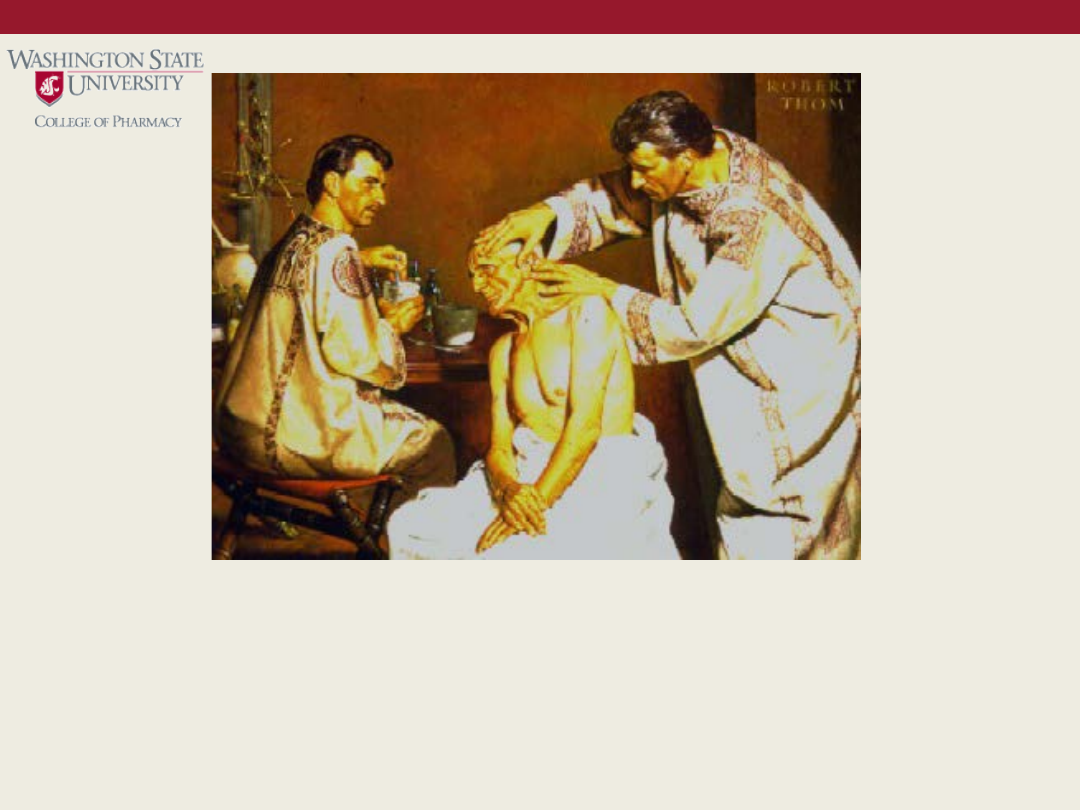
10. Damian and Cosmas – Pharmacy’s Patron Saints
Twinship of the health professions, Pharmacy and Medicine, is nowhere more strikingly
portrayed than by Damian, the apothecary, and Cosmas, the physician. Twin brothers of
Arabian descent, and devout Christians, they offered the solace of religion as well as the
benefit of their knowledge to the sick who visited them. Their twin careers were cut short in the
year 303 by martyrdom. For centuries their tomb in the Syrian city of Cyprus was a shrine.
Churches were built in their honor in Rome and other cities. After canonization, they became
the patron saints of Pharmacy and Medicine, and many miracles were attributed to them.
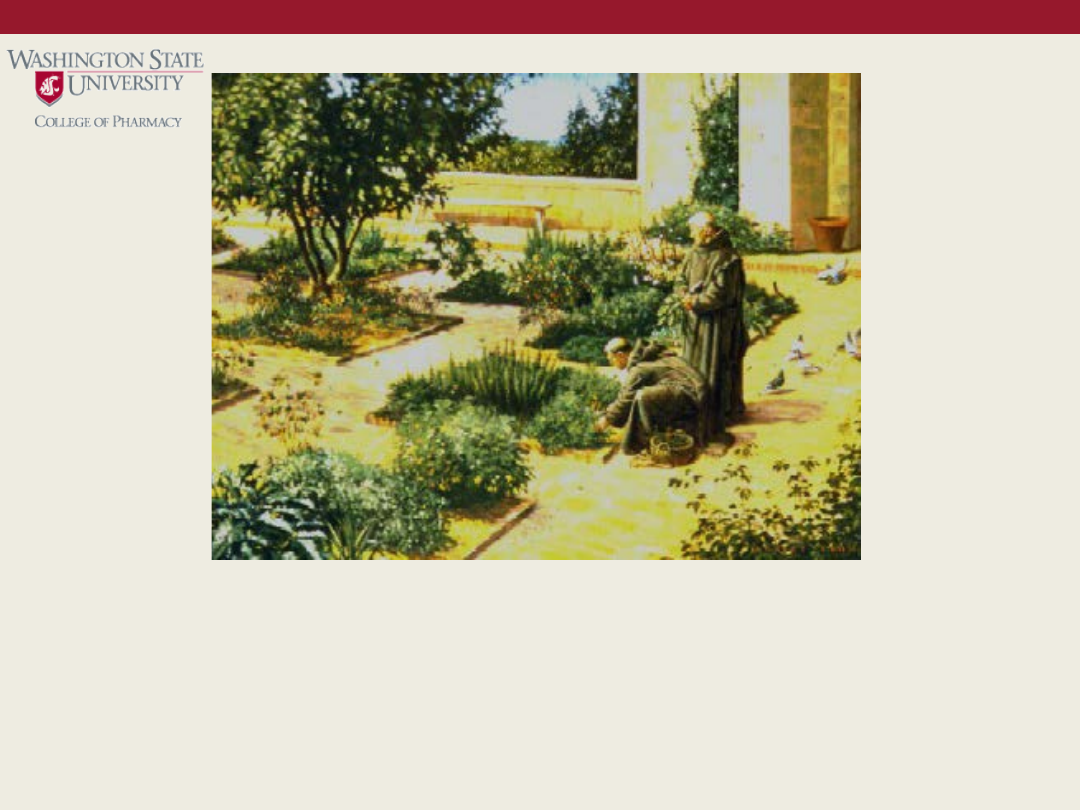
11. Monastic Pharmacy
During the Middle Ages remnants of the Western knowledge of Pharmacy and Medicine were
preserved in the monasteries (fifth to twelfth centuries). These scientists are known to have
been taught in the cloisters as early as the seventh century. Manuscripts from many islands
were translated or copied for monastery libraries. The monks gathered herbs and simples in
the field, or raised them in their own herb gardens. These they prepared according to the art of
the apothecary for the benefit of the sick and injured. Gardens such as these still may be found
in monasteries in many countries.

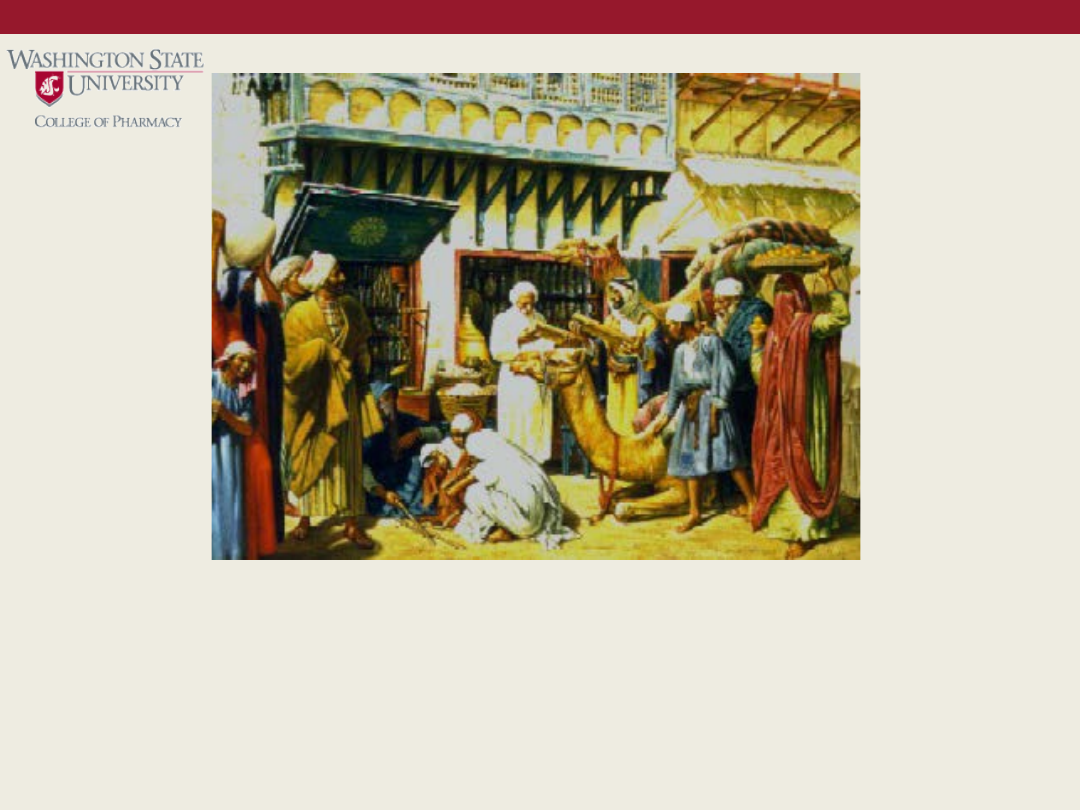
12. The First Apothecary Shops
The Arabs separated the arts of apothecary and physician, establishing in Bagdad late in the
eighth century the first privately owned drug stores. They preserved much of the Greco-Roman
wisdom, added to it, developing with the aid of their natural resources syrups, confections,
conserves, distilled waters and alcoholic liquids. The apothecary is examining logs of
sandalwood offered by a traveling merchant, while children indulge their taste for sweets with
stalks of sugar cane. When the Moslems swept across Africa, Spain and southern France,
they carried with them a new pattern of Pharmacy which western Europe soon assimilated.
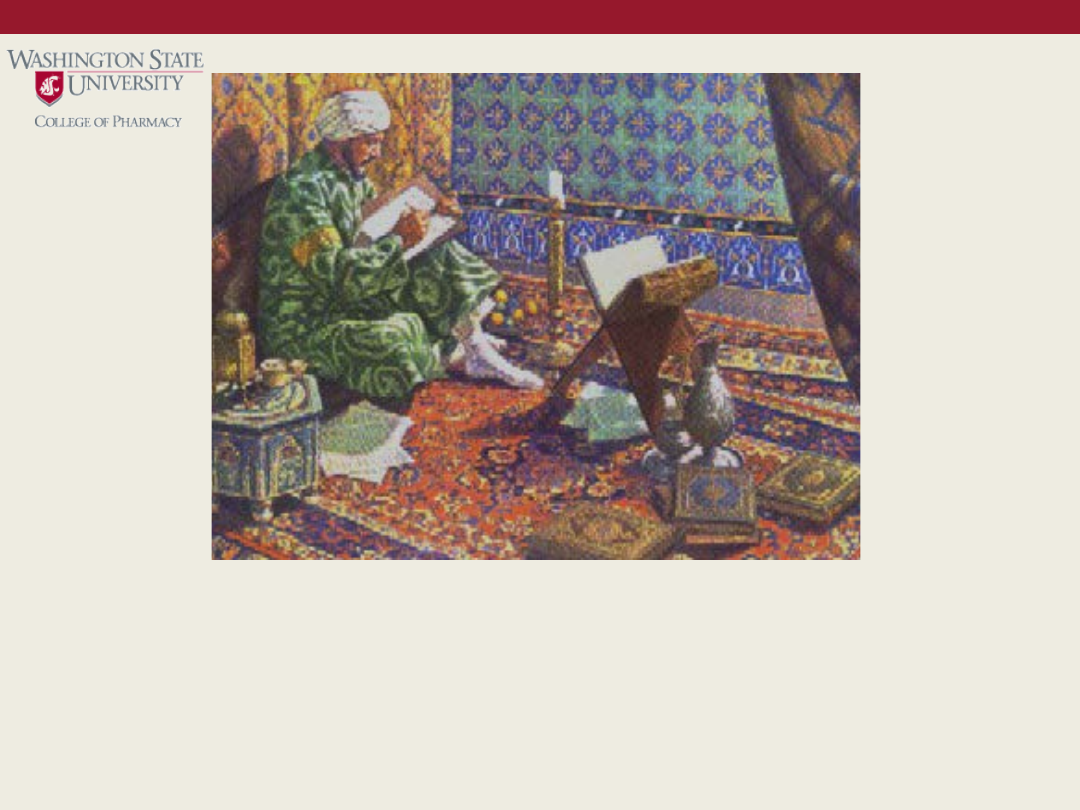
13. Avicenna – The “Persian Galen”
Among the brilliant contributors to the sciences of Pharmacy and Medicine during the Arabian
era was one genius who seems to stand for his time - the Persian, Ibn Sina (about 980-1037
A.D.), called Avicenna by the Western world. Pharmacist, poet, physician, philosopher and
diplomat, Avicenna was an intellectual giant, a favorite of Persian princes and rulers. He wrote
in Arabic, often while secluded in the home of an apothecary friend. His pharmaceutical
teachings were accepted as authority in the West until the 17th century; and still are dominant
influences in the Orient.
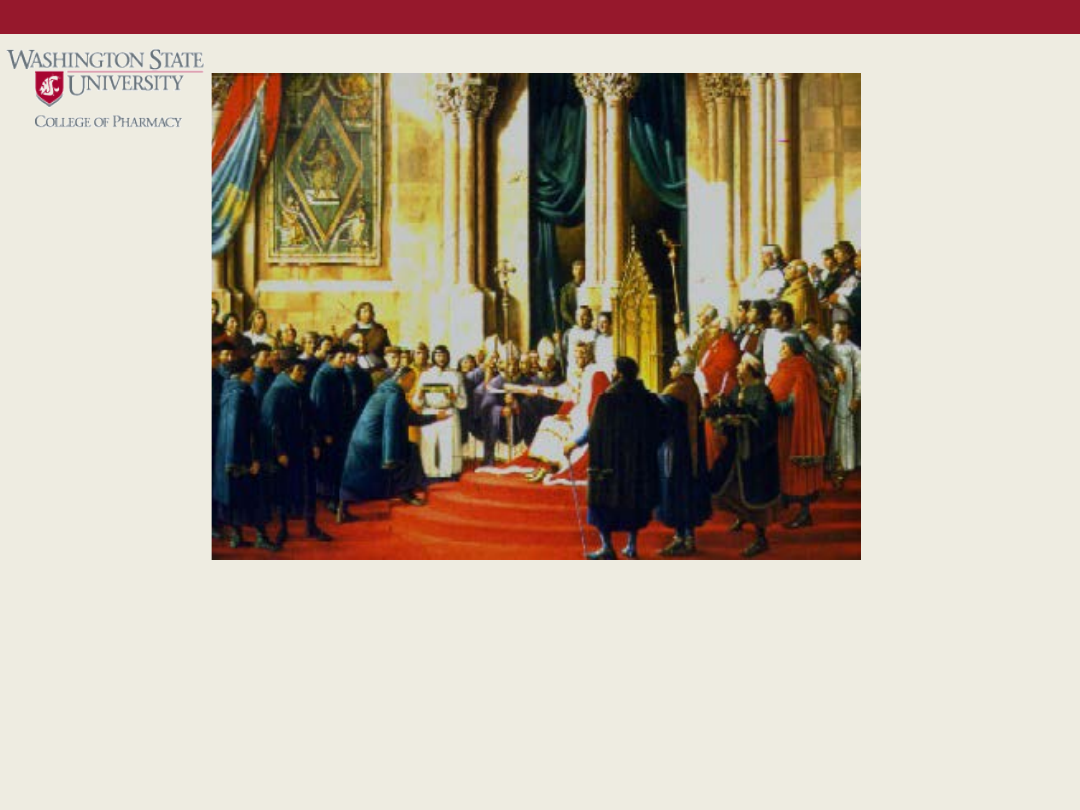
14. Separation of Pharmacy and Medicine
In European countries exposed to Arabian influence, public pharmacies began to appear in the
17th century. However, it was not until about 1240 A.D. that, in Sicily and southern Italy,
Pharmacy was separated from Medicine. Frederick II of Hohenstaufen, who was Emperor of
Germany as well as King of Sicily, was a living link between Oriental and Occidental worlds. At
his palace in Palermo, he presented subject Pharmacists with the first European edict
completely separating their responsibilities from those of Medicine, and prescribing regulations
for their professional practice.