ВУЗ: Не указан
Категория: Не указан
Дисциплина: Не указана
Добавлен: 13.10.2020
Просмотров: 1636
Скачиваний: 1
7
EXECUTIVE SUMMARY
1. TRAFFICKING IN PERSONS
HAPPENS EVERYWHERE
The crime of trafficking in persons affects virtually every
country in every region of the world. Between 2010 and
2012, victims with 152 different citizenships were identi-
fied in 124 countries across the globe. Moreover, traffick-
ing flows - imaginary lines that connect the same origin
country and destination country of at least five detected
victims – criss-cross the world. UNODC has identified
at least 510 flows. These are minimum figures as they are
based on official data reported by national authorities.
These official figures represent only the visible part of the
trafficking phenomenon and the actual figures are likely
to be far higher.
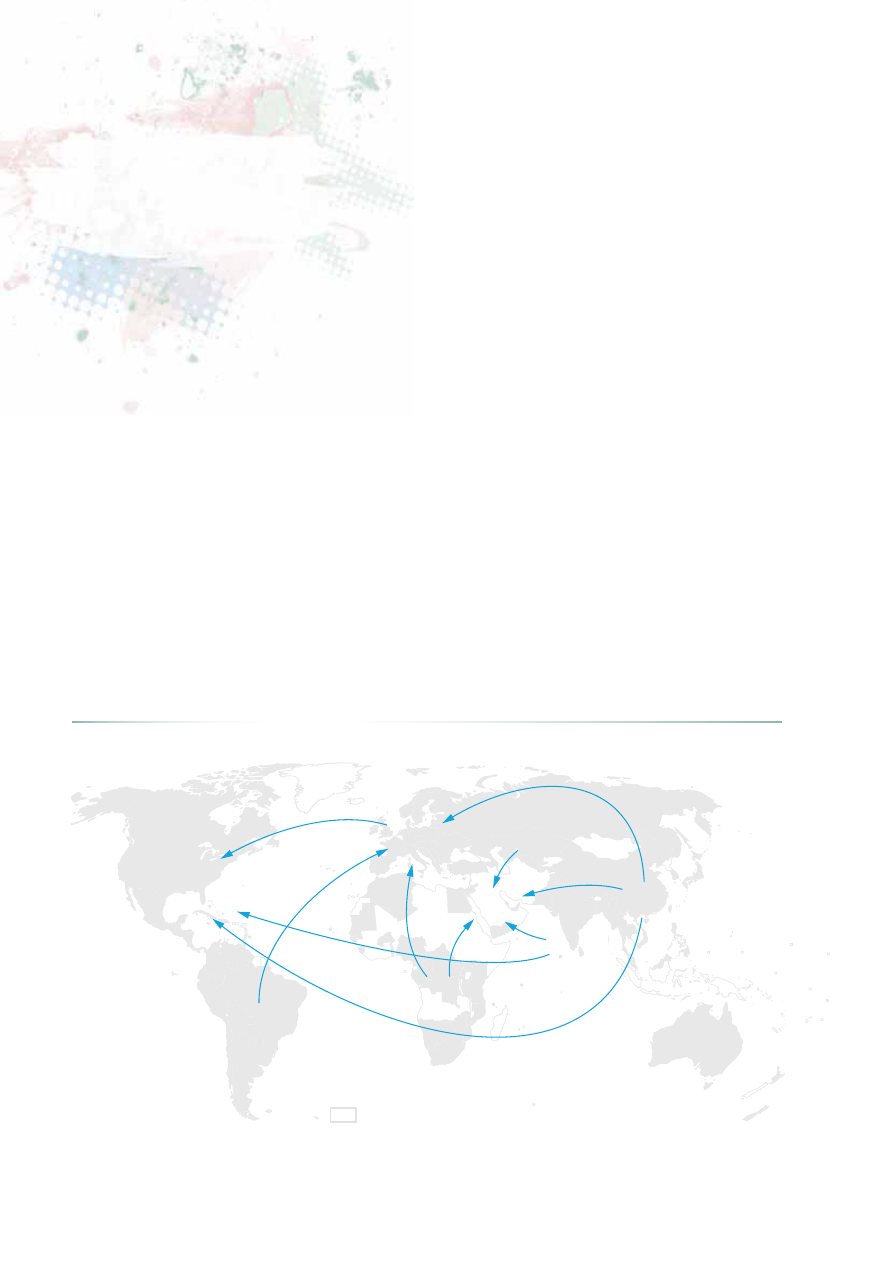
Most trafficking flows are intraregional, meaning that the
origin and the destination of the trafficked victim is within
the same region; often also within the same subregion.
For this reason, it is difficult to identify major global traf-
ficking hubs. Victims tend to be trafficked from poor
countries to more affluent ones (relative to the origin
country) within the region.
Transregional trafficking flows are mainly detected in the
rich countries of the Middle East, Western Europe and
North America. These flows often involve victims from
the ‘global south’; mainly East and South Asia and Sub-
Saharan Africa. Statistics show a correlation between the
affluence (GDP) of the destination country and the share
of victims trafficked there from other regions. Richer
countries attract victims from a variety of origins, includ-
ing from other continents, whereas less affluent countries
are mainly affected by domestic or subregional trafficking
flows.
Main destination areas of transregional trafficking flows (in blue) and their significant origins,
2010-2012
Source: UNODC.
East
Asians
South
Americans
Sub-Saharan
Africans
Eastern
and Central
Europeans
South
Asians
Western
and Central
Europe
North America,
Central America
and the Caribbean
The Middle
East
Sciences Po - Atelier de cartographie, 2014
countries not covered
The arrows show the flows that represent 5% and above
of the total victims detected in destination subregions
GLOBAL REPOR
T ON
TRAFFICKING IN PERSONS
2014
8
2. A TRANSNATIONAL CRIME
THAT OFTEN INVOLVES DOMESTIC
OFFENDERS AND LIMITED
GEOGRAPHICAL REACH
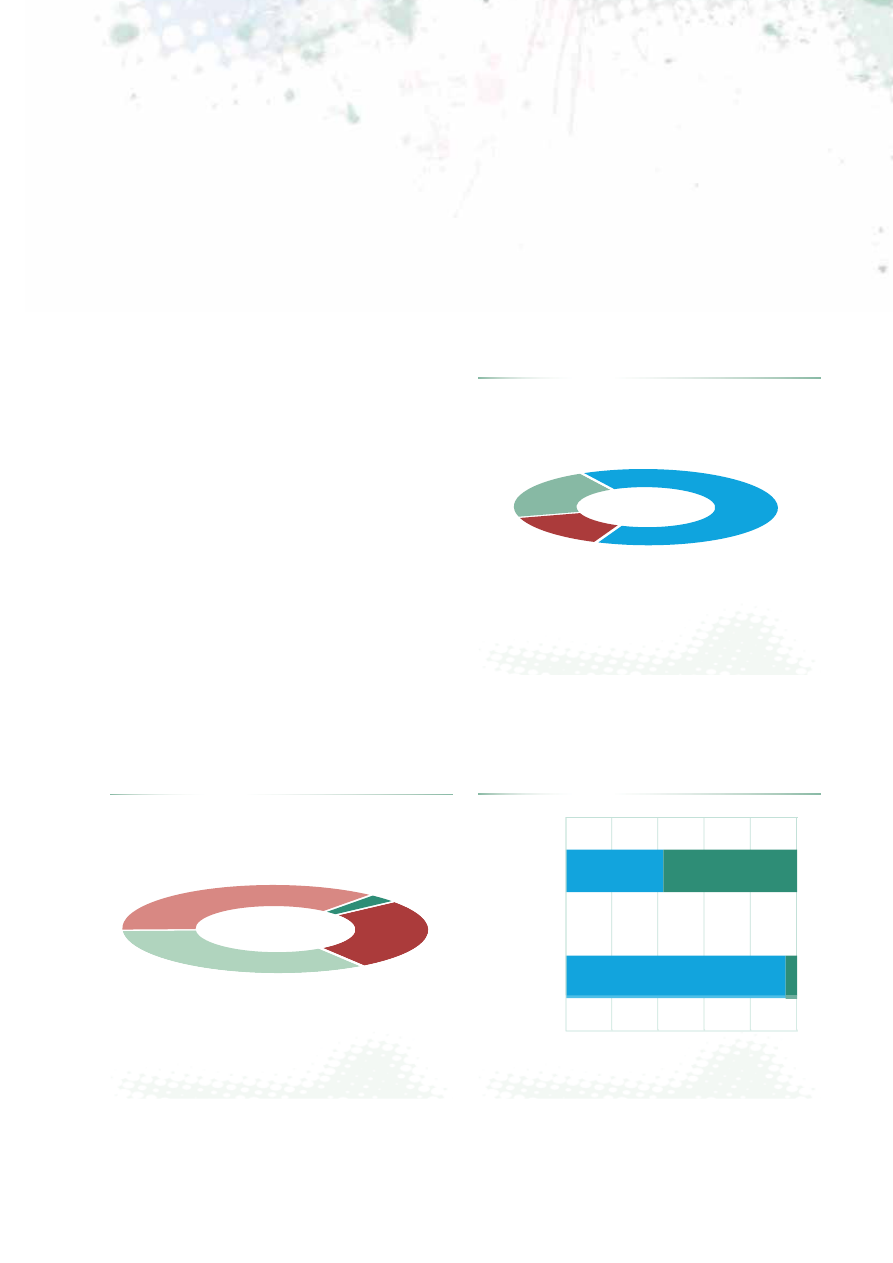
Most victims of trafficking in persons are foreigners in the
country where they are identified as victims. In other
words, these victims - more than 6 in 10 of all victims -
have been trafficked across at least one national border.
That said, many trafficking cases involve limited geo-
graphic movement as they tend to take place within a
subregion (often between neighbouring countries).
Domestic trafficking is also widely detected, and for one
in three trafficking cases, the exploitation takes place in
the victim’s country of citizenship.
A majority of the convicted traffickers, however, are citi-
zens of the country of conviction. These traffickers were
convicted of involvement in domestic as well as transna-
tional trafficking schemes.
Dividing countries into those that are more typical origin
countries and those that are more typical destinations for
trafficking in persons reveals that origin countries convict
almost only their own citizens. Destination countries, on
the other hand, convict both their own citizens and
foreigners.
Moreover, there is a correlation between the citizenships
of the victims and the traffickers involved in cross-border
trafficking. This correlation indicates that the offenders
often traffic fellow citizens abroad.
TRANSREGIONAL
26%
CROSS-BORDER WITHIN
SAME SUBREGION
37%
DOMESTIC
(WITHIN NATIONAL BORDERS)
34%
FROM NEARBY
SUBREGION
3%
Citizenship of convicted traffickers globally,
2010-2012 (or more recent)
; shares of local and
foreign nationals (relative to the country of
conviction)
Source: UNODC elaboration on national data.
NATIONALS
64%
FOREIGNERS FROM
OTHER REGIONS
14%
FOREIGNERS FROM COUNTRIES
IN THE SAME REGION
22%
95%
42%
5
%
58%
0%
20%
40%
60%
80%
100%
Countries of
origin
Countries of
destination
NATIONAL OFFENDERS
FOREIGN OFFENDERS
0%
20%
40%
60%
%
8
8
0
0
0
%
%
%
1
10
0
0
0
0
%
g
Distribution of national and foreign
offenders among countries of origin and
destination of cross-border trafficking,
2010-2012
(or more recent)
Source: UNODC elaboration on national data.
26%
(WITHIN NATIONAL BORDERS)
34%
Breakdown of trafficking flows by geographi-
cal reach,
2010-2012 (or more recent)
Source: UNODC elaboration on national data.
Executive summary
9
3. INCREASED DETECTION OF
TRAFFICKING IN PERSONS FOR
PURPOSES OTHER THAN SEXUAL
EXPLOITATION
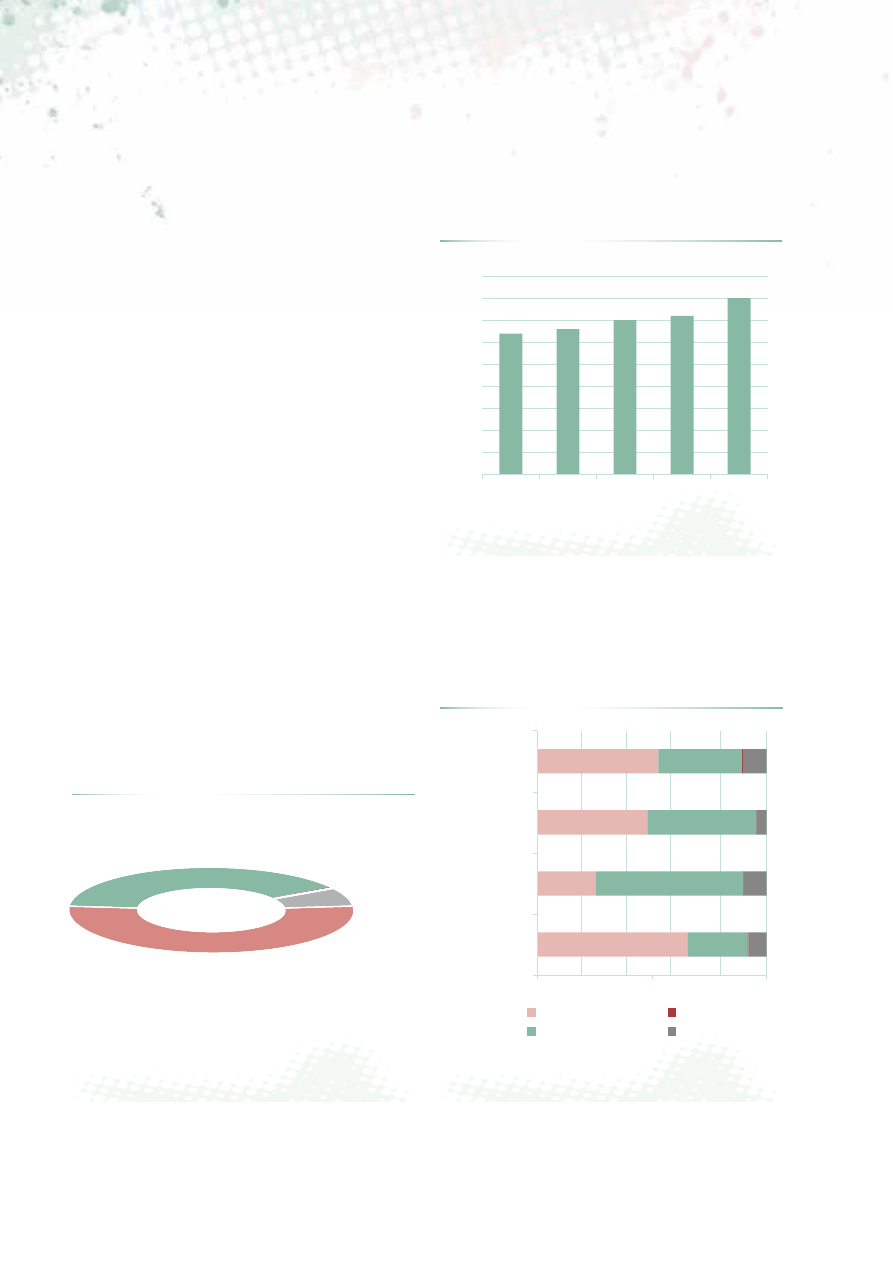
While a majority of trafficking victims are subjected to
sexual exploitation, other forms of exploitation are increas-
ingly detected. Trafficking for forced labour - a broad
category which includes, for example, manufacturing,
cleaning, construction, catering, restaurants, domestic
work and textile production – has increased steadily in
recent years. Some 40 per cent of the victims detected
between 2010 and 2012 were trafficked for forced labour.
Trafficking for exploitation that is neither sexual nor
forced labour is also increasing. Some of these forms, such
as trafficking of children for armed combat, or for petty
crime or forced begging, can be significant problems in
some locations, although they are still relatively limited
from a global point of view.
There are considerable regional differences with regard to
forms of exploitation. While trafficking for sexual exploi-
tation is the main form detected in Europe and Central
Asia, in East Asia and the Pacific, it is forced labour. In
the Americas the two types are detected in near equal
proportions.
Forms of exploitation among detected
trafficking victims,
2011*
Source: UNODC elaboration on national data.
*Please note that the regional differences in detection capacities
and definitions – particularly for forced labour – affect the global
shares.
SEXUAL
EXPLOITATION
53%
FORCED
LABOUR
40%
OTHERS
7%
ORGAN
REMOVAL
0.3%
Share of the total number of detected victims
who were trafficked for forced labour,
2007-
2011
Source: UNODC elaboration on national data.
32%
33%
35%
36%
40%
0%
5%
10%
15%
20%
25%
30%
35%
40%
45%
2007
2008
2009
2010
2011
Forms of exploitation among detected
trafficking victims, by region of detection,
2010-2012 (or more recent)
Source: UNODC elaboration on national data.
0%
20%
40%
60%
80%
100%
Europe and
Central Asia
East Asia,
South Asia
and Pacific
Americas
Africa and
the Middle East
Sexual exploitation
Forced labour,
servitude and
slavery like
Organ removal
Other forms
of exploitation
53%
37%
10%
48%
47%
4%
26%
64%
10%
66%
26%
8%
GLOBAL REPOR
T ON
TRAFFICKING IN PERSONS
2014
10
4. WOMEN ARE SIGNIFICANTLY
INVOLVED IN TRAFFICKING IN
PERSONS, BOTH AS VICTIMS AND
AS OFFENDERS
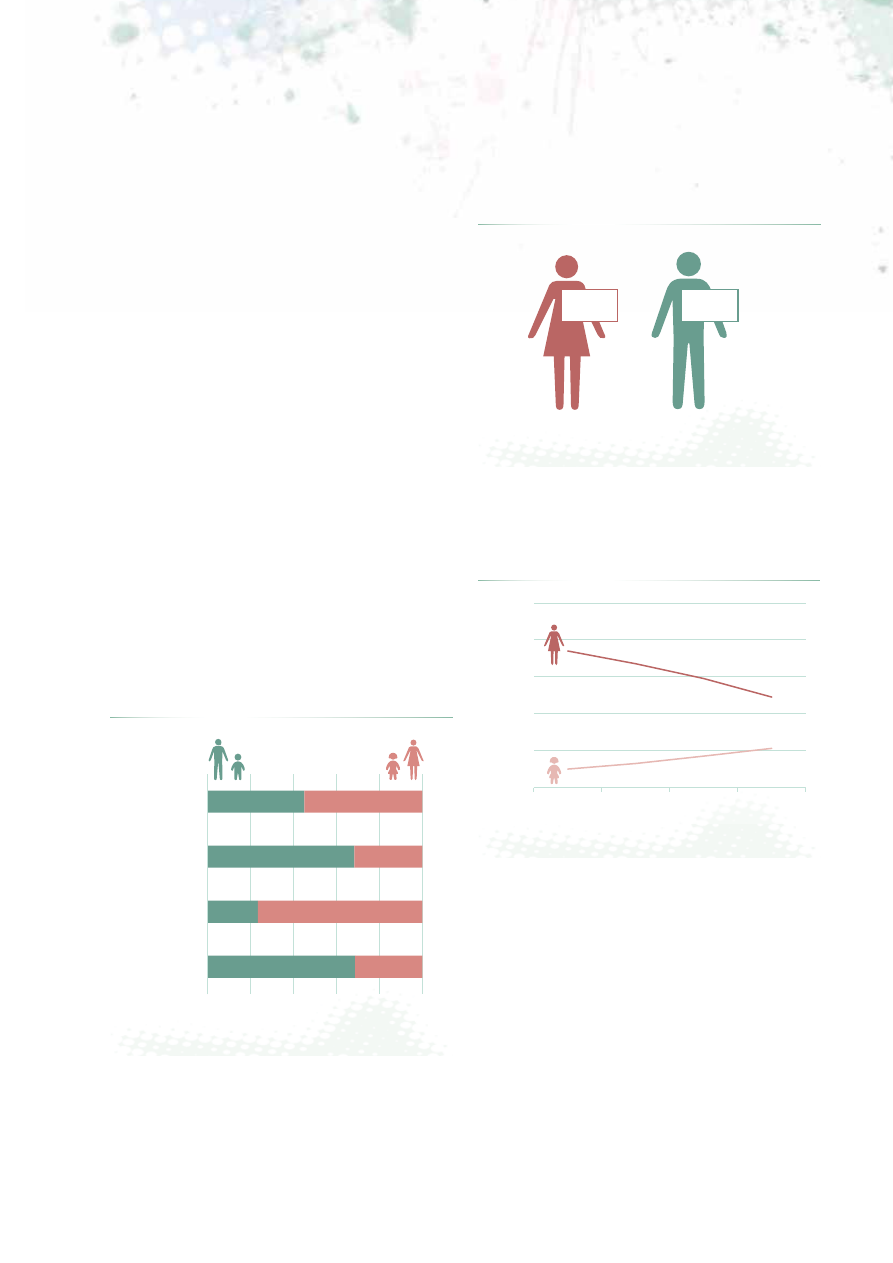
For nearly all crimes, male offenders vastly outnumber
females. On average, some 10-15 per cent of convicted
offenders are women. For trafficking in persons, however,
even though males still comprise the vast majority, the
share of women offenders is nearly 30 per cent.
Moreover, approximately half of all detected trafficking
victims are adult women. Although this share has been
declining significantly in recent years, it has been partially
offset by the increasing detection of victims who are girls.
Women comprise the vast majority of the detected victims
who were trafficked for sexual exploitation. Looking at
victims trafficked for forced labour, while men comprise
a significant majority, women make up nearly one third
of detected victims. In some regions, particularly in Asia,
most of the victims of trafficking for forced labour were
women.
Persons convicted for trafficking in persons,
by gender,
2010-2012 (or more recent)
Source: UNODC elaboration on national data.
Trends in the shares of females (women and
girls) among the total number of detected
victims,
2004-2011
Source: UNODC elaboration on national data.
Gender breakdown of detected victims of
trafficking for forced labour, by region,
2010-2012 (or more recent)
Source: UNODC elaboration on national data.
Europe and
Central Asia
South Asia,
East Asia and
the Pacific
Americas
Africa and
Middle East
69%
23%
68%
45%
31%
77%
32%
55%
0%
20%
40%
60%
80% 100%
10%
13%
17%
21%
74%
67%
59%
49%
0%
20%
40%
60%
80%
100%
2004
2006
2009
2011
28
%
72
%
Executive summary
11
5. DETECTED CHILD TRAFFICKING
IS INCREASING
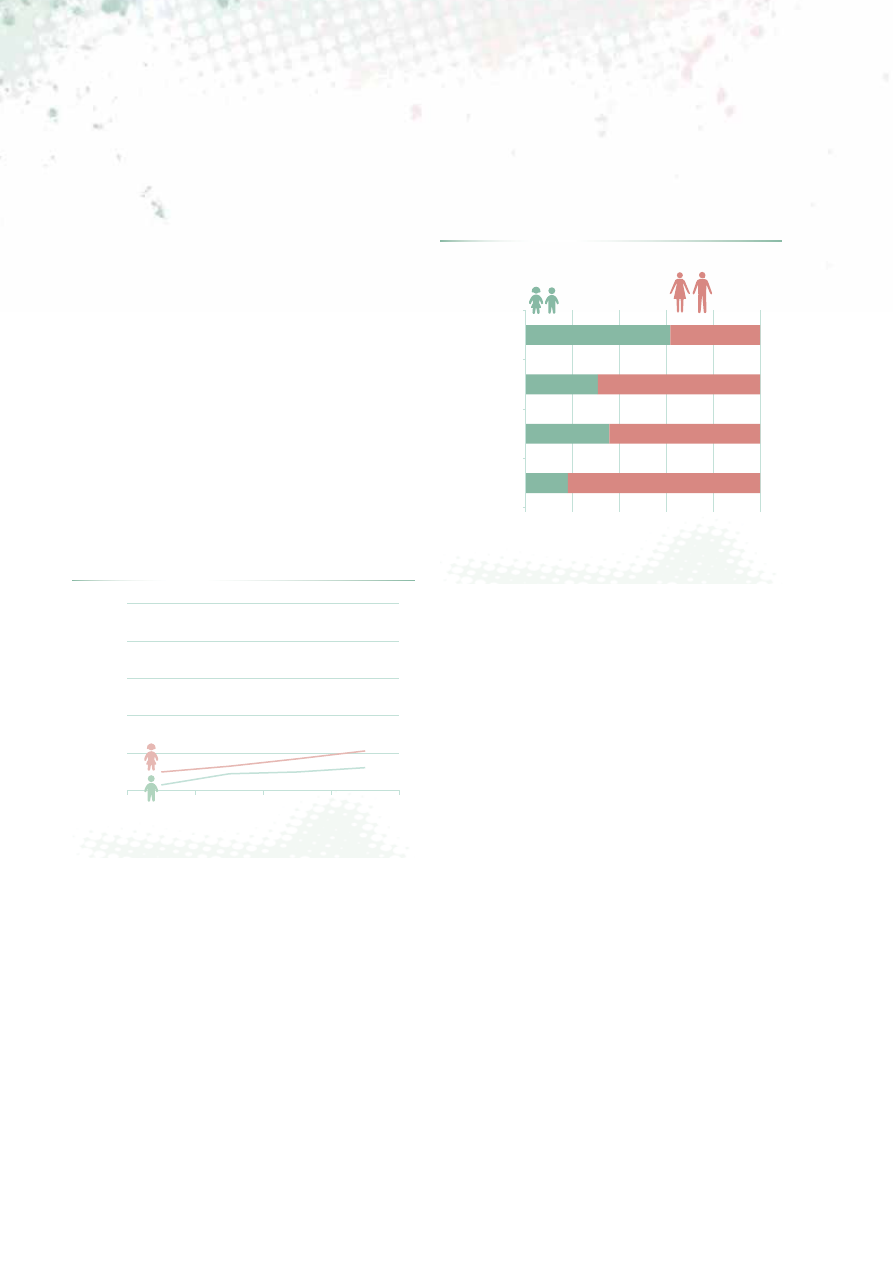
Since UNODC started to collect information on the age
profile of detected trafficking victims, the share of children
among the detected victims has been increasing. Globally,
children now comprise nearly one third of all detected
trafficking victims. Out of every three child victims, two
are girls and one is a boy.
The global figure obscures significant regional differences.
In some areas, child trafficking is the major trafficking-
related concern. In Africa and the Middle East, for exam-
ple, children comprise a majority of the detected victims.
In Europe and Central Asia, however, children are vastly
outnumbered by adults (mainly women).
Trends in the shares of children (girls and
boys) among the total number of detected
victims,
2004-2011
Source: UNODC elaboration on national data.
10%
13%
17%
21%
3%
9%
10%
12%
0%
20%
40%
60%
80%
100%
2004
2006
2009
2011
Shares of children and adults among the
detected victims of trafficking in persons,
by region,
2010-2012 (or more recent)
Source: UNODC elaboration on national data.
18%
36%
31%
62%
82%
64%
69%
38%
0%
20%
40%
60%
80%
100%
Europe and
Central Asia
South Asia,
East Asia and
the Pacific
Americas
Africa and
Middle East
ADULTS
CHILDREN