ВУЗ: Не указан
Категория: Не указан
Дисциплина: Не указана
Добавлен: 13.10.2020
Просмотров: 1635
Скачиваний: 1
GLOBAL REPOR
T ON
TRAFFICKING IN PERSONS
2014
12
6. MORE THAN 2 BILLION PEOPLE
ARE NOT PROTECTED AS
REQUIRED BY THE UNITED
NATIONS TRAFFICKING IN
PERSONS PROTOCOL
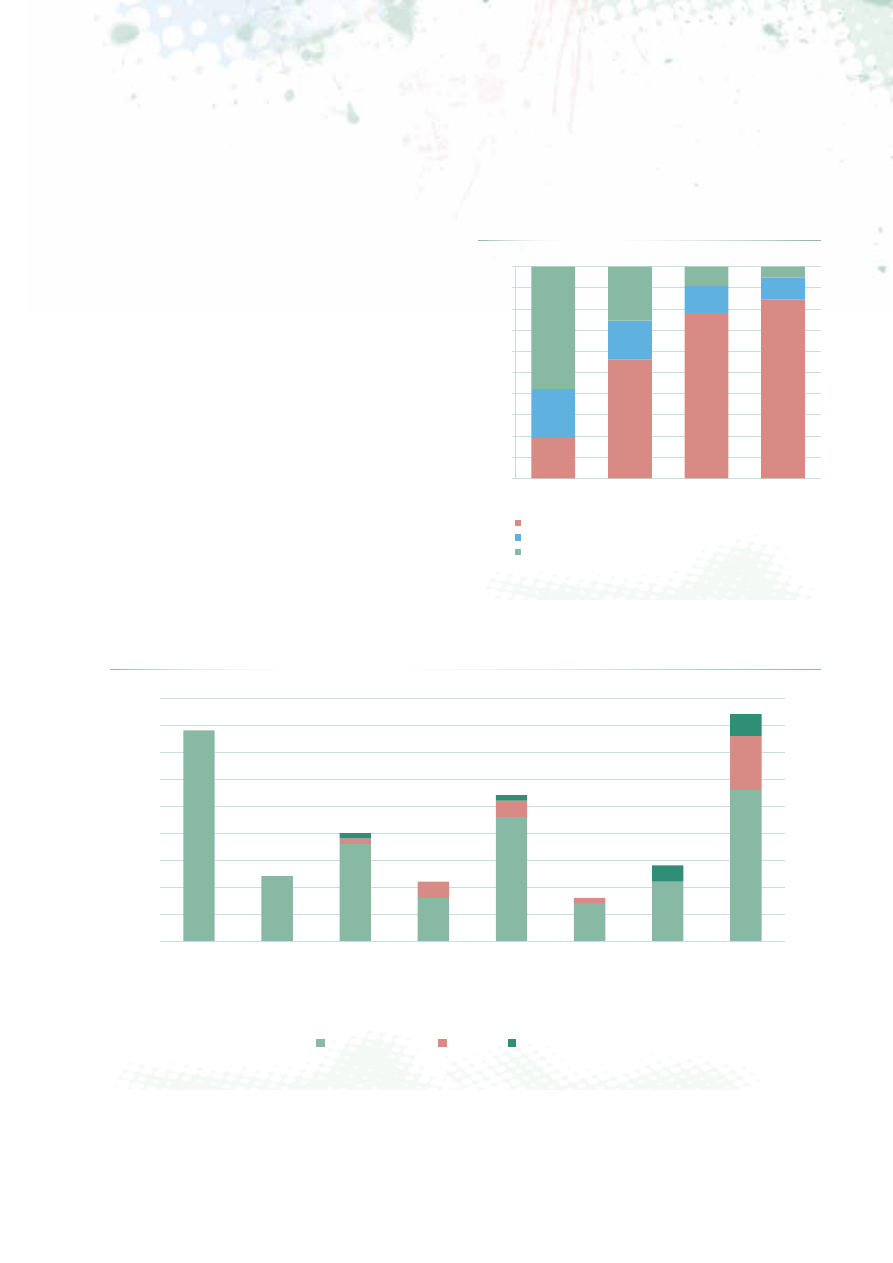
More than 90 per cent of countries among those covered
by UNODC criminalize trafficking in persons. Many
countries have passed new or updated legislation since the
entry into force of the United Nations Protocol against
Trafficking in Persons in 2003.
Although this legislative progress is remarkable, much
work remains. 9 countries still lack legislation altogether,
whereas 18 others have partial legislation that covers only
some victims or certain forms of exploitation. Some of
these countries are large and densely populated, which
means that more than 2 billion people lack the full pro-
tection of the Trafficking in Persons Protocol.
Criminalization of trafficking in persons with
a specific offence, shares and numbers of
countries,
2003-2014
Source: UNODC elaboration on national data.
33
(19%)
97
(56%)
135
(78%)
146
(84.5%)
40
(23%)
32
(18.5%)
22
(13%)
18
(10.5%)
100
(58%)
44
(25.5%)
16
(9%)
9
(5%)
0%
10%
20%
30%
40%
50%
60%
70%
80%
90%
100%
November
2003
November
2008
August
2012
August
2014
Most/all forms
Partial
No specific offence
Criminalization of trafficking in persons with a specific offence, numbers of countries,
by subregion,
2014
Source: UNODC elaboration on national data.
39
12
18
8
23
7
11
28
1
3
3
1
10
1
1
3
4
0
5
10
15
20
25
30
35
40
45
Western
and Central
Europe
Eastern
Europe and
Central Asia
North and
Central
America and
the Caribbean
South
America
East Asia
and the
Pacific
South Asia
North Africa
and Middle
East
Subsahara
Africa
Most/all forms
Partial
No specific offence
Executive summary
13
7. IMPUNITY PREVAILS
In spite of the legislative progress mentioned above, there
are still very few convictions for trafficking in persons.
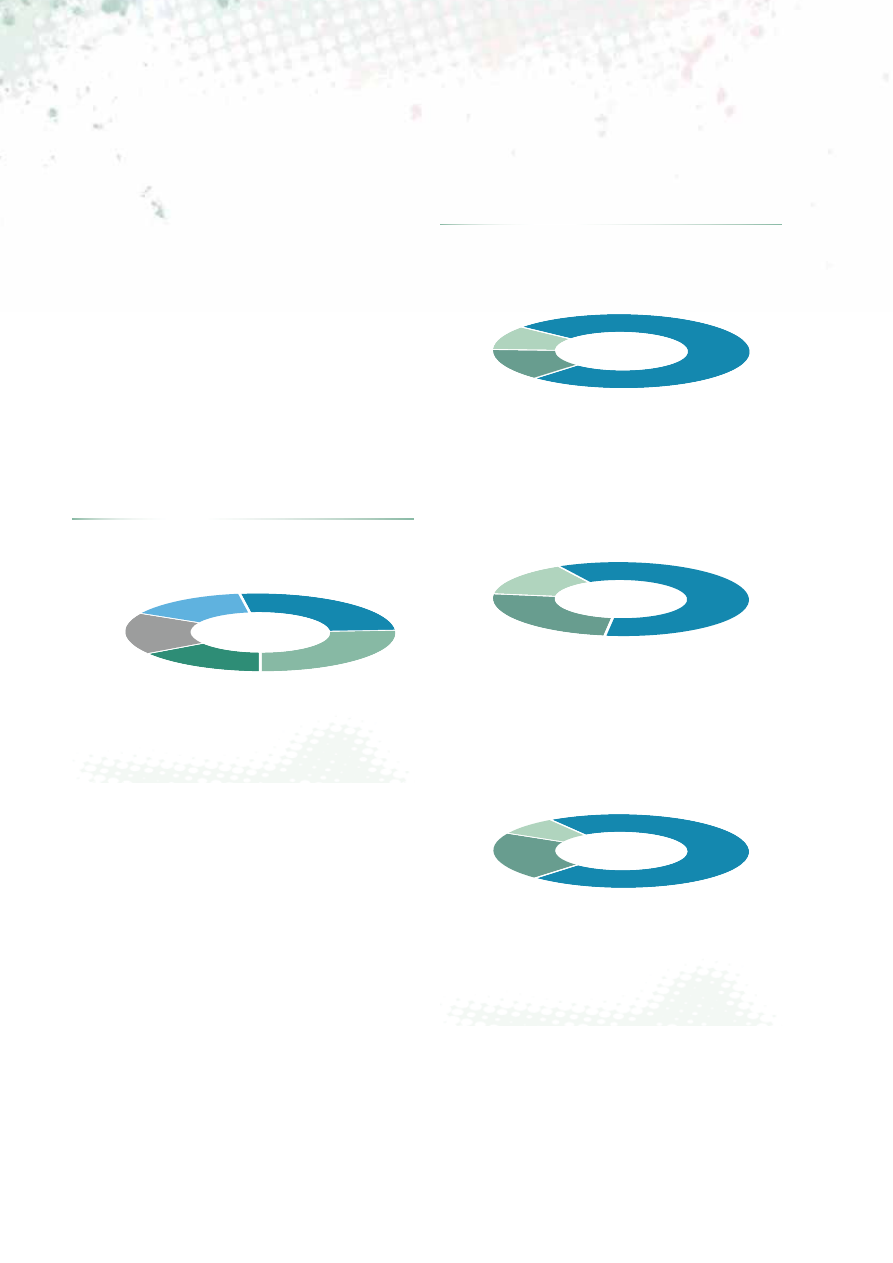
Only 4 in 10 countries reported having 10 or more yearly
convictions, with nearly 15 per cent having no convictions
at all.
The global picture of the criminal justice response has
remained largely stable in recent years. Fewer countries
are reporting increases in the numbers of convictions
which remain very low. This may reflect the difficulties
of the criminal justice systems to appropriately respond
to trafficking in persons.
Number of convictions recorded per year,
share of countries,
2010-2012
Source: UNODC elaboration on national data.
Trends in the number of recorded convictions,
share of countries
Sources: UN.GIFT/UNODC, Global Report on Trafficking in Per-
sons 2009 (2003-2007); UNODC, elaboration on national data
(2007-2010 and 2010-2012).
INFORMATION
NOT AVAILABLE
17%
NO CONVICTIONS
15%
MORE THAN 50
CONVICTIONS
16%
LESS THAN TEN
CONVICTIONS
26%
BETWEEN 10 AND
50 CONVICTIONS
26%
STABLE OR
UNCLEAR TRENDS
77%
INCREASING
TRENDS
13%
DECREASING
TRENDS
10%
2010-2012
STABLE OR
UNCLEAR TRENDS
60%
INCREASING
TRENDS
25%
DECREASING
TRENDS
15%
2007-2010
STABLE OR
UNCLEAR TRENDS
71%
INCREASING
TRENDS
21%
DECREASING
TRENDS
8%
2003-2007


14
8. ORGANIZED CRIME INVOLVE-
MENT: TOWARDS A TYPOLOGY
Criminals committing trafficking in persons offences can
act alone, with a partner or in different types of groups
and networks. Human trafficking can be easily conducted
by single individuals with a limited organization in place.
This is particularly true if the crime involves only a few
victims who are exploited locally. But trafficking opera-
tions can also be complex and involve many offenders,
which is often the case for transregional trafficking flows.
Offenders may traffic their victims across regions to more
affluent countries in order to increase their profits. How-
ever, doing so increases their costs as well as the risks of
law enforcement detection. It also requires more organi-
zation, particularly when there are several victims. Cross-
border trafficking flows – subregional and transregional
– are more often connected to organized crime. Complex
trafficking flows can be more easily sustained by large and
well-organized criminal groups.
The transnational nature of the flows, the victimization
of more persons at the same time, and the endurance in
conducting the criminal activity are all indicators of the
level of organization of the trafficking network behind the
flow. On this basis, a typology including three different
trafficking types is emerging. The trafficking types have
some typical characteristics; however, as always, typologies
are based on categorization to better explain and under-
stand different aspects of trafficking. ‘Pure’ trafficking
types may not exist since there is always some overlap
between different types.
Typology on the organization of trafficking in persons
SMALL LOCAL OPERATIONS
MEDIUM SUBREGIONAL OPERATIONS
LARGE TRANSREGIONAL OPERATIONS
Domestic or short-distance trafficking
flows.
Trafficking flows within the subregion or
neighboring subregions.
Long distance trafficking flows involving
different regions.
One or few traffickers.
Small group of traffickers.
Traffickers involved in organized crime.
Small number of victims.
More than one victim.
Large number of victims.
Intimate partner exploitation.
Some investments and some profits
depending on the number of victims.
High investments and high profits.
Limited investment and profits.
Border crossings with or without travel doc-
uments.
Border crossings always require travel
documents.
No travel documents needed for
border crossings.
Some organization needed depending on
the border crossings and number of victims.
Sophisticated organization needed to move
large number of victims long distance.
No or very limited organization required.
Endurance of the operation.

15
INTRODUCTION
TRAFFICKERS, ORGANIZED CRIME
AND THE BUSINESS OF EXPLOITA-
TION
The crime of trafficking in persons is carried out by dif-
ferent types of traffickers, ranging from individuals
exploiting their partner to organized criminal groups oper-
ating across national borders. Trafficking in persons is
usually thought of as a ‘transnational organized crime.’
1
And indeed, many trafficking outfits meet the criteria of
transnational organized crime groups, as spelled out in
the United Nations Convention against Transnational
Organized Crime.
2
Aspects of the crime are often com-
mitted in different countries by criminals not necessarily
hailing from the country where the crime was detected.
These criminals may have organized themselves to a lesser
or greater extent. In some cases the complexity of the
crime requires a relatively high level of organization. In
other cases, victims of trafficking in persons may have
been trafficked by an individual trafficker operating in a
local community.
In both cases, the profits that human trafficking can gen-
erate is the prime motivation for the criminals, and
exploiting other people can be lucrative. Just as profit
potential is an important consideration for most legitimate
businesses, so it is for traffickers, who have a strong finan-
cial incentive to operate where profits are high. Broadly
speaking, this means that traffickers will often choose to
carry out the exploitation in a location where this will be
more profitable. At the same time, traffickers also have to
take into account costs and the risk of detection, which
1
This conceptualization is reflected in the fact that the Protocol to Pre-
vent, Suppress and Punish Trafficking in Persons, Especially Women
and Children – which contains the main, international definition of
the crime of trafficking in persons - supplements the United Nations
Convention against Transnational Organized Crime.
2
“Organized criminal group” shall mean a structured group of three or
more persons, existing for a period of time and acting in concert with
the aim of committing one or more serious crimes or offences estab-
lished in accordance with this Convention, in order to obtain, directly
or indirectly, a financial or other material benefit.” A/RES/55/25, the
United Nations Convention against Transnational Organized Crime,
Art. 2 (a).
tends to increase as more territory and international bor-
ders are traversed.
This edition of the
Global Report on Trafficking in Persons
sheds light on the role of organized crime in trafficking
operations, and presents a first step towards a typology of
trafficking cases based on the level of organization of the
crime as well as of the economic interests behind it. This
work is in its infancy and will be further refined as more
relevant information becomes available.
3
However, it can
already shed some light on the more typical features of
many trafficking cases, which will be helpful for design-
ing appropriate responses to this crime.
What is trafficking in persons?
Trafficking in persons can be conceptualized in different
ways. This Report employs the definition contained in
the United Nations Trafficking in Persons Protocol.
4
According to this definition, which has been adopted by
the 160 UN Member States that have ratified the
Protocol,
5
there are three distinct ‘constituent elements’
of trafficking in persons: the act, the means and the pur-
pose. All three elements must be present in order for a
case to be defined as a trafficking in persons offence. Each
element has a range of manifestations, however.
The Trafficking in Persons Protocol specifies that “the act”
means the recruitment, transport, transfer, harbouring or
receipt of persons. “The means” refers to the method used
to lure the victim. Possible means are the threat or use of
force, deception, coercion, abduction, fraud, abuse of
power or a position of vulnerability, or giving payments
or benefits. These terms are not necessarily precise from
a legal point of view and may be defined differently by
different jurisdictions. “The purpose” is always exploita-
3
For example, UNODC is starting to collect qualitative data on traf-
ficking in persons through interviews with practitioners in select
countries. The focus will be on offending, and this data will be used
to further develop the typology.
4 A/RES/55/25 Annex II: The Protocol to Prevent, Suppress and
Punish Trafficking in Persons, Especially Women and Children, sup-
plementing the United Nations Convention against Transnational
Organized Crime.
5
As of 15 August 2014.

GLOBAL REPOR
T ON
TRAFFICKING IN PERSONS
2014
16
tion of the victim, though this can take on various forms,
including sexual exploitation, forced labour, removal of
organs or a range of other forms.
The Protocol definition is broad enough to give States
Parties considerable leeway in tailoring and adapting their
national legislation. This means that adjudicated traffick-
ing crimes can look very different from one country to
the next. Couple this with the fact that trafficking in per-
sons affects nearly every country in the world, and the
complexity of the trafficking crime is evident.
The Global Report on Trafficking
in Persons
In July 2010, the United Nations General Assembly
adopted the Global Plan of Action to Combat Trafficking
in Persons.
6
The Global Plan was an expression of strong
political will among Member States to tackle this heinous
crime. Among its provisions was a request for an expanded
knowledge base on trafficking in persons. As a result,
UNODC was given the mandate and duty to collect data
and report biennially on trafficking in persons patterns
and flows at the national, regional and international levels.
Research by a global organization like UNODC brings
the possibility of obtaining a ‘bird’s eye view’ of the crime
of trafficking in persons across the world. From an inter-
national perspective, and with data from many Member
States in all regions of the world, it is possible to discern
whether certain trafficking patterns or forms of exploita-
tion are more prevalent in some areas, and whether certain
trafficking flows are becoming more or less pronounced.
Such knowledge also has the potential to enhance national-
level responses as well as international cooperation in this
area. Moreover, in this edition of the Global Report, it is
also now possible to present some trend information
which will further enhance the relevance and usefulness
of the Report.
At present, there is no sound estimate of the number of
victims of trafficking in persons worldwide. Due to meth-
odological difficulties and the challenges associated with
estimating sizes of hidden populations such as trafficking
victims, this is a task that has so far not been satisfactorily
accomplished. UNODC has consulted with leading
researchers on hidden populations in order to generate rec-
ommendations for future research work to produce a global
victim estimate; for more information, please refer to the
text box ‘Towards a global victim estimate?’.
6
A/RES/64/293.