ВУЗ: Не указан
Категория: Не указан
Дисциплина: Не указана
Добавлен: 13.10.2020
Просмотров: 1638
Скачиваний: 1

17
METHODOLOGY
QUANTITATIVE DATA COLLECTION
The data collection for the Global Report on Trafficking
in Persons has a dual objective: To achieve the broadest
possible geographical coverage by using the most solid
information available. While the geographical coverage is
crucial for a report that is global in scope, the solidity of
information is equally important as UNODC’s intention
is to produce a report that is reliable and accurate.
The statistical information was collected by UNODC in
two ways: through a short, dedicated questionnaire
7
dis-
tributed to Governments and by the collection of official
information available in the public domain (national
police reports, Ministry of Justice reports, national traf-
ficking in persons reports, et cetera). All the information
that was collected, regardless of source or method, was
7
Available at the Global Report website, http://www.unodc.org/glotip.
shared with national authorities for verification prior to
publication of this report.
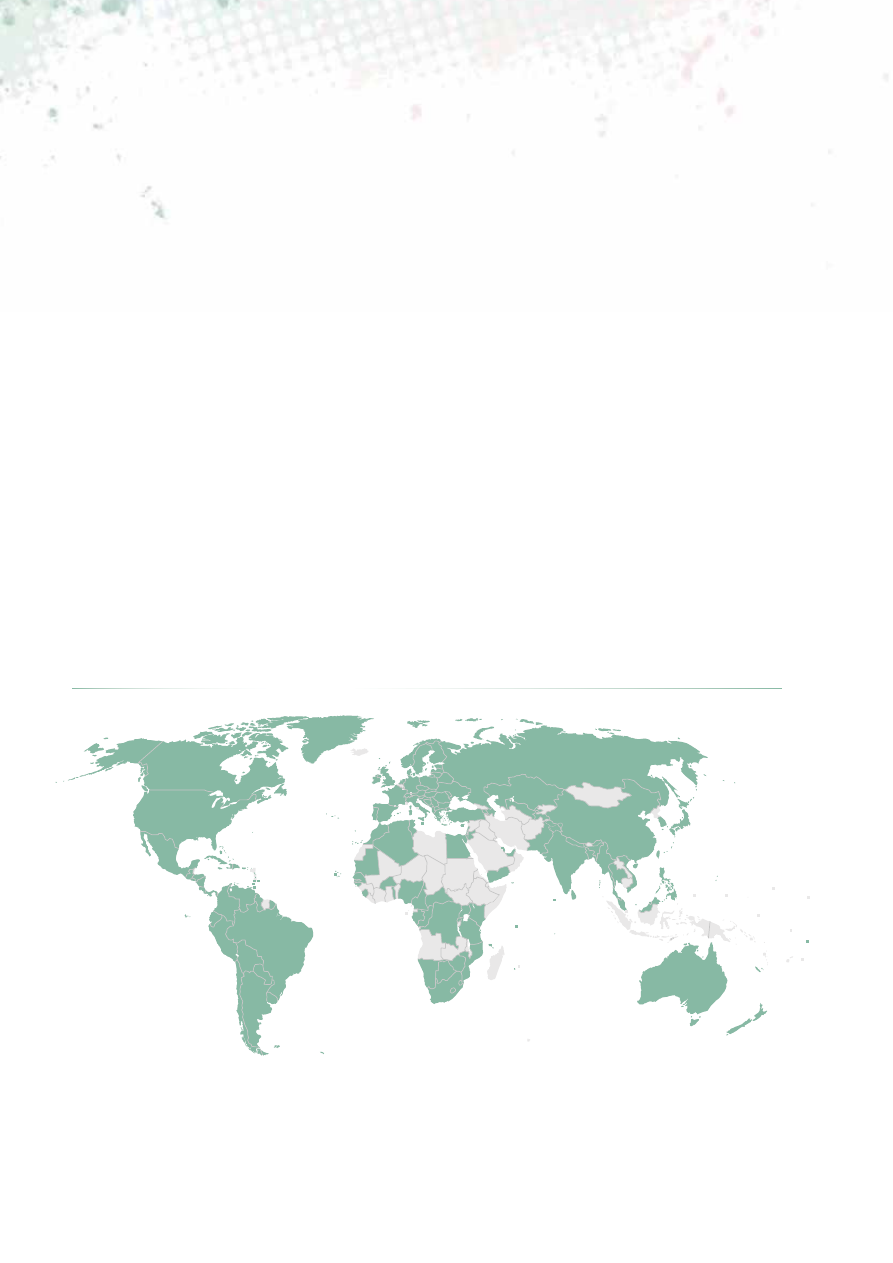
Some countries were not covered by the data collection.
These countries did not respond to the questionnaire, and
in addition, UNODC research efforts to locate official
national data on trafficking in persons did not yield any
results.
Official statistics from national authorities account for 92
per cent of the information collected for this edition of
the Global Report. Intergovernmental organizations sup-
plied 5 per cent, and non-governmental organizations the
remaining 3 per cent of the data.
DATA COVERAGE
The time period covered by the data is generally 2010-
2012. Nearly 20 countries also provided information for
Data on offenders
Data on victims
Total number of reported victims
40,177
Age reported
34,888
Gender reported
33,111
Age and gender reported
31,766
Citizenship reported
27,052
Countries of repatriation reported (for national victims trafficked abroad)
4,441
Form of exploitation reported
30,592
Gender reported according to form of exploitation
22,405
SUSPECTED PERSONS
PROSECUTED PERSONS
CONVICTED PERSONS
Total number of reported offenders
33,860
34,256
13,310
Gender reported
29,568
10,024
4,915
Citizenship reported
5,747

18
GLOBAL REPOR
T ON
TRAFFICKING IN PERSONS
2014
the year 2013, and this is normally included in the analy-
sis. Some trend presentations employ data collected for
previous UNODC reports on trafficking in persons; in
these cases, the sources are specified.
Reporting from Member States is not uniform. While the
questionnaire provides a standard set of indicators, many
countries report only partially. For example, some coun-
tries may provide citizenships for both offenders and vic-
tims, others for victims only, and yet others may only
report the gender or age profile of the victims. As a result,
the amounts of data that form the basis for the different
analyses vary. Below is a breakdown of the data that coun-
tries reported to UNODC for each indicator.
These figures represent officially detected offenders and
victims. These are persons who have been in contact with
an institution – the police, border control, immigration
authorities, social services, shelters run by the state or by
NGOs, international organizations, et cetera - as a result
of their involvement (or potential involvement in the case
of suspect offenders, and persons in countries that report
data on possible or probable victims of trafficking) in traf-
ficking in persons situations. As for any crime, there is a
large and unknown ‘dark figure’ of criminal activity that
is never officially detected. As such, the figures reported
here do not reflect the real extent of trafficking in persons,
but rather a sample of the population of victims and
offenders that is used to analyse patterns and flows of traf-
ficking in persons.
In terms of geographical coverage, information has been
collected from 128 countries for this edition of the Global
Report. Specific country-level coverage is indicated in the
table and map at the end of this section. All regions are
covered, although the amount and solidity of the data
varies between regions and subregions. Broadly speaking,
Europe and Central Asia as well as the Americas have solid
data coverage that allows for detailed analyses. Asia and
the Pacific, and particularly Africa and the Middle East,
are covered, but with significant room for improvement
in terms of data quality and quantity.
All the information that was collected for and used in this
Report is presented in the country profiles
8
which also
specify the information sources.
8
Available at the Global Report website, http://www.unodc.org/glotip.
QUALITATIVE DATA – THE ‘COURT
CASES’
As explained above, the main data source for the Global
Report is statistical criminal justice data officially reported
to UNODC by Member States. This data forms the basis
for most of the analyses presented in the Report. However,
in order to go beyond the statistics, for this edition of the
Report, UNODC invited Member States to submit five
cases of trafficking in persons that had recently been pros-
ecuted in their jurisdiction.
9
Member States used their
own discretion when selecting whether to contribute and
which cases to include. This means that cases were not
necessarily prosecuted under Trafficking in Persons Pro-
tocol-aligned legislation.
This call resulted in some 115 case briefs from nearly 30
different countries across six of the eight subregions used
in the Report. These briefs will be referred to as the ‘court
cases’ throughout the Report. About half of the cases were
submitted by countries in Europe and Central Asia, and
more than a quarter by countries in the Americas. Rela-
tively few Asian and African cases were received.
The submitted material was not uniform, and there were
often information gaps that made coding, comparison
and analysis challenging. Moreover, the case sample is
relatively small and not necessarily representative of the
global manifestations of trafficking in persons. Therefore,
it cannot be used to draw solid conclusions.
Regardless of the limitations, the wealth of information
contained in these real-world cases can enrich our under-
standing of the patterns and flows of this crime. These
cases illustrate some of the many ways in which trafficking
in persons is planned and executed in diverse locations,
and how criminal justice systems across many jurisdictions
are tackling it. Information from the court cases will be
presented alongside the quantitative data where relevant
throughout the Report. When cases are discussed, the
name of the submitting country is stated, but the names
of other countries involved in the cases have been
omitted.
9 Additionally, the UNODC Human Trafficking Case Law Database
contains more than 1,000 case briefs from nearly 100 different juris-
dictions.
Methodology
19
sample used for the analysis in each region, with Europe
and Central Asia having the highest number of victims
reported to UNODC during the period considered. The
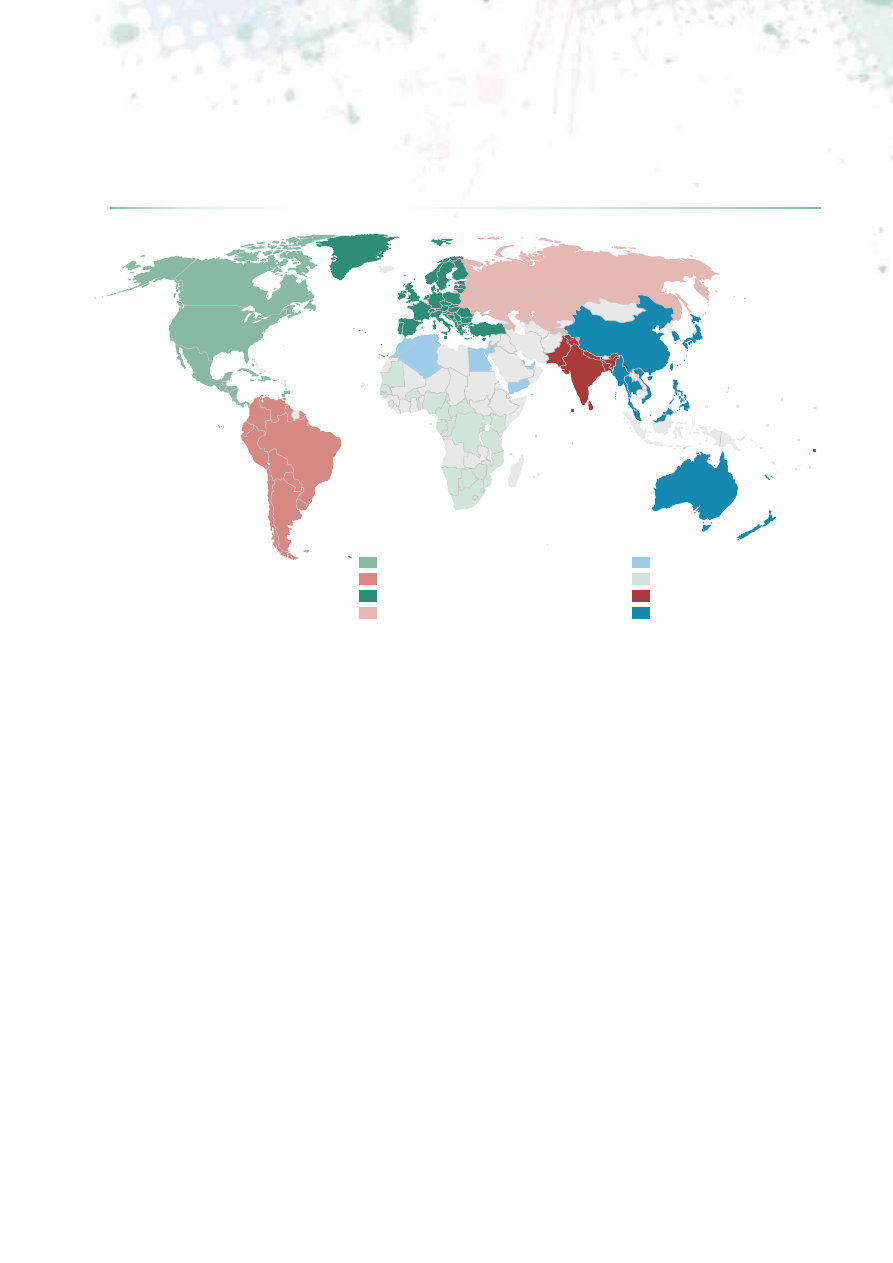
regional groupings are then further divided into two sub-
regions when data coverage allows and doing so helps
facilitate more extensive analysis. Europe and Central Asia
consists of Western and Central Europe, as well as Eastern
Europe and Central Asia. The Americas consists of North
and Central America and the Caribbean, as well as South
America. South Asia, East Asia and the Pacific consists of
South Asia as well as East Asia and the Pacific. Africa and
the Middle East consists of North Africa and the Middle
East, as well as Sub-Saharan Africa.
ORGANIZATION OF THE REPORT
The report consists of two main analytical chapters. Chap-
ter I provides a global overview of the patterns and flows
of trafficking in persons. It also includes an extensive anal-
ysis of the role of organized crime elements in the traf-
ficking crime, and an overview of the status of country-level
legislation and responses to the trafficking crime. Chapter
II analyses patterns and flows of trafficking in persons, as
well as the responses to the crime, from a regional perspec-
tive. Additionally, the country profiles, which present the
country-level information that was collected for this
Report, are available on the Report website at www.unodc.
org/glotip. These information sheets are divided into four
main sections: the country’s legislation on trafficking in
persons; suspects and investigations; victims; and any
additional information on the institutional response.
The 128 countries covered have been categorized into four
regions: Europe and Central Asia, the Americas, South
and East Asia and the Pacific, and Africa and the Middle
East. The order of presentation is based on the size of the
Countries covered by the data collection for this report
Source: UNODC.
Note: The boundaries shown on this map do not imply official endorsement or acceptance by the United Nations. Dashed lines represent undetermined
boundaries. The dotted line represents approximately the Line of Control in Jammu and Kashmir agreed upon by India and Pakistan. The final status of
Jammu and Kashmir has not yet been agreed upon by the parties. The final boundary between the Sudan and South Sudan has not yet been determined.
Sciences Po - Atelier de cartographie, 2014
20
GLOBAL REPOR
T ON
TRAFFICKING IN PERSONS
2014
Regional and subregional designations used in this report
Source: UNODC.
Note: The boundaries shown on this map do not imply official endorsement or acceptance by the United Nations. Dashed lines represent undetermined
boundaries. The dotted line represents approximately the Line of Control in Jammu and Kashmir agreed upon by India and Pakistan. The final status of
Jammu and Kashmir has not yet been agreed upon by the parties. The final boundary between the Sudan and South Sudan has not yet been determined.
A F R I C A
A N D
T H E M I D D L E E A S T
A M E R I C A S
E U R O P E
A N D C E N T R A L A S I A
S O U T H A S I A ,
E A S T A S I A
A N D T H E P A C I F I C
North and Central A
m
erica and the Caribbean
South A
m
erica
Western and Central Europe
Eastern Europe and Central Asia
North Africa and the Middle East
Sub-Saharan Africa
South Asia
East Asia and the Pacific
Sciences Po - Atelier de cartographie, 2014

Methodology
21
AFRICA AND THE MIDDLE EAST
38 states out of the 66 UN Member States
in the region
AMERICAS
29 states out of the 35 UN Member States
in the region
EUROPE AND CENTRAL ASIA
43 states out of the 53 UN Member States
in the region
SOUTH ASIA, EAST ASIA AND
THE P
ACIFIC
18 states out of the 39 UN Member States
in the region
North Africa and
the Middle East
(11 countries)
Sub-Saharan Africa
(total: 27)
North and Central
America and the
Caribbean
(total: 18)
South America
(total: 11)
W
estern and
Central Europe
(total: 34)
Eastern Europe
and Central Asia
(total: 9)
East Asia and
the Pacific
(total: 12)
South Asia
(6 countries)
Algeria
Botswana
Bahamas
Argentina
Albania
Armenia
Australia
Bangladesh
Bahrain
Burkina Faso
Barbados
Bolivia (Plurinational
State of)
Austria
Azerbaijan
Brunei Darussalam
India
Egypt
Camer
oon
Canada
Brazil
Bosnia and
Herzegovina
Belarus
China Maldives
Israel
Cabo V
e
rd
e
Costa Rica
Chile
Bulgaria
Kazakhstan
Japan
Nepal
Jor
dan
Central African
Republic
Cuba
Colombia
Cr
oatia
Republic of Mol-
dova
Malaysia
Pakistan
Lebanon
Comor
os
Dominican Republic
Ecuador
Cyprus
Russian Federation
Myanmar
Sri Lanka
Mor
occo
Democratic Repub-
lic of the Congo
El Salvador
Guyana
Czech Republic
Tajikistan
New Zealand
Qatar
Gabon
Gr
enada
Paraguay
Denmark
Ukraine
Philippines
Tunisia
Gambia
Guatemala
Peru
Estonia
Uzbekistan
Republic of Kor
ea
United Arab
Emirates
Guinea-Bissau
Haiti
Uruguay
Finland
Samoa
Y
emen
Kenya
Honduras
V
enezuela (Bolivar
-
ian Republic of)
France
Thailand
Lesotho
Jamaica
Germany
V
iet Nam
Mauritania
Mexico
Gr
eece
Mozambique
Nicaragua
Hungary
Namibia
Panama
Ir
eland
Nigeria
St. V
incent and
Gr
enadines
Italy
Republic of Congo
Trinidad and T
obago
Latvia