ВУЗ: Не указан
Категория: Не указан
Дисциплина: Не указана
Добавлен: 17.04.2021
Просмотров: 1242
Скачиваний: 2
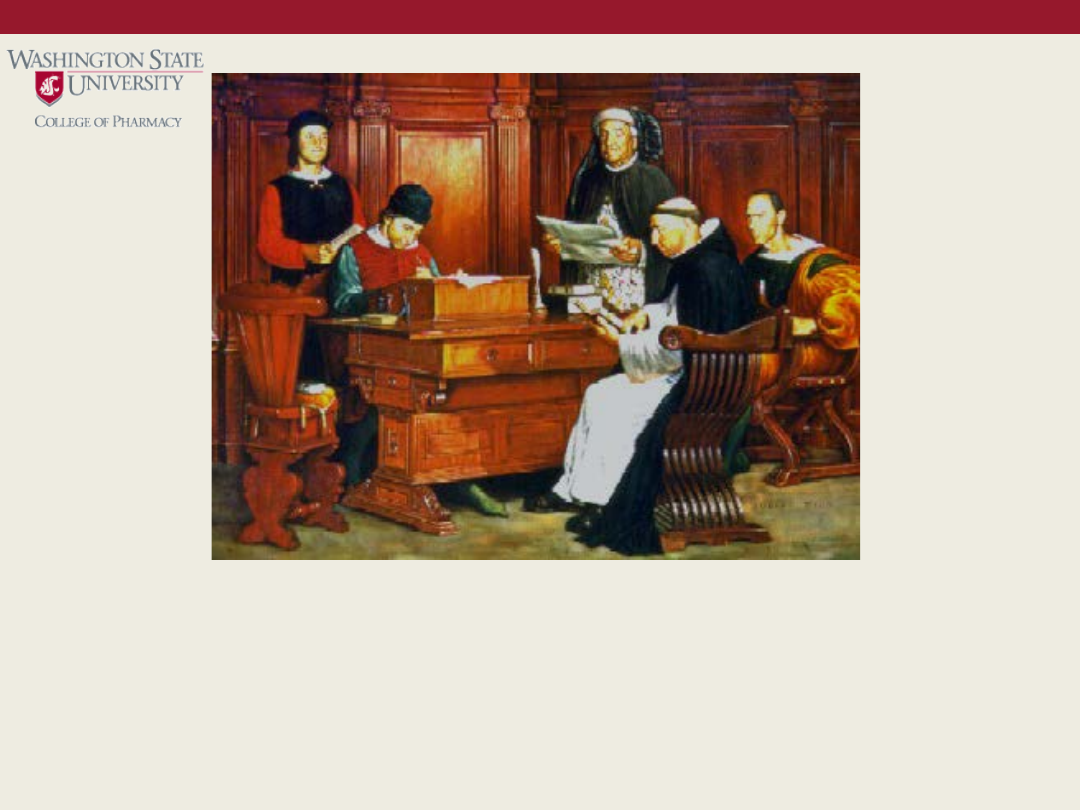
15. The First Official Pharacopeia
The idea of a pharmacopoeia with official status, to be followed by all apothecaries, originated
in Florence. The Nuovo Receptario, originally written in Italian, was published and became the
legal standard for the city-state in 1498. It was the result of collaboration of the Guild of
Apothecaries and the Medical Society - one of the earliest manifestations of constructive
interprofessional relations. The professional groups received official advice and guidance from
the powerful Dominican monk, Savonarola, (seated, foreground) who, at the time, was the
political leader in Florence.
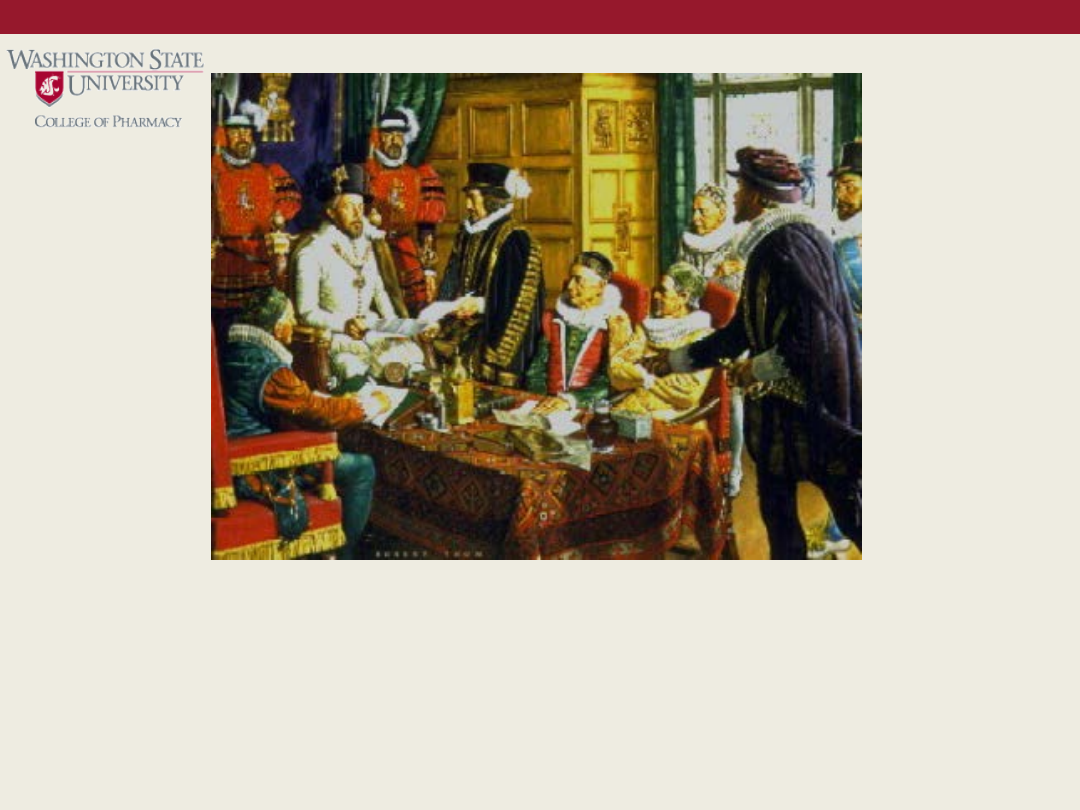
16. The Society of Apothecaries of London
Trade in drugs and spices was lucrative in the Middle Ages. In the British Isles, it was
monopolized by the Guild of Grocers, which had jurisdiction over the apothecaries. After years
of effort, the apothecaries found allies among court physicians. King James I, flanked by two
"Beefeaters" wore heavily padded attire because of fear of stabbing. Upon persuasion by the
philosopher-politician, Francis Bacon, the King granted a charter in 1617 which formed a
separate company known as the "Master, Wardens and Society of the Art and Mystery of the
Apothecaries of the City of London" over vigorous protests of the grocers. This was the first
organization of pharmacists in the Anglo-Saxon world.
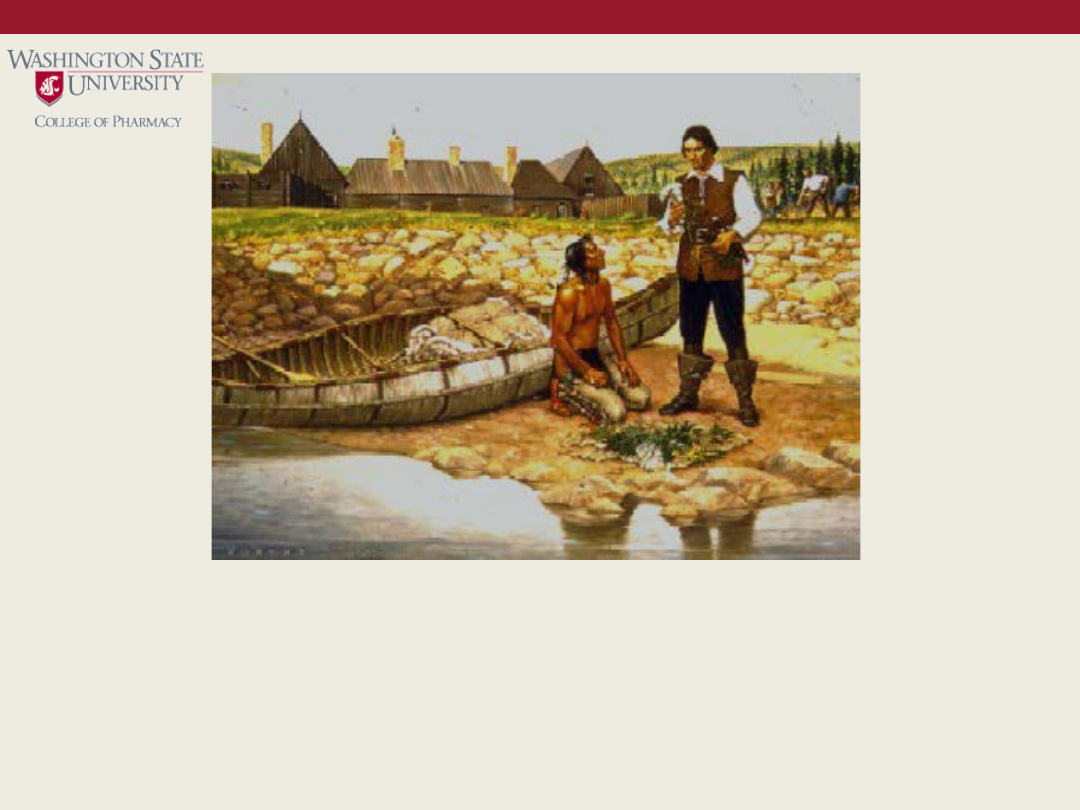
17. Louis Hébert, Apothecary to New France (Canada)
Young Parisian Apothecary Louis Hébert answered the call of the New World in 1605, when he
helped de Monts and Champlain build New France's first settlement, the Habitation, at Port
Royal (Nova Scotia, Canada). Hébert looked after the health of the pioneers, cultivated native
drug plants, and supervised the gardens. At the waterfront, he examined specimens of drug
plants offered by Micmac Indians. These included Arum, (Jack-in-the-Pulpit), Eupatorium
(Boneset), Verbascum (Mullein), and Hydrastis (Golden Seal). When the Habitation was
destroyed by the English in 1613, he returned to his Parisian apothecary shop. The lure of
Canada was strong, however, and in 1617, he and the family returned with Champlain to
Quebec, where Hébert's "green thumb" gained him lasting fame as the first successful farmer
in what is now Canada.
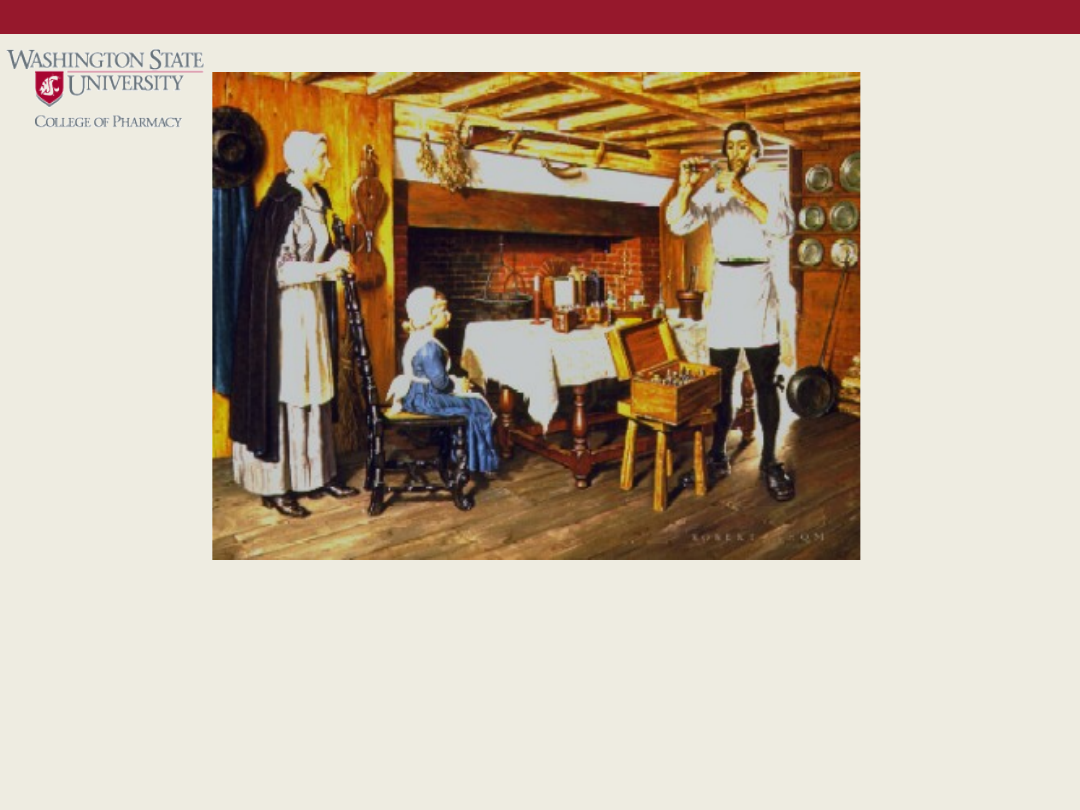
18. The Governor who Healed the Sick
Many Europeans "of quality and wealth, particularly those who were non-conformists in
religion" were attracted to the possibilities of the American Colonies. From Britain came John
Winthrop, first Governor of Massachusetts Bay Colony and founder of Boston. Governor
Winthrop, unable to induce professionals to the Colony, sought advice from English
apothecaries and physicians, and added to his small store of imported drugs those derived
from plants native to New England. In his home (about 1640), he made available as best he
could the "art and mystery" of the apothecary for his citizens.
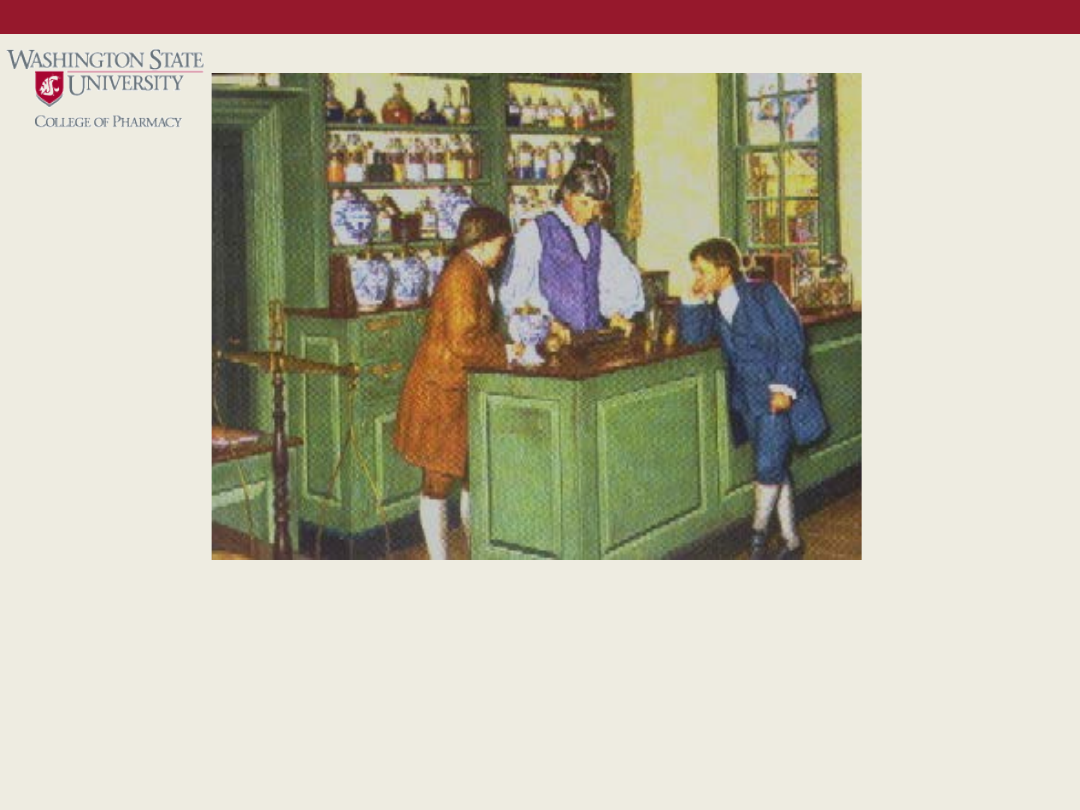
19. The Marshall Apothecary
Christopher Marshall, an Irish immigrant, established his apothecary shop in Philadelphia in
1729. During 96 years, this pioneer pharmaceutical enterprise became a leading retail store,
nucleus of large-scale chemical manufacturing; a "practical" training school for pharmacists; an
important supply depot during the Revolution; and finally, it was managed by granddaughter
Elizabeth, America's first woman pharmacist. Christopher earned the title of "The fighting
Quaker" during the Revolution; his sons, Charles and Christopher, Jr., (shown as youths with
their father, about 1754) earned individual fame and carried on his fine traditions.