ВУЗ: Не указан
Категория: Не указан
Дисциплина: Не указана
Добавлен: 17.04.2021
Просмотров: 1245
Скачиваний: 2
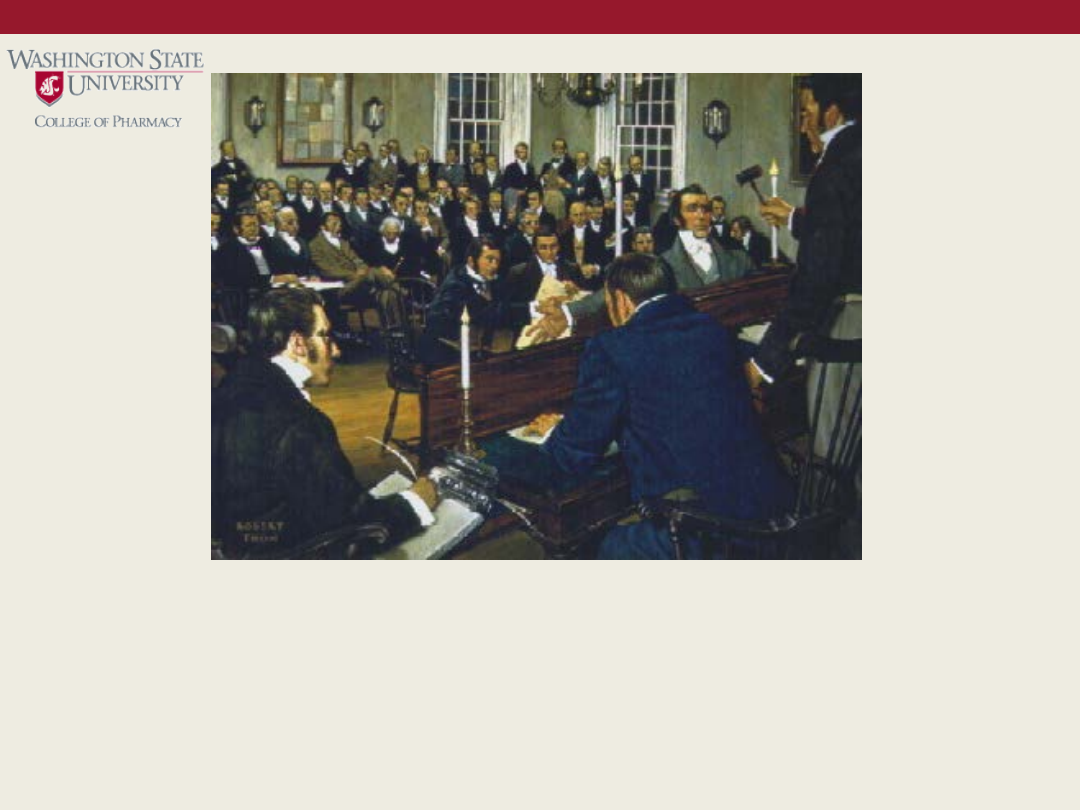
25. American Pharmacy Builds its Foundations
Faced with two major threats; deterioration of the practice of pharmacy, and a discriminatory
classification by the University of Pennsylvania medical faculty, the pharmacists of
Philadelphia held a tempestuous protest meeting in Carpenters' Hall, February 23, 1821. At a
second meeting, March 13, the pharmacists voted formation of: an association, which became
The Philadelphia College of Pharmacy; a school of pharmacy; and a self-policing board. Sixty-
eight pharmacists signed the Constitution of the first pharmaceutical association in the United
States; American Pharmacy's first educational institution, bearing the same name, opened
November 9.
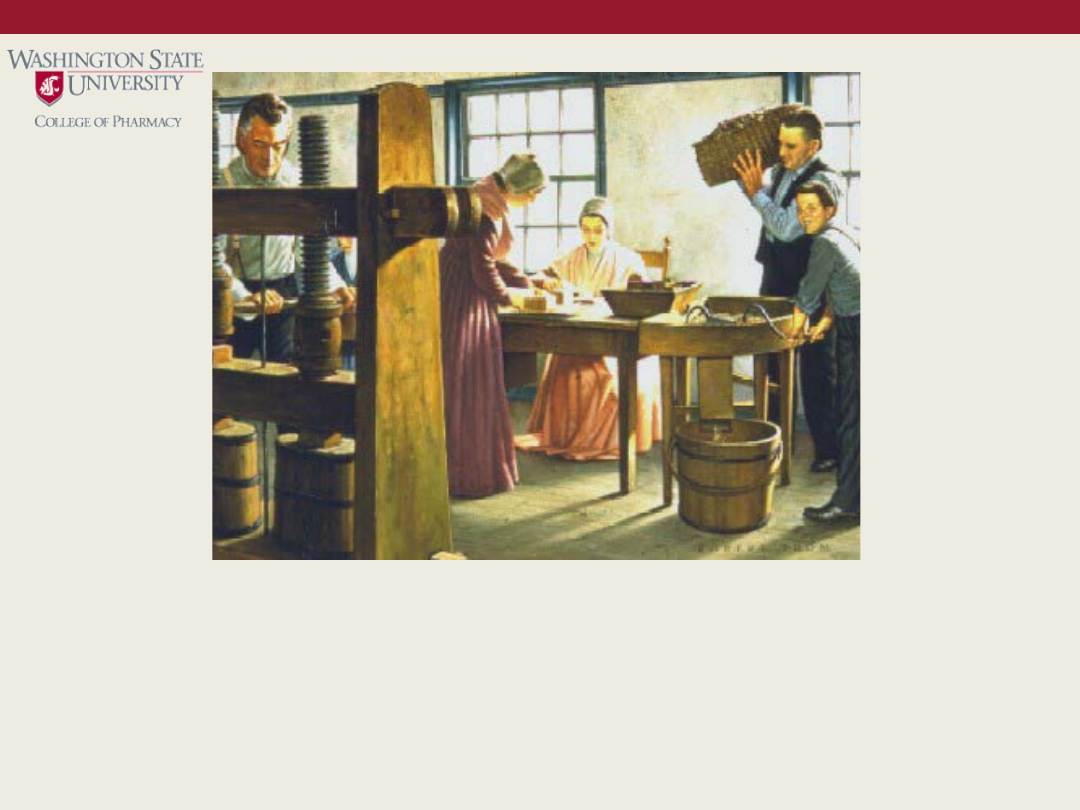
26. The Shakers and Medicinal Herbs
First U.S. industry in medicinal herbs was carried on by the United Society of Believers in
Christ's Second Appearing, commonly known as the Shakers. Begun about 1820, and
commercially important by 1830, the medicinal herb industry grew, hit its peak in the 1860's,
then waned at the close of the century. The Shakers gathered or cultivated some 200 varieties;
dried, chopped, and pressed them into "bricks"; wrapped, labeled, and sold them to
pharmacists and physicians world-wide. Tons of solid and fluid extracts also were produced.
The Shaker label was recognized for reliability and quality for more than a century.
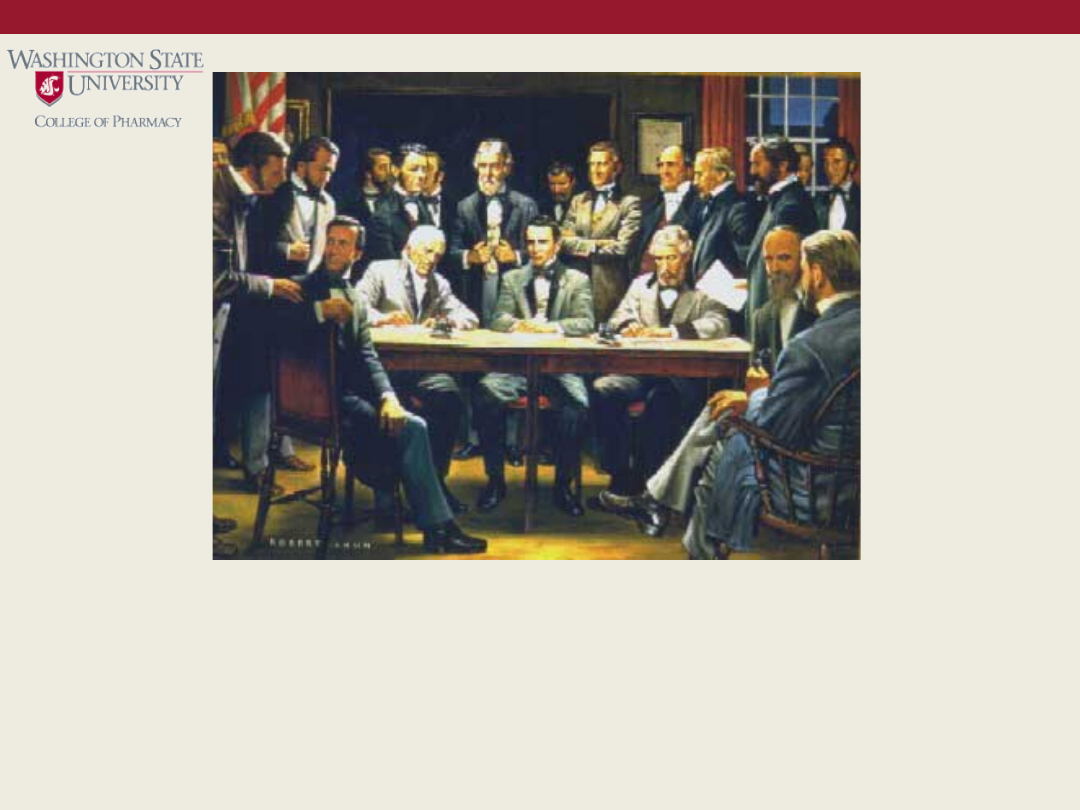
27. The American Pharmaceutical Association
Need for better intercommunication among pharmacists; standards for education and
apprenticeship; and quality control of imported drugs, led to calling of a convention of
representative pharmacists in the Hall of the Philadelphia College of Pharmacy, October 6 to 8,
1852. Under leadership of its first President, Daniel B. Smith, and first Secretary, William
Procter, Jr., the twenty delegates launched The American Pharmaceutical Association;
mapped its objectives; and opened membership to "All pharmaceutists and druggists" of good
character who subscribed to its Constitution and to its Code of Ethics. The Association
continues to serve Pharmacy today.
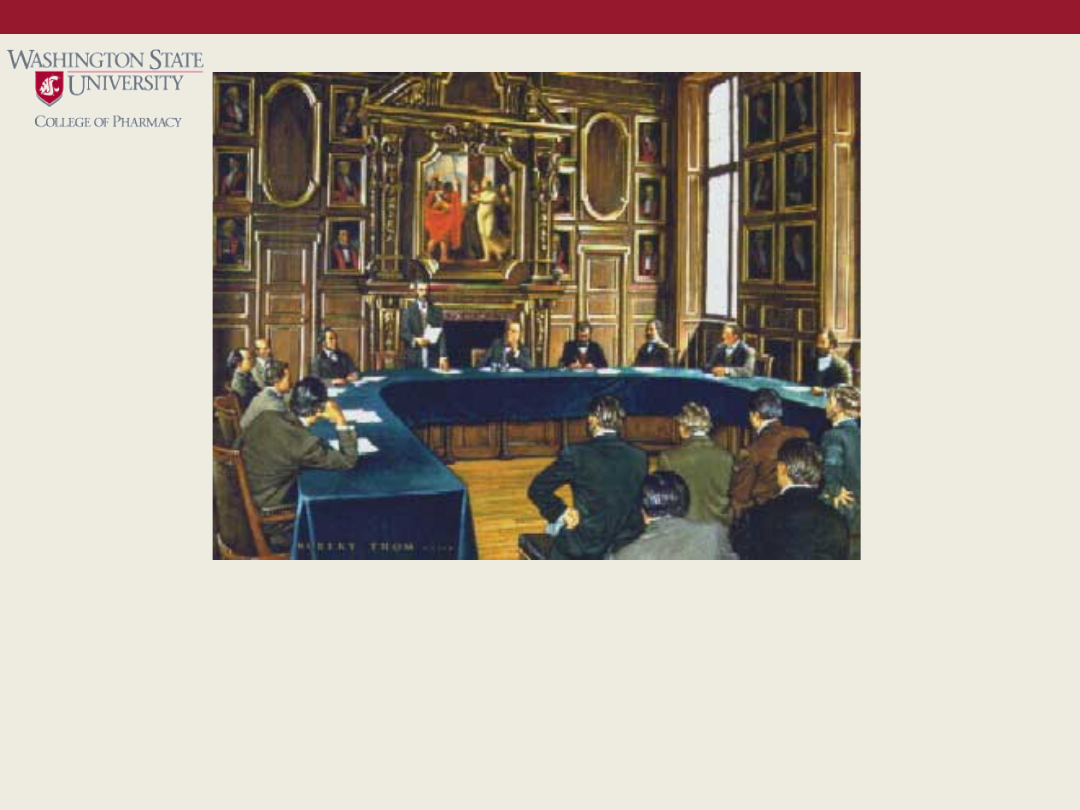
28. European and American Pharmacy Meet
Over the years, no real discord has existed between representatives of European and
American Pharmacy so far as ethical and scientific aims are concerned. But when the groups
met for the first time, at the Second International Congress of Pharmacy in Paris, France,
August 21 to 24, 1867, there was a great divergence of opinion on the subject of compulsory
limitation of pharmacies. William Procter, Jr., leading the delegates of The American
Pharmaceutical Association, told the international body that "Public opinion is in America a
forceful agent of reform," and that, in his country, "there is not the slightest obstacle toward a
multiplication of drug stores save that a lack of success." His declaration vividly documented
the American Way of Pharmacy.
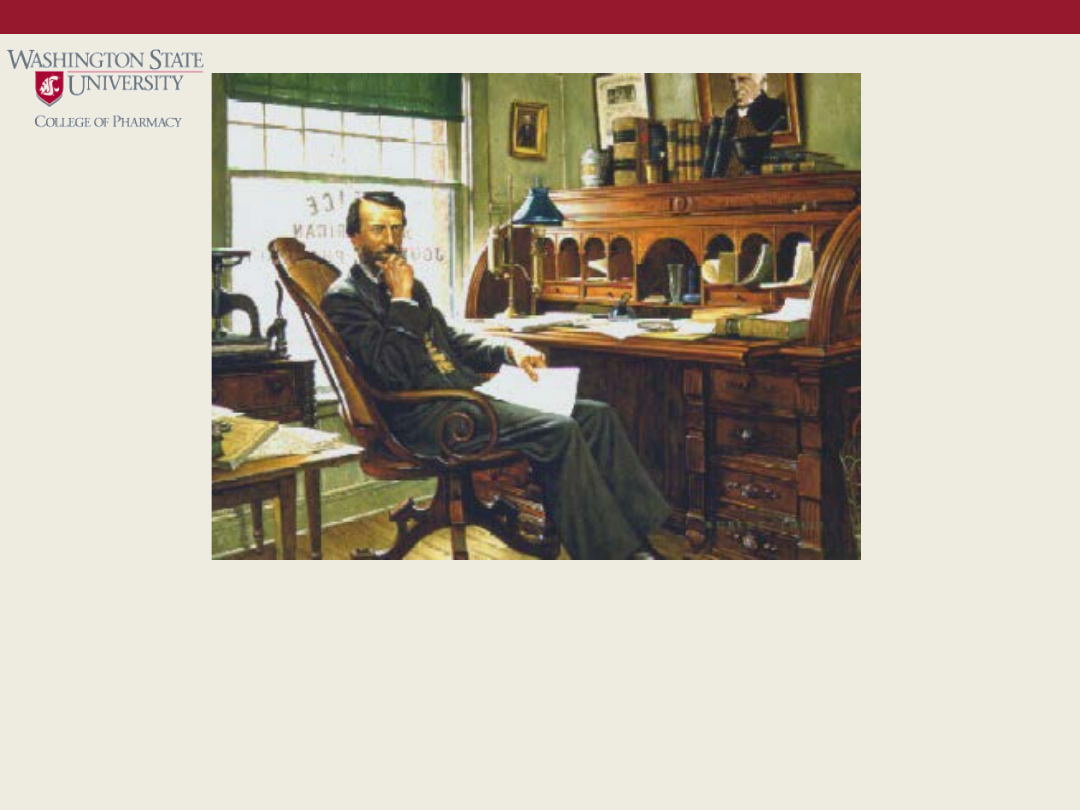
29. The Father of American Pharmacy
Rarely has a titular distinction been so deserved. William Procter, Jr., graduated from The
Philadelphia College of Pharmacy in 1837; operated a retail pharmacy; served the College as
Professor of Pharmacy for 20 years; was a leader in founding The American Pharmaceutical
Association; served that organization as its first secretary; later, as its president; served 30
years on the U.S.P. Revision Committee; was for 22 years Editor of the American Journal of
Pharmacy. In 1869, though retired, Procter continued to edit the Journal in a small publication
office located beside the College's Tenth Street building. From retirement he returned to
P.C.P.'s chair of Pharmacy in1872; literally died "in the harness," in 1874.