ВУЗ: Не указан
Категория: Не указан
Дисциплина: Не указана
Добавлен: 13.10.2020
Просмотров: 1656
Скачиваний: 1

Global overview
I
47
profit. The families exploiting domestic help in Africa or
housing
restavek
children in the Caribbean are benefiting
from the labour of these children. The debt bondage
schemes behind some West African or East Asian traffick-
ing networks are leveraging the migration dream of the
victims to exploit them in forced labour or in the com-
mercial sex market. Trafficking in persons is motivated by
profit maximization and organized by traffickers trying
to maximize benefits and minimize costs. The higher the
profits, the greater the economic incentives to conduct
the trafficking crime.
There are always economic gains involved in exploiting
people, domestically or abroad. At the same time, exploit-
ing them in relatively richer countries (in relation to the
origin country) is economically more advantageous
because the services the traffickers demand from the vic-
tims have a higher monetary value there.
In the case previously discussed, about a local national
exploiting his girlfriend on his own in Canada, the author-
ities estimated that this trafficker profited about
US$180,000 during the 8 months of the victim’s exploi-
tation in the commercial sex market. This means that the
trafficker was able to earn on average $750 per day
through this exploitative business. In Denmark, the
national authorities reported that a victim from a country
in the Balkans who was forced into sexual exploitation by
two compatriots earned them at least $50,000 over 18
months. The exploitation of the 11 South-East Asian vic-
tims who were trafficked to Australian brothels lasted for
some two years and resulted in a net profit of between
US$55,000-65,000, at a minimum. Such amounts would
be all but impossible to earn from prostitution in poorer
countries. The authorities in the Philippines have reported
that victims of sexual exploitation in the Philippines were
forced to serve their clients for a price of US$10-20 per
time. The same price level was reported by the Chilean
authorities.
Although the data is scarce and anecdotal, it is nonetheless
clear that the business of sexual exploitation is more prof-
itable if operated in richer countries. This is also illustrated
by the fact that the prices traffickers pay for women to
exploit in the sex industry varies in line with whether the
trafficking is conducted in richer or poorer countries.
According to information provided by the Japanese
authorities, the price of women in trafficking in persons
cases ranges around US$20,000. In Slovenia, the authori-
ties reported values around $4,000. In Argentina, the price
for a woman to be exploited in commercial sex ranges
around $400.
20
The price of women may not only be a
direct function of the profit potential as the perceived risk
associated with carrying out the crime also plays a role, as
does the demand for sex services. Nonetheless, broadly
speaking, the richer the country, the higher the profits the
exploitation business can generate, and the more the
exploiter is willing to invest for a victim to be exploited
there.
The same logic applies to trafficking for labour exploita-
tion. The average legal salary of a labourer in the construc-
tion industry in the United States is about US$2,200 per
month.
21
In Central America, such work is legally remu-
nerated at $60, on average, per month, and farmers in the
same area are paid around $30 per month.
22
Even when
selling the work of his or her victims for half of the legal
salary, the margins the Central American traffickers will
be able to generate by exploiting fellow citizens in the
construction sector in North America are far higher than
in the origin countries, particularly when the living costs
are reduced to the minimum by providing sub-standard
conditions. Thus Central American traffickers want to
move their victims and exploit them in North America
where the profits can be much higher.
There are also significant differences in the values of the
labour markets in Central Europe or the Balkans in com-
parison to Western European countries. According to legal
standards, a labourer in agriculture or in the construction
sector may be paid around 250 euros per month in the
Balkans, 100 euros in Eastern Europe and 1,500 euros in
Western Europe.
23
While traffickers do not assess where
to traffic their victims on the basis of legal salary levels,
such levels nonetheless give an indication of the value of
the labour extorted from the victims of trafficking in dif-
ferent countries, and thus, where it is more economically
profitable to exploit the victims.
The previously discussed Canadian case of the well-organ-
ized criminal group exploiting Central European victims
in forced labour is illustrative. The victims were forced to
work long hours in the construction sites in Canada; made
harder by living under the threat that their families may
20 The GDP per capita for these countries was: Japan: US$38, 492
(2013); Slovenia: $22,059 (2012); and Argentina: $14,760 (2013).
(World Bank, World Development Indicators, GDP per capita in
current US$).
21 See International Labour Office (ILO), LABORSTA database on
wage statistics, available at: http://laborsta.ilo.org/STP/guest.
22 Ibid.
23 Ibid.

GLOBAL REPOR
T ON
TRAFFICKING IN PERSONS
2014
48
have suffered violence back in Europe. The revenues
derived by the work of these victims were kept by the traf-
fickers, and the value of their labour was much higher
than it would have been in Central Europe, about five
times more.
24
Also, the investments of traffickers are lim-
ited to one-off travel costs of victims and local cost of
living (minimized by forcing the victims to live in inad-
equate accommodation). As a consequence, the profits
the group generated by exploiting the victims in Canada
were much higher than what could have come from
exploitation in their origin countries. However, the traf-
fickers miscalculated the risks and are now facing jail sen-
tences in Canada.
The picture is similar in the case of the six victims from
the Balkan area who were exploited in forced labour in
the cleaning sector in Austria. The authorities calculated
that the work of each victim generated profits of about
2,000 euros per month for the traffickers. The exploita-
tion continued for eight months until the victims were
rescued and the traffickers arrested and later convicted.
This exploitative business guaranteed the traffickers at
least 100,000 euros in total. If the same exploitative busi-
ness had been conducted in the Balkans, the revenues
would have been ten times less than those generated in
Austria.
25
The services provided by the victims, whether he or she
is exploited in forced labour, domestic servitude or sexual
exploitation, are sold at higher prices in richer countries
where the demand for such services and labour is also
higher
.
Also, richer countries may offer some ‘advantages’
to the traffickers in terms of the victims’ potentially
increased vulnerability to control and coercion, as factors
such as language and migration status (often illegal) may
prevent victims from reporting to national authorities.
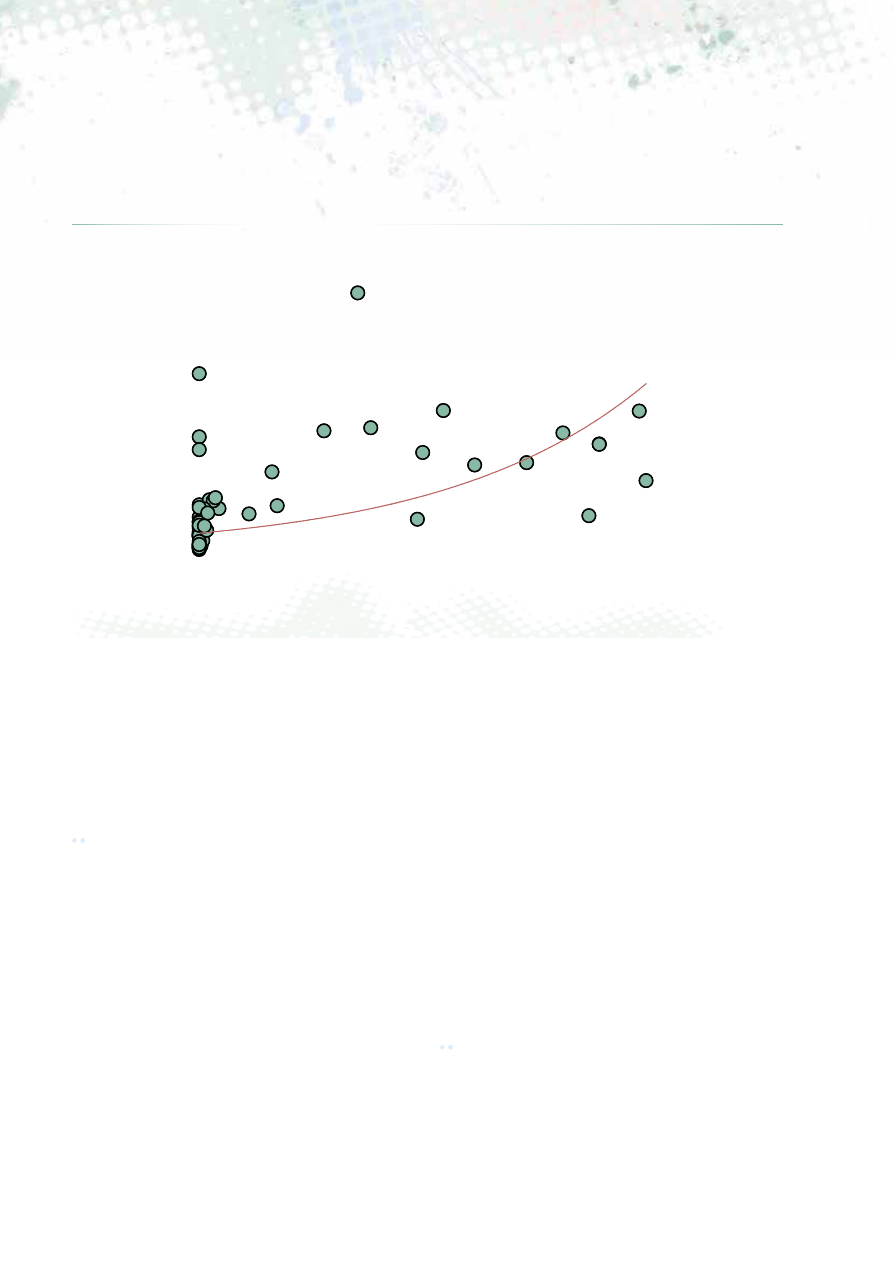
For these reasons, as shown in the section on trafficking
flows, the rich regions of the world attract more transre-
gional trafficking than the poorer parts of the word. A
positive correlation between the gross domestic product
(GDP) per capita and the share of transregional traffick-
ing shows that richer countries have larger shares of such
trafficking, and this is true also when the analysis focuses
24 According to ILO LABORSTA (op.cit.), the average monthly pay for
a laborer in the construction industry in Canada was around 2,000
euros per month for the period considered.
25 According to ILO LABORSTA, the monthly pay for a laborer in the
Balkans for services in hotels and restaurants was around 220 euros
per month for the period considered.
on individual regions, or when controlling for develop-
ment levels.
26
This does not mean that there is less trafficking in poor
countries, or that the victims exploited in poor countries
suffer less. Poor countries may attract more or fewer vic-
tims than richer ones. However, in poorer countries, the
geographical scope of the trafficking is usually limited to
domestic or subregional trafficking, while the richer coun-
tries see victims trafficked in from a larger number of
origin countries from different regions. The ‘global north’
attracts victims from all over the world. Traffickers in
poorer countries have an economic interest of moving
victims there - to Western Europe, North America or the
Middle East - while there is little to gain from moving
victims in the opposite direction.
In addition to economic factors, there are also other con-
ditions that have an impact on the directions of trafficking
flows. These include issues related to job markets, migra-
tion policy, regulation, prostitution policy, legal context
and law enforcement and border control efficiency. As
indicated before, to traffic victims internationally is com-
plicated and may involve significant risks depending of
the measures implemented by countries along the traf-
ficking route. Relatively few traffickers are able to organize
themselves well enough to conduct effective transregional
trafficking activities.
A trade-off between organization
and profits
A statistical analysis of the data on victims detected
between 2010 and 2012 shows that geographical proxim-
ity between a country of origin and a country of destina-
tion is strongly correlated with the intensity of the
trafficking flows between them, also in rich parts of the
world.
27
In general, the closer two countries are, the more
victims are trafficked along the flow between them.
The same data show that another factor to consider in
relation to cross-border trafficking flows is organized
crime. A correlational analysis between the level of organ-
26 The share of the victims trafficked from outside of the region of detec-
tion for the period 2010-2012, and the GDP per capita for the year
2011 show a significant and strong positive correlation (pearsons coeff
0.729; sign 0.000).
27 An analysis of variance (ANOVA) among the shares of citizenships of
foreign victims of trafficking detected at destination divided in two
groups, victims from within the region and from outside the region,
shows trafficking from within the region is more than three times
higher than transregional trafficking.
Global overview
I
49
FIG. 25:
Correlation between the share of transregional trafficking victims detected and GDP
per capita, recorded in the countries of destination
Source: UNODC elaboration on national data.
ized crime
28
measured at the origin country level, and the
share of citizens of these countries detected in the major
destinations of transregional trafficking (Western Europe,
North America and the Middle East) proved significant
and positive.
29
This means that the higher the prevalence
of organized crime in the origin countries, the more vic-
tims of these origin countries are detected in the major
destinations.
28 Measured by the Composite Organized Crime Index (COCI) (Van
Dijk, J.,
The World of Crime,
Sage Publications, 2008, pp. 162-167)
and the organized crime perception index referring to the year 2013
of the World Economic Forum (Schwab, K.,
The Global Competitive-
ness Report 2013–2014,
World Economic Forum, 2013).
29 For Western and Central Europe, the share of the citizenships among
victims of cross border trafficking for the period 2010-2012, and
the Organized Crime Index COCI register a significant and positive
correlation (pearsons coeff 0.577; sign 0.000), confirmed by using
the World Economic Forum perception index 2013 (pearsons coeff
-0.402; sign 0.000). For North and Central America, the share of the
citizenships among victims of cross border trafficking from outside
of the region for the period 2010-2012, and the Organized Crime
Index COCI register a significant and positive correlation (pearsons
coeff 0.379; sign 0.007), confirmed by using the World Economic
Forum perception index 2013 (pearsons coeff -0.302; sign 0.014).
When intraregional trafficking is considered this last one is stronger
(pearsons coeff -0.742; sign 0.001). For the Middle East, the share
of the citizenships among victims of cross border trafficking for the
period 2010-2012, and the Organized Crime Index COCI registers a
significant and positive correlation (pearsons coeff 0.564; sign 0.000),
and it is much stronger if single regions of origin are considered.
It is important to note that these results only refer to cross-
border trafficking. This statistical link does not exist
between domestic trafficking and organized crime.
Domestic trafficking happens everywhere, and it seems
to be unrelated to the level of organized crime.
The relationship between organized crime and cross-bor-
der trafficking flows is also confirmed by linear regressions
that combine these indicators. The origins of cross-border
trafficking towards North America, Central America and
the Caribbean is an exponential function of the level of
organized crime in these origin countries.
30
The more the
origin countries are affected by organized crime, the more
outward trafficking there is from these countries towards
North and Central America and the Caribbean.
Compared to the results emerging for North and Central
America and the Caribbean, a stronger relationship is
found between organized crime and the origins of traf-
ficking towards Western and Central Europe. The higher
30 ‘TiP to N.Am’: Origins of cross border trafficking detected in North
and Central America and the Caribbean, in terms of share of victims
detected by citizenship detected there. ‘OCWEF’ : Organized Crime
Perception Index measured by the World Economic Forum in Schwab,
K.
The Global Competitiveness Report 2013–2014,
World Economic
Forum. Linear regression: Ln(TiP to N.Am)= -610*OCWEF-2.882.
(Rsq. : 0.111; Sig.0.041; OCWEF Sig 0.041; Cost Sig 0.031).
South Africa
Bahrain
United Kingdom
Qatar
Canada
Costa Rica
Israel
Finland
United Arab Emirates
0
10,000
20,000
30,000
40,000
50,000
60,000
70,000
80,000
90,000
0%
10%
20%
30%
40%
50%
60%
70%
80%
90%
100%
GROSS D
O
ME
STIC
P
R
ODUC
T
PE
R C
A
PITA
(
2
011)
Share of victims detected originating from outside the region

GLOBAL REPOR
T ON
TRAFFICKING IN PERSONS
2014
50
the origin country’s level of organized crime, the more
victims who are citizens of that country are detected in
these parts of Europe. The relationship is significant for
intra-regional trafficking (considering only origin coun-
tries in Western and Central Europe), and transregional
trafficking (considering only non-European origins traf-
ficked to Western and Central Europe).
31
The presence of organized crime alone cannot explain why
certain trafficking flows originate from certain countries
and are directed towards other countries, but statistics
show that such presence may cause a significant part of
the flows.
Broader discussions of cross-border trafficking flows, simi-
larities and analytical suggestions can be found within the
field of migration studies. The Gravity Models of Migra-
tion
32
consider the spatial mobility of a population as an
interaction between two territorial units.
The Gravity Models of Migration theorized that migra-
tion flows between two countries is a function of the
demographical power of the countries of origin and des-
tination; the larger the populations, the more intense the
migration flow between the two countries. The model also
states that the more distant the two countries, the less
intense the flows between them, thus geographical prox-
imity is an inverse function of population mobility. This
is in line with the statistical results described in the first
paragraph of this section.
This intuitive finding was later elaborated upon by other
social scientists who, considering different intervening
factors, developed more complex migration gravity
models, aimed at explaining the migration flows between
two territories.
33
It is possible to apply the basic gravity model to human
trafficking flows if the model includes the organized crime
factor. Considering the cross-border flows detected in
Western and Central Europe between 2010 and 2012,
about half can be explained by the population sizes of the
31 ‘TiP to Eu’: Origins of cross border trafficking detected in West-
ern and Central Europe, in terms of share of victims detected by
citizenship detected there. COCI, Van Dijk, op. cit. Linear regres-
sion for intra-regional trafficking: Ln(TiP to Eu)= 0.075*COCI-
11.304 - (Rsq. : 0.470; Sig: 0.000) - COCI (Sig 0.000); Cost (Sig
0.000). Linear regression for trans-regional trafficking: Ln(TiP to
Eu)= 0.091*COCI-9.627 - (Rsq. : 0.435; Sig: 0.002) - COCI (Sig
0.002); Cost (Sig 0.000).
32 Stewart, J. Q.,
An inverse distance variation for certain social influences,
Science, 93, 1941: 89-90.
33 Ibid; Haynes, K. E., and Fotheringham, A. S.,
Gravity and Spatial
Interaction Models,
Sage Publications, 1984.
countries of origin, by the distance of these countries to
the destination countries, and by their levels of organized
crime.
34
The larger the population, the closer to the des-
tination areas, and the more organized crime within the
origin country, the bigger the trafficking flow from that
country towards Western and Central Europe.
This analysis shows that human trafficking flows are also
determined by organized crime applied to the migratory
context. It is clear that this model just explains 50 per cent
of the cross-border trafficking flows. Elements such as
criminal justice and institutional responses, as well as
socio-economic factors, should be considered in order to
have a complete mapping of the determinants of traffick-
ing flows.
In summary, the results of a qualitative analysis of some
of the court cases, in combination with a statistical analysis
of the profile of the victims detected in the 128 countries
considered in this Report, suggest that domestic and traf-
ficking between geographically proximate countries are
common forms of trafficking globally. These forms are
characterized by relatively small numbers of victims who
are trafficked within one country or between neighbour-
ing countries and they do not usually need much organi-
zation. The investments and profits are limited and they
are often organized by one or a few traffickers; for exam-
ple, a couple.
The same analysis also shows that when regional or tran-
sregional trafficking flows do occur, they generally move
from poorer towards richer countries, where the profits
from the exploitative business are normally much higher
than in the poorer countries. The number of victims traf-
ficked from richer towards poorer countries is very lim-
ited. In these cases, as a general pattern, traffickers in the
origin country are citizens of that country and in the des-
tination country they are either citizens of the destination
country or fellow citizens of the victims, or perhaps both,
working in coordination to exploit the victims.
Another characteristic of longer distance trafficking oper-
ations is that they tend to involve several victims who need
34 ‘TiP to Eu’: Origins of cross border trafficking detected in Western
and Central Europe, in terms of share of victims detected by citizen-
ship detected there. ‘COCI’ : Composite Organized Crime Index
measured by Van Dijk 2010. ‘Dist to EU’ : the geographical distance
between the countries of origins and the geographical Centre of West-
ern and Central Europe. ‘Pop’; the population size of the countries
considered; The multivariate regression for cross border traffick-
ing is the following; Ln(TiP to Eu)= 0.656*COCI+0.3*Ln(POP)-
0.624*Dist to EU. (Rsq. : 0.464; Sig: 0.000) - COCI (Sig 0.000);
Dist to EU (Sig 0.000); POP (Sign 0.037); Cost (Sig 0.000).

Global overview
I
51
to cross one or more borders. This means that they also
require significant skills, capital and organization, partic-
ularly when the border crossing is restricted. When such
operations are successful, it is usually because they are run
by a large, transnational and well-organized criminal net-
work. A sizable criminal organization is able to traffic
more victims across longer distances and towards more
profitable destinations, and to exploit them there for a
longer period of time.
On this basis, a typology of three different trafficking types
can be drawn up. The types have some features in common
as the categorizations are broad. Few trafficking cases
belong squarely in one category. This typology – which
can be tailored to local circumstances – can be helpful in
understanding the organization of trafficking in persons
and what are some of the common features of this crime.
THE RESPONSE TO TRAFFICKING
IN PERSONS
Legislation on trafficking in
persons:
Progress, but many people
remain without full legislative protec-
tion
The Protocol to Prevent, Suppress and Punish Trafficking
in Persons, Especially Women and Children, which sup-
plements the United Nations Convention against Trans-
national Organized Crime, entered into force in December
2003. The impact of the Protocol on the national legisla-
tive responses around the world has been very strong. In
November 2003, almost two thirds of countries did not
have a specific offence that criminalized trafficking in per-
sons, or even just some forms of this crime. At the end of
the year 2006, three years after the Protocol entered into
force, this share had dropped to 28 per cent. Now, in
2014, 5 per cent of countries do not have specific legisla-
tion that criminalizes trafficking in persons.
As of August 2014, of the 173 countries considered for
this analysis, 146 (85 per cent) criminalize all aspects of
trafficking in persons explicitly listed in the UN Traffick-
ing in Persons Protocol.
About 10 per cent of the covered countries have partial
legislation. These countries do criminalize trafficking in
persons specifically, but their legislation may only cover
some victims (for example, only children, women and/or
foreigners) or certain forms of exploitation (for example
sexual exploitation).
5 per cent of the countries considered (9 of 173) do not
have any offence in their legislation that specifically crimi-
nalizes trafficking in persons, or even just some forms of
it. It is likely that instances of trafficking may be prose-
cuted in these countries by leveraging other articles of the
criminal code, such as slavery, forced labour, pimping,
child stealing or others (which may also happen in coun-
tries that have specific legislation on trafficking in per-
sons). However, it is very unlikely that these instruments
are tailored to address the issue of victim assistance. More-
TABLE 1:
Typology on the organization of trafficking in persons
SMALL LOCAL OPERATIONS
MEDIUM SUBREGIONAL OPERATIONS
LARGE TRANSREGIONAL OPERATIONS
Domestic or short-distance trafficking
flows.
Trafficking flows within the subregion or
neighboring subregions.
Long distance trafficking flows involving
different regions.
One or few traffickers.
Small group of traffickers.
Traffickers involved in organized crime.
Small number of victims.
More than one victim.
Large number of victims.
Intimate partner exploitation.
Some investments and some profits
depending on the number of victims.
High investments and high profits.
Limited investment and profits.
Border crossings with or without travel doc-
uments.
Border crossings always require travel
documents.
No travel documents needed for
border crossings.
Some organization needed depending on
the border crossings and number of victims.
Sophisticated organization needed to move
large number of victims long distance.
No or very limited organization required.
Endurance of the operation.