ВУЗ: Не указан
Категория: Не указан
Дисциплина: Не указана
Добавлен: 13.10.2020
Просмотров: 1653
Скачиваний: 1
GLOBAL REPOR
T ON
TRAFFICKING IN PERSONS
2014
62
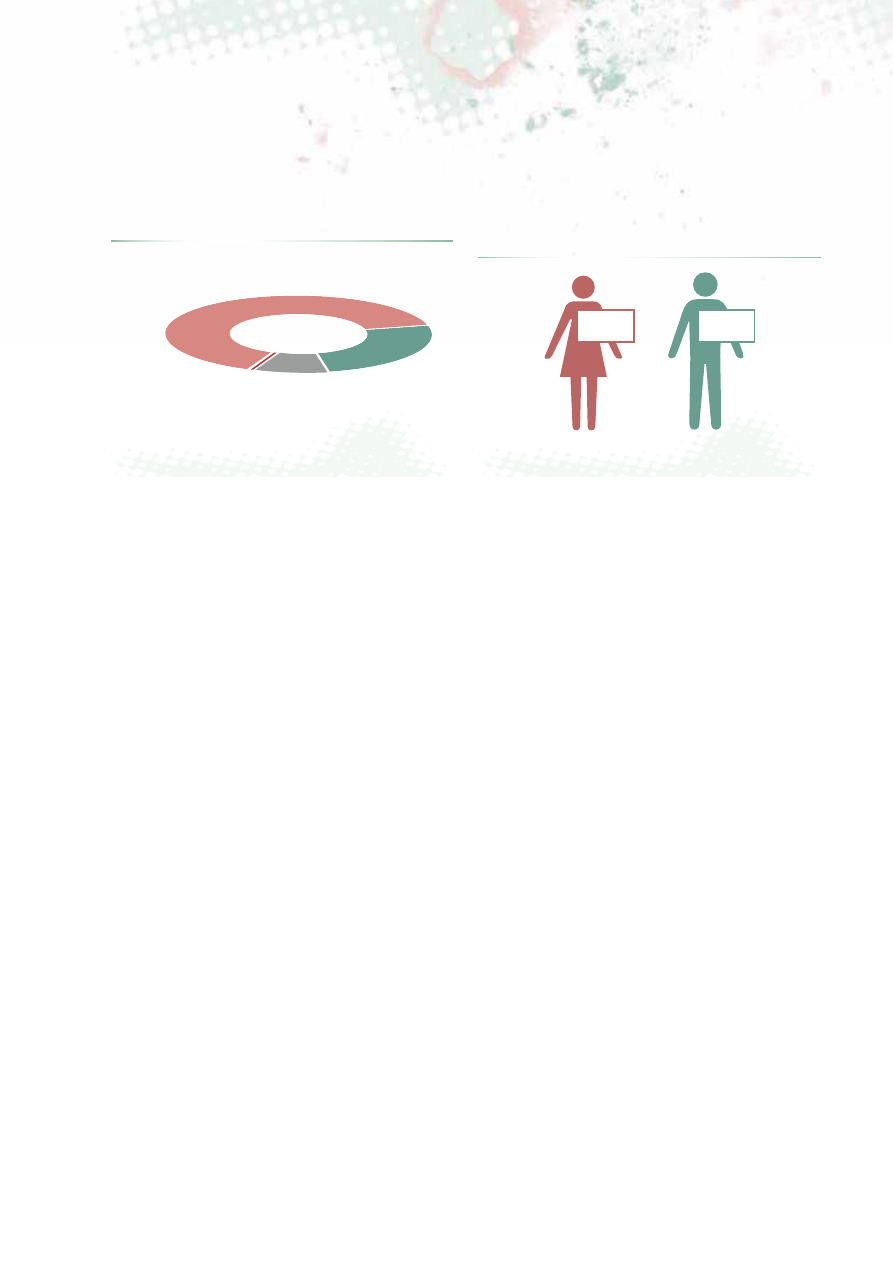
The large share of victims trafficked for sexual exploita-
tion implies that forced labour is less commonly detected
in this subregion. 25 per cent of the victims detected in
Western and Central Europe were exploited in forced
labour. About 30 per cent of these victims were females,
while about 70 per cent were males.
In Western and Central Europe, victims exploited in
‘other’ forms of trafficking are relatively frequently
detected. Some 9 per cent of victims were trafficked for
purposes other than sexual exploitation or forced labour.
For instance, about 1.5 per cent of the detected victims
were trafficked for begging, while more than 1 per cent
were trafficked for the purpose of committing (often
petty) crime. Other types of exploitation in this category
include forced marriages, welfare fraud, children exploited
for the production of pornographic material, as well as
mixed sexual and labour exploitation.
As far as the gender distribution for trafficking for ‘other’
purposes is concerned, for victims detected in Western
and Central Europe between 2010 and 2012, female vic-
tims account for some 72 per cent of the victims of this
type of trafficking.
Trafficking flows
The most striking feature of trafficking in persons in West-
ern and Central Europe is the diversity of trafficking flows
associated with this subregion. As mentioned before, it is
a significant origin and destination area simultaneously.
From an origin point of view, victims from this subregion
are largely trafficked within the subregion, mainly from
Central Europe and the Balkans towards the other coun-
tries, and in terms of domestic trafficking.
As a destination area, Western and Central European
countries detected victims of more than 130 different citi-
zenships, displaying a vast variety of trafficking flows
directed to this part of the world. The victims detected
here between 2010 and 2012 were mainly from within
the subregion, but also from a broad range of other coun-
tries. In other words, while the subregional nature of traf-
ficking in persons is the key feature, at the same time,
Western and Central Europe is also a significant destina-
tion area for victims from elsewhere.
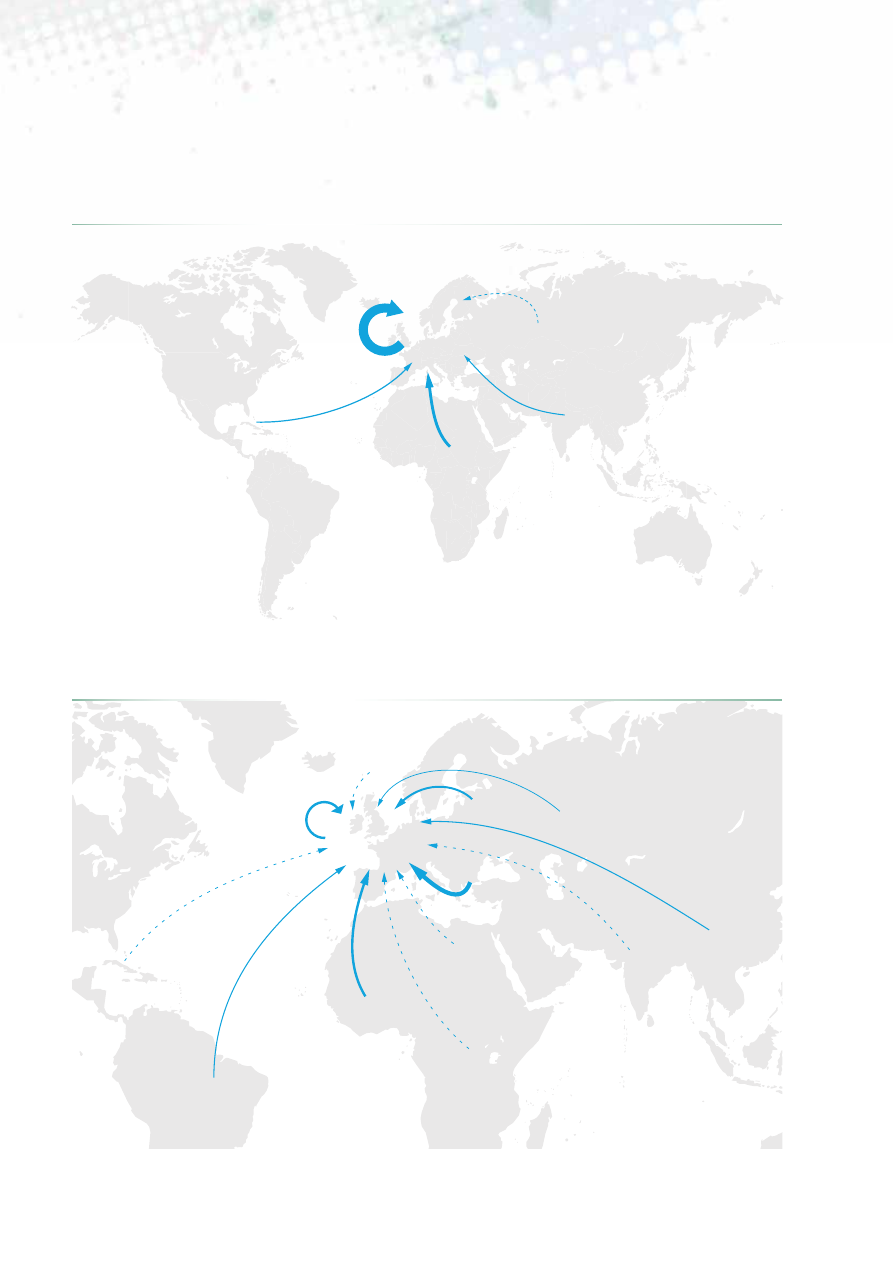
Cross-border trafficking originating from within the sub-
region accounts for the largest share of detected victims,
nearly 40 per cent. Victims from approximately 40 West-
ern and Central European countries have been detected
in the subregion. The vast majority of these victims come
from countries in the Balkans. Victims from the Balkan
area have been identified in significant numbers in all
parts of Western and Central Europe.
Domestic trafficking accounts for about one fourth of the
total number of victims detected in Western and Central
Europe. Added up, the shares of subregional cross-border
trafficking and domestic trafficking show that more than
six in 10 victims detected in Western and Central Europe
are citizens of countries within the subregion.
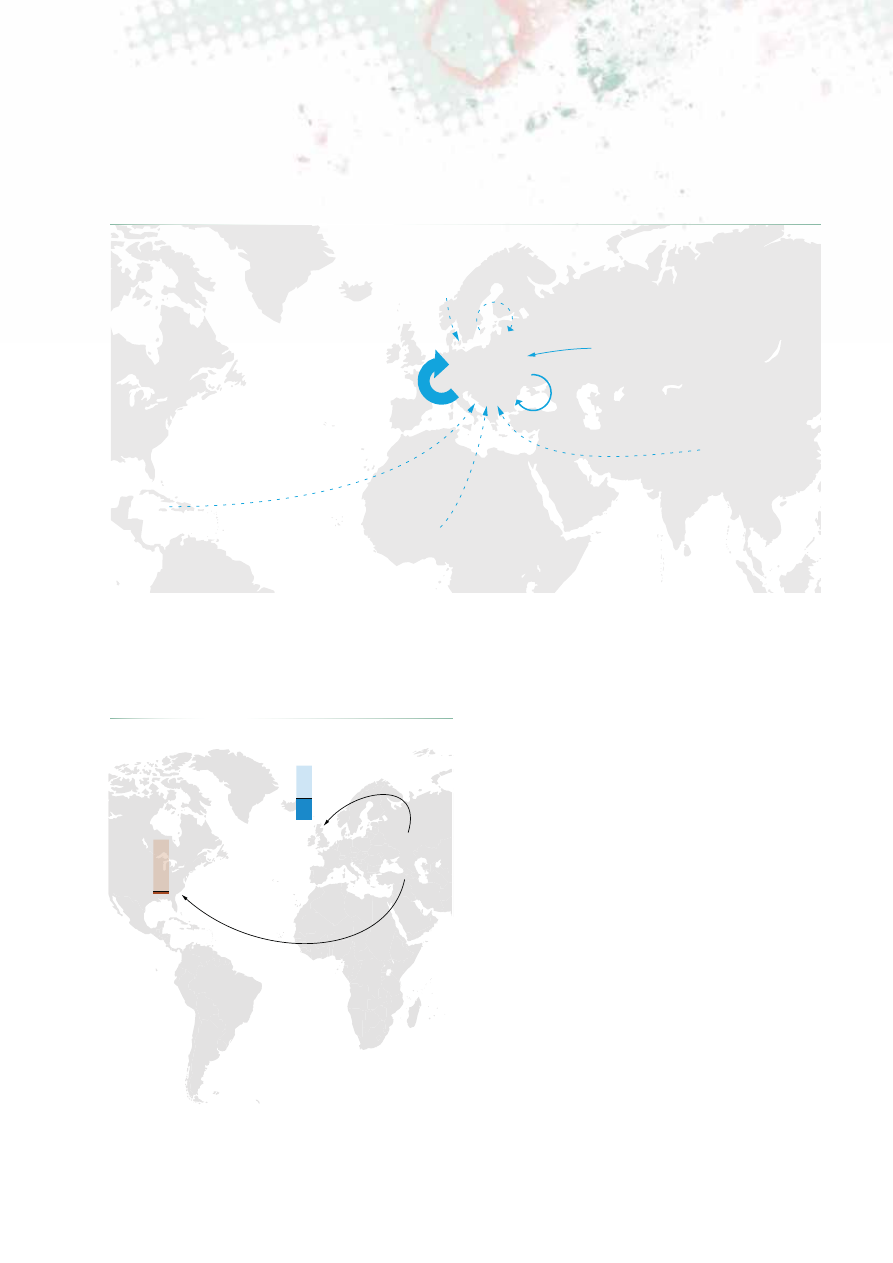
However, the trafficking flows are different when focusing
on different areas within the subregion. When the analysis
considers the more affluent countries in Western and
Southern Europe, domestic trafficking accounts for 16
per cent of the total number of detected victims, while
for countries in Central Europe and the Balkans, it
accounts for about 80 per cent of the detected victims.
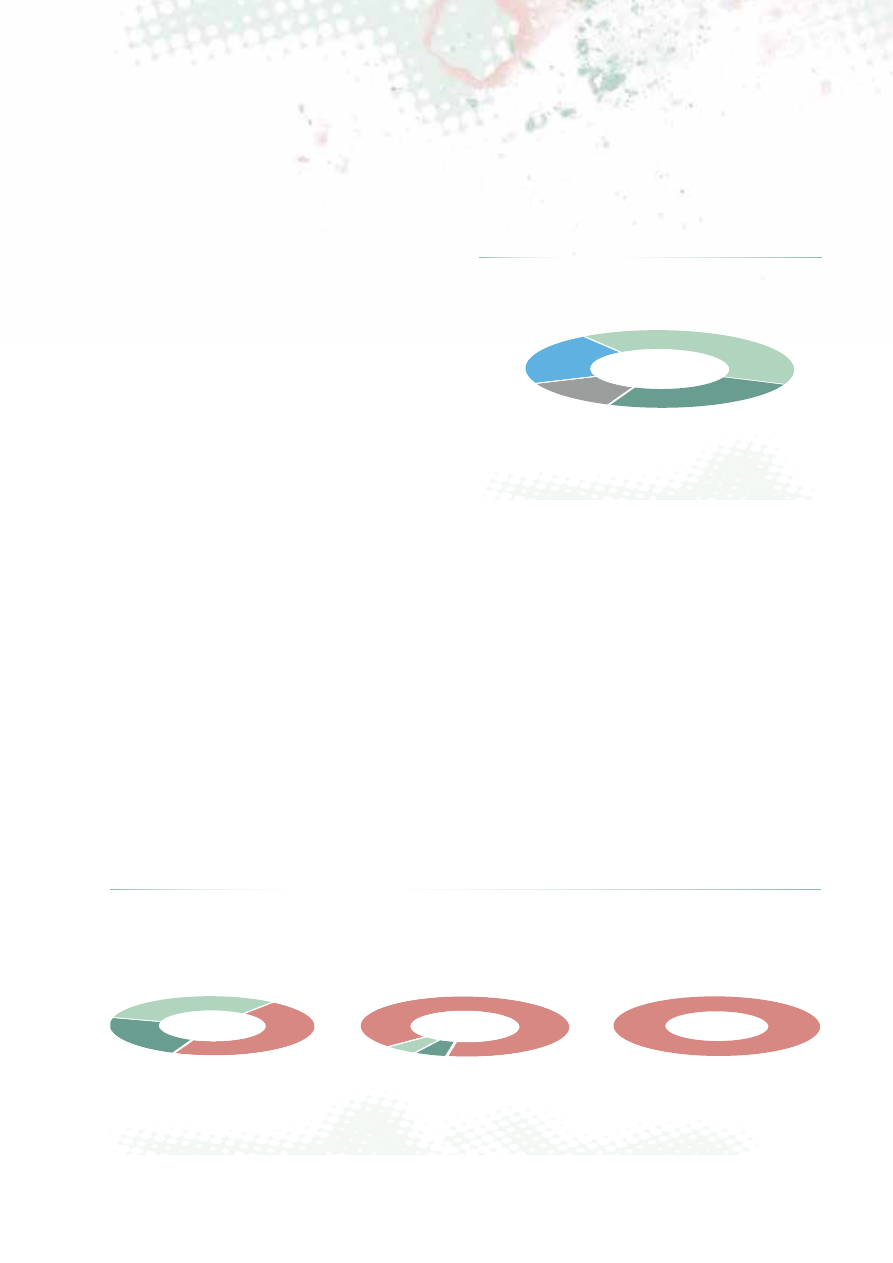
FIG. 35:
Forms of exploitation detected
in Western and Central Europe,
2010-2012 (or more recent)
Source: UNODC elaboration on national data.
ORGAN
REMOVAL
0.1%
SEXUAL
EXPLOITATION
65%
OTHERS
9%
FORCED
LABOUR
26%
FIG. 36:
Gender breakdown of victims
trafficked for forced labour in
Western and Central Europe,
2010-2012 (or more recent)
Source: UNODC elaboration on national data.
31
%
69
%
Regional overviews
II
63
MAP 8:
Origins of victims trafficked to Western and Central Europe,
by subregion, share of the
total number of victims detected there,
2010-2012
Source: UNODC.
8%
7%
4%
within Western
and Central Europe
62%
19%
Eastern Europe
and Central Asia
Africa and
the Middle East
South Asia, East Asia
and the Pacific
Western
and Central
Europe
Americas
100% is equivalent to
16,718 detected victims
Sciences Po - Atelier de cartographie, 2014
7%
The Balkans
Central Europe
Other Europe
(cross-border)
South
America
Western
and Southern
Europe
East Asia
Central America
and the Caribbean
Eastern Europe
and Central Asia
100% is equivalent to
14,775 detected victims
Percentages are written
for values above 3%
Sciences Po - Atelier de cartographie, 2014
West Africa
16%
Domestic
16%
Other
Sub-Saharan Africa
North Africa
and the Middle East
4%
13%
7%
27%
South Asia
MAP 9:
Origins of victims trafficked to Western and Southern Europe,
share of the total
number of victims detected there
, 2010-2012 (or more recent)
Source: UNODC.

GLOBAL REPOR
T ON
TRAFFICKING IN PERSONS
2014
64
40%
Western
and Southern
Europe
5%
North America,
Central America
and the Caribbean
Central Europe
and the Balkans
Sciences Po - Atelier de cartographie, 2014
As for cross-border trafficking from within the subregion,
countries in Central Europe and the Balkans mainly
receive trafficking victims from neighbouring countries
of the same area, as well as victims from proximate coun-
tries in Eastern Europe. The more affluent countries in
Western and Southern Europe report significant inflows
from the Balkans (27 per cent) and from Central Europe
(13 per cent).
Trafficking from the Balkans into the rest of the subregion
remains very significant. It is, however, limited to Europe
as detections of victims from the Balkans outside Europe
are rare. Trafficking victims originating from Central
Europe have been increasingly detected in the rest of
Europe compared to the period 2007-2010. In addition,
and as opposed to the victims from the Balkans, citizens
of countries in this area have been detected outside
Europe, particularly in North and Central America and
the Caribbean. It is thus a trafficking flow that should be
monitored in the future.
Moreover, more than 2 per cent of the detected victims
in Western and Central Europe were trafficked from one
of the Baltic countries. This is a small share, but consider-
ing the limited population of these countries, it is none-
theless significant.
Trafficking from countries in the other European subre-
Central
Europe and
the Balkans
South Asia, East Asia
and the Pacific
Americas
Eastern Europe
and Central Asia
The Balkans
(cross-border)
9%
Central Europe
(cross-border)
Other
Europe
100% is equivalent to
1,943 detected victims
Percentages are written
for values above 3%
Sciences Po - Atelier de cartographie, 2014
Domestic
79%
Sub-Saharan Africa
5%
MAP 10:
Origins of victims trafficked to Central Europe and the Balkans,
share of the total
number of victims detected there,
2010-2012 (or more recent)
Source: UNODC.
MAP 11:
Destinations of trafficking victims
from Central Europe and the Balkans,
as a proportion of the total number
of victims detected at specific desti-
nations,
2010-2012
Source: UNODC.
Regional overviews
II
65
gion, Eastern Europe and Central Asia, into Western and
Central Europe, accounts for about 4 per cent of the total
number of detected victims, which is a very similar value
to what was reported for the 2007-2010 period in the
Global Report on Trafficking in Persons 2012
(almost 5 per
cent).
Although subregional trafficking is more prominently
detected, the share of victims who are trafficked transre-
gionally to Western and Central Europe is almost 40 per
cent. This share reaches peaks of 50 per cent in the coun-
tries of Western and Southern Europe, while such traf-
ficking is marginal for the countries in Central Europe
and the Balkans. The dispersion of these victims’ origin
countries is remarkable. Victims with some 80 non-Euro-
pean citizenships were detected across Western and Cen-
tral Europe between 2010 and 2012. This subregion is
clearly one of the main destinations for transregional traf-
ficking. Other wealthy areas also receive a lot of inbound
cross-border trafficking, but that tends to come from
countries that are relatively close in geographical terms.
Western and Central Europe is the only region to detect
victims from every other region in significant numbers.
Looking specifically at the origins of transregional traf-
ficking flows, the trafficking of Africans, particularly West
Africans, appears to be the most significant. Detections
of West Africans are second only to that of people from
the Balkans in terms of shares of the total number of vic-
tims who are trafficked cross-border. West African victims
have been detected in 20 countries across most of Western
and Central Europe. The relevance and endurance of this
trafficking flow across many parts of Western and Central
Europe might indicate the presence of a well-organized
structure behind the flow.
Trafficking from other parts of Sub-Saharan Africa is also
detected. Moreover, victims from North African countries
- especially from the Maghreb - are broadly dispersed.
These victims are detected in limited numbers but in dif-
ferent countries.
The detection of victims from the Americas used to be
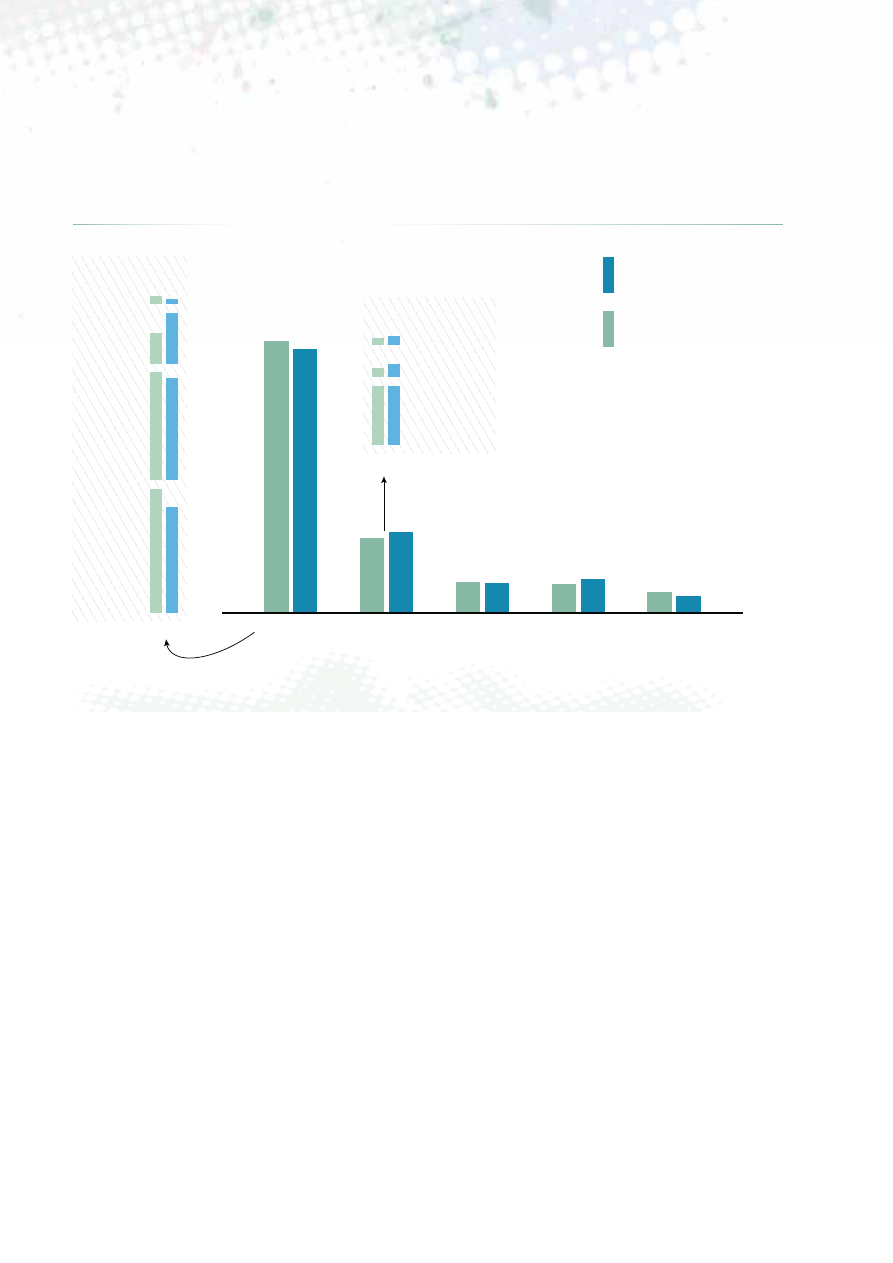
FIG. 37:
Evolution of the origins of trafficking into Western and Central Europe,
2007/2010-2010/2012
Source: UNODC elaboration on national data.
within Western
and Central
Europe
domestic
trafficking
The Balkans
Central
Europe
Other
Europe
West Africa
Sub-Saharan
Africa, other
North Africa
and Middle East
Eastern Europe
and Central Asia
East and
South Asia
Americas
Africa and
the Middle
East
2007-2010
100% is equivalent to
16,808 detected victims
2010-2012
100% is equivalent to
16,718 detected victims
64% 62%
26%
24%
29%
25%
7%
12%
2%
1%
14%
14%
2%
3%
2%
2%
5% 4%
7% 7%
7% 8%
18% 19%
Sciences Po - Atelier de cartographie, 2014
detail
detail
GLOBAL REPOR
T ON
TRAFFICKING IN PERSONS
2014
66
largely limited to Spain and Portugal. This has changed,
and nowadays, victims from the Americas – primarily
South America, and to a lesser extent, Central America
and the Caribbean - have been detected in other countries
of this subregion. During the 2010-2012 period, South
American victims accounted for 6 per cent of the total
number of victims detected in Western and Central
Europe.
Victims from the Caribbean accounted for approximately
1.5 per cent of the total number of detected victims in
some 9 countries in Western and Central Europe. This is
quite a remarkable share for relatively small and distant
countries.
Asian victims are also detected in significant numbers in
Western and Central Europe. This group accounts for
about 6 per cent of the total number of detected victims.
East and South-East Asian victims have been detected in
many countries. Additionally, South Asian victims have
been detected in many countries in Western and Central
Europe, but in limited numbers.
Response to trafficking in persons
In terms of legislation, all the countries in Western and
Central Europe considered in this Report have national
legislation that is in line with the UN Trafficking in Per-
sons Protocol today. The historical evolution of the legis-
lation in this part of the world was, to a considerable
extent, affected by the entry into force of the Protocol in
December 2003. More than half of the countries amended
their criminal code after this date to introduce a specific
offence on trafficking in persons that was in line with the
international standards.
While several of the countries had specific legislation
before December 2003, the offences were often intro-
duced either in the year 2002 or earlier in 2003. So for
many of these countries as well, the legislation was
amended as a result of the political push generated by the
Trafficking in Persons Protocol that was adopted by the
Member States in the year 2000.
A further geographical analysis shows that the countries
in Central Europe and the Balkans were the quickest in
setting up their legislative counter-trafficking framework.
Among the 18 countries with proper legislation in place
in 2003, 6 were in Western Europe, while 12 were in
Central Europe and the Balkans. The gap was quickly
closed, however, as after just five years, most of the coun-
tries had adopted proper legislation to combat trafficking
in persons.
FIG. 38:
Historical evolution of the legislation in Western and Central Europe,
2003-2012
Source: UNODC elaboration on national data.
2003
NO OFFENCE
9
MOST / ALL
FORMS
18
PARTIAL
OFFENCE
12
TOTAL NUMBER OF COUNTRIES CONSIDERED, N:39
NO OFFENCE
2
MOST / ALL
FORMS
35
PARTIAL
OFFENCE
2
2008
MOST / ALL
FORMS
39
2012
FIG. 39:
Number of Western and Central
European countries according to
the number of convictions per year
reported,
2010-2012
Source: UNODC elaboration on national data.
INFORMATION
NOT AVAILABLE
4
BETWEEN 10 AND 50
CONVICTIONS PER YEAR
13
LESS THAN TEN
CONVICTIONS
PER YEAR
7
MORE THAN 50
CONVICTIONS PER YEAR
8
TOTAL NUMBER OF COUNTRIES
CONSIDERED, N:32