ВУЗ: Не указан
Категория: Не указан
Дисциплина: Не указана
Добавлен: 13.10.2020
Просмотров: 1637
Скачиваний: 1

GLOBAL REPOR
T ON
TRAFFICKING IN PERSONS
2014
32
G
LO
B
AA
L
RE
P
OR
T
ON
TR
AF
FI
CK
IN
G
IN
P
ER
SO
N
32
Recruitment through feigned romantic relationships
The recruitment of victims is an essential part of
the trafficking process. Though the recruitment can
happen in many ways, it often involves deception.
The victim may be deceived about work conditions
such as the type of job, the workplace and the
salary. In other cases, criminals deceive by feigning
a romantic interest and entering into a relationship
with the victim in order to gain her trust. Victims
of this type of recruitment are often underage, but
may also be adults. Generally, the perpetrator is
male and the victim female. As the ‘relationship’
develops, the exploiter manipulates and/or coerces
the victim into sexual exploitation, from which he
obtains the profits.
This type of recruitment has been denounced by
the Dutch authorities for more than a decade.
I
However, feigned romantic relationships is a rela-
tively common recruitment method in many coun-
tries. The court cases submitted to UNODC by
Member States included several clear cases of such
recruitments, and even more where this method
may have been used, but the information is insuf-
ficient to establish with certainty. While most of
these cases originated from countries in the Ameri-
cas, there were also cases from other parts of the
world.
Many of the court cases involved domestic traffick-
ing situations where one man recruited one victim,
often an underage girl. In one case from Mexico,
for example, a man met his 16-year-old victim at
the video game parlour where she worked. He
courted her, they began dating, and eventually
moved together to a different city. Once there, he
forced her into prostitution and took away the
money paid by the customers. He also threatened
and beat her. In this case, the offender was acting
alone, and he was sentenced to nine years’ impris-
onment.
In another court case, reported by Canada, 10
males – including one minor boy - were convicted
of trafficking four underage girls. The sentences
ranged from one to three years of imprisonment.
The offenders were part of a ‘street gang’ who car-
ried out a relatively extensive trafficking operation
in which the minor boy was the recruiter. He oper-
ated at schools were he could easily make contacts
with multiple underage girls. Some of the girls fell
in love with him and once trust had been estab-
lished, the girls were introduced to the other, older
gang members. The victims were then forced, under
threats of violence, to abide by strict rules and pro-
vide sexual services for payments the traffickers
then collected. Here, the recruitment through the
feigned romantic relationship was one part of a
larger scheme to exploit several girls.
This type of recruitment does not necessarily have
to occur in a domestic context, however. In a court
case from Brazil, a European man was found guilty
of recruiting a local woman in Brazil through a
feigned romantic relationship for the purpose of
bringing her to Europe for sexual exploitation. The
offender pretended that he was in love with the
victim, gained her trust, arranged the travel and
even paid for her passport. But once they arrived in
Europe, the victim was locked in, forced to work as
a prostitute and generate a set amount of money for
the trafficker each day. The trafficker was sentenced
to five years’ imprisonment.
These cases show that recruitment through feigned
romantic relationships can be used either by traf-
fickers operating alone, or as part of a larger group.
The exploitation can take place domestically or in
another country, and although there were no such
cases within the set of court cases, it is not incon-
ceivable that this recruitment method could also be
used to deceive potential victims of trafficking for
forced labour. Every trafficking case needs at least
one victim and feigned romantic relationships is
one of the ways criminals go about recruiting vic-
tims.
I
See, for example,
Trafficking in Human Beings
, the First Report
of the Dutch National Rapporteur, Bureau NRM, The Hague,
November 2002.
Global overview
I
33
Sciences Po - Atelier de cartographie, 2014
countries not covered
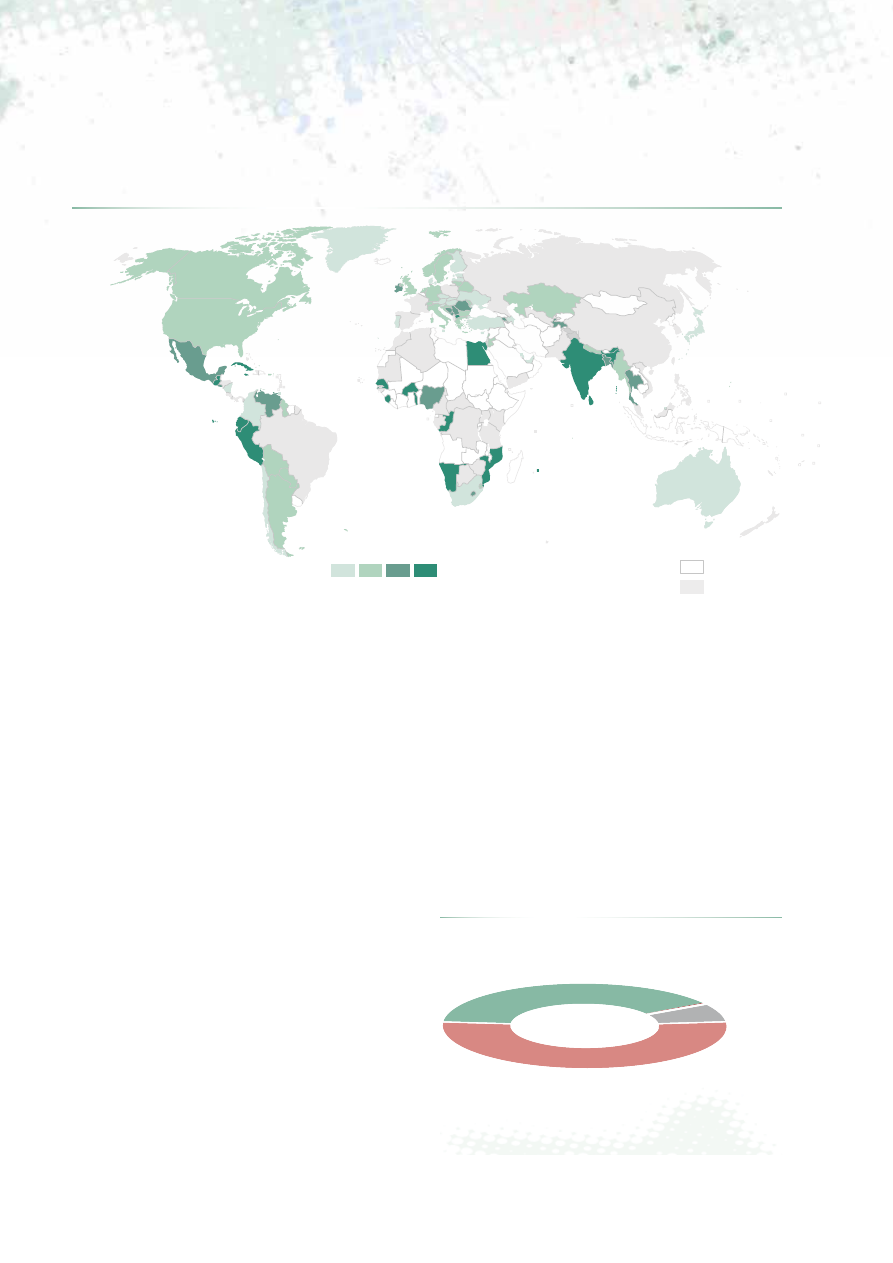
Share of children
data not available
0
10
30
60
100
Information on the forms of exploitation was provided
by 88 countries. It refers to a total of 30,592 victims of
trafficking in persons detected between 2010 and 2012
whose form of exploitation was reported.
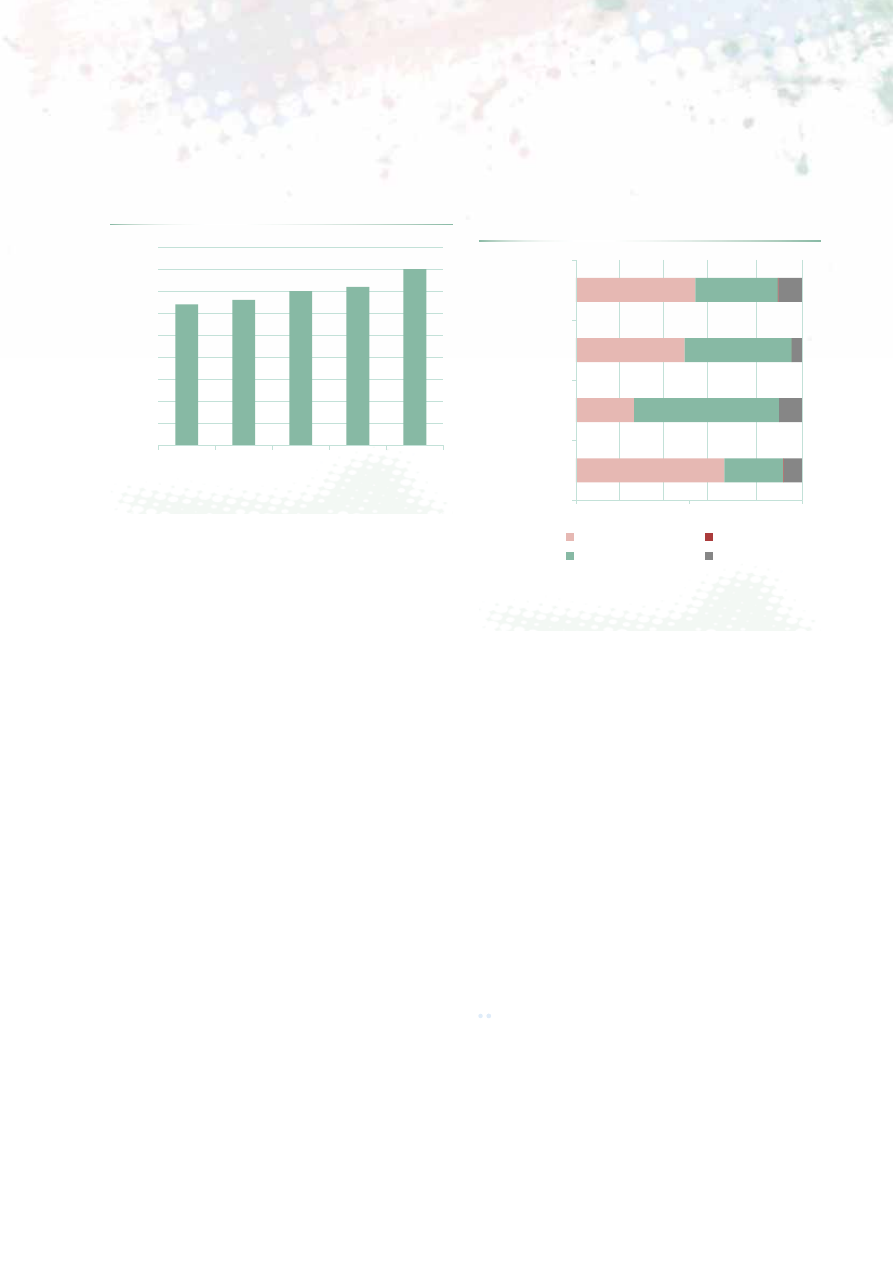
Looking first at the broader global picture, some 53 per
cent of the victims detected in 2011 were subjected to
sexual exploitation, whereas forced labour accounted for
about 40 per cent of the total number of victims for whom
the form of exploitation was reported.
FORMS OF EXPLOITATION
Exploitation is the source of profits in trafficking in per-
sons cases, and therefore, the key motivation for traffickers
to carry out their crime. Traffickers, who may be more or
less organized, conduct the trafficking process in order to
gain financially from the exploitation of victims. The
exploitation may take on a range of forms, but the prin-
ciple that the more productive effort traffickers can extract
from their victims, the larger the financial incentive to
carry out the trafficking crime, remains.
Victims may be subjected to various types of exploitation.
The two most frequently detected types are sexual exploi-
tation and forced labour. The forced labour category is
broad and includes, for example, manufacturing, cleaning,
construction, textile production, catering and domestic
servitude, to mention some of the forms that have been
reported to UNODC. Victims may also be trafficked for
the purpose of organ removal, or for various forms of
exploitations that are not forced labour, sexual exploita-
tion or organ removal. These forms have been categorized
as ‘other forms of exploitation’ in this Report, and this
Section will also examine the detections of these ‘other
forms’ in some detail.
MAP 2:
Share of children among the total number of detected victims,
by country,
2010-2012
Source: UNODC.
Note: The boundaries shown on this map do not imply official endorsement or acceptance by the United Nations. Dashed lines represent undetermined
boundaries. The dotted line represents approximately the Line of Control in Jammu and Kashmir agreed upon by India and Pakistan. The final status of
Jammu and Kashmir has not yet been agreed upon by the parties. The final boundary between the Sudan and South Sudan has not yet been determined.
FIG. 14:
Forms of exploitation among
detected trafficking victims,
2011
Source: UNODC elaboration on national data.
SEXUAL
EXPLOITATION
53%
FORCED
LABOUR
40%
OTHERS
7%
ORGAN
REMOVAL
0.3%

GLOBAL REPOR
T ON
TRAFFICKING IN PERSONS
2014
34
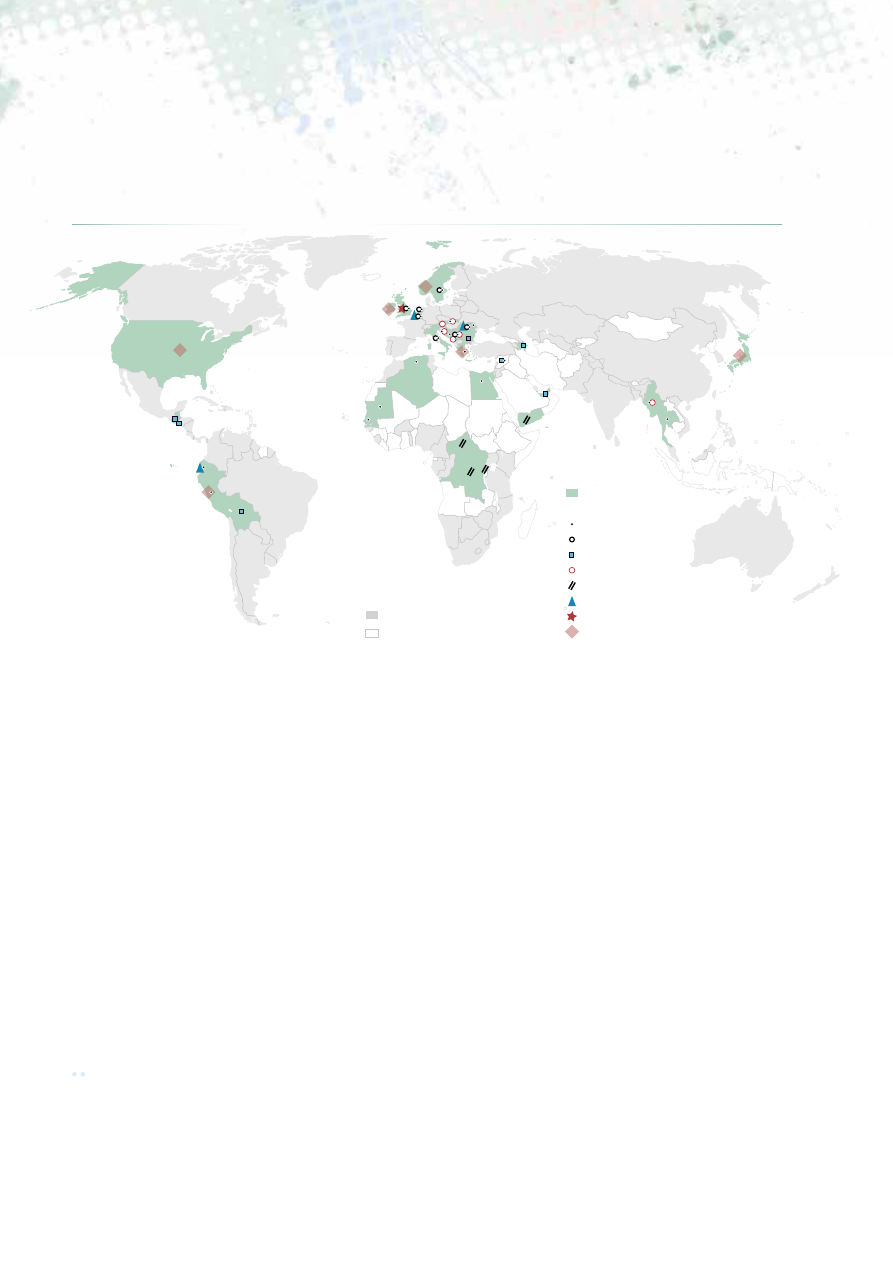
While among the detected trafficking victims, sexual
exploitation is the largest category, the share of forced
labour detections is increasing. The increasing detections
of trafficking for forced labour has been a significant trend
in recent years
Trafficking for sexual exploitation is the major detected
form of trafficking in persons in Europe and Central Asia.
More than 65 per cent of the victims detected in this
region are trafficked for sexual exploitation. In the subre-
gion of Eastern Europe and Central Asia in particular,
sexual exploitation is frequently detected, accounting for
71 per cent of the victims (see also the regional
overview).
In the other regions, the shares of trafficking for forced
labour are far higher than in Europe and Central Asia. In
South Asia, East Asia and the Pacific, trafficking for forced
labour is the major detected form of trafficking as it
accounts for nearly two thirds of the detected victims. In
the subregion of South Asia, over 80 per cent of the
reported victims are trafficked for forced labour (see the
regional overview). In the Americas, trafficking for forced
labour and trafficking for sexual exploitation are detected
in nearly identical proportions.
There are some differences between the two subregions
of the Americas, however. In North America, Central
America and the Caribbean, more than 50 per cent of the
detected victims are exploited in forced labour, whereas
in South America, the percentage is around 40. The pro-
portion of detected trafficking for forced labour in South
America is a likely underestimation as this category does
not include the large number of victims of ‘slavery and
slavery-like conditions’. These victims are not officially
recorded as trafficking victims as it is unknown to which
extent they are in exploitative situations as a result of a
trafficking process. If the victims who are exploited under
‘slavery or slavery-like conditions’
10
in South America
would be considered trafficking victims, the share of vic-
tims of trafficking in persons for forced labour globally
would be considerably larger.
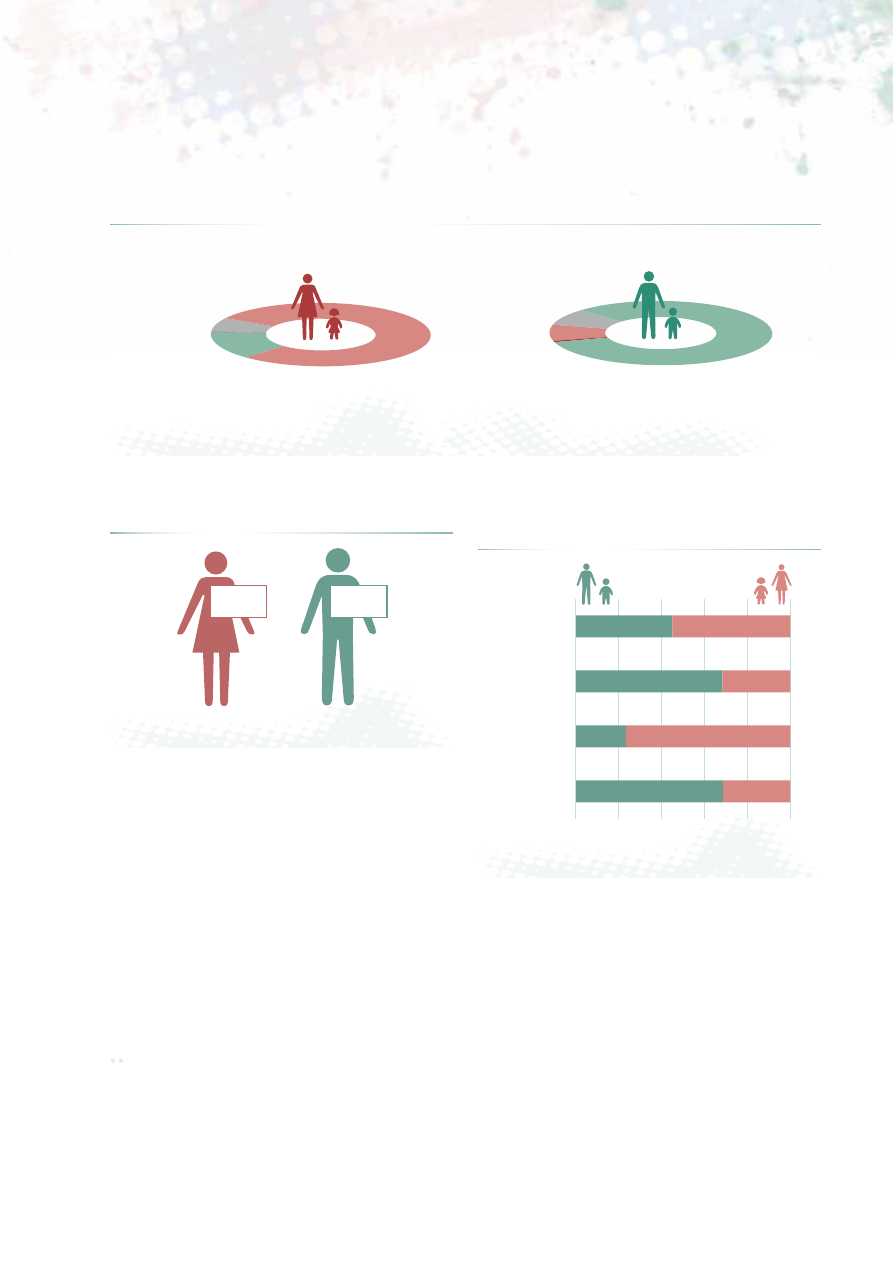
Globally, ten types of exploitation different from sexual
exploitation, forced labour or organ removal were identi-
fied by the national authorities during the reporting
period. These types are trafficking for mixed exploitation
in forced labour and sexual exploitation, for committing
crime, for begging, for pornography (including internet
pornography), forced marriages, benefit fraud, baby sell-
ing, illegal adoption,
11
armed combat and for rituals.
10 Some countries in South America have legislation that is not fully
in line with the UN Trafficking in Persons Protocol. Offences that
may be prosecuted as trafficking for forced labour in countries with
Protocol-compliant legislation may instead be prosecuted as crimes
related to ‘slavery and slavery-like conditions’ in these countries.
11 The interpretative notes on article 3 of the Trafficking in Persons
Protocol (see A/55/383/Add.1, paras. 63-68) indicate that illegal
adoption is to be considered as a purpose of trafficking in persons
where this amounts to a practice similar to slavery as defined in the
FIG. 15:
Share of detected victims trafficked
for forced labour,
2007-2011
Source: UNODC elaboration on national data.
32%
33%
35%
36%
40%
0%
5%
10%
15%
20%
25%
30%
35%
40%
45%
2007
2008
2009
2010
2011
FIG. 16:
Forms of exploitation among
detected trafficking victims,
by
region,
2010-2012 (or more recent)
Source: UNODC elaboration on national data.
0%
20%
40%
60%
80%
100%
Europe and
Central Asia
East Asia,
South Asia
and Pacific
Americas
Africa and
the Middle East
Sexual exploitation
Forced labour,
servitude and
slavery like
Organ removal
Other forms
of exploitation
53%
37%
10%
48%
47%
4%
26%
64%
10%
66%
26%
8%
Global overview
I
35
There are pronounced regional differences with regard to
these ‘other forms of exploitation’. While in Europe and
Central Asia, this category mainly includes begging and
victims trafficked to commit (often petty) crime, in Sub-
Saharan Africa, it often entails trafficking of children for
armed combat (‘child soldiers’). In Asia, the issue of forced
marriage is also frequently reported for victims who are
not trafficked for sexual exploitation, forced labour or
organ removal.
During the reporting period, cases of trafficking for organ
removal were detected and reported by 12 countries. These
victims account for about 0.2 per cent of the total number
of victims. Most of the detected victims of this form of
trafficking are males.
In general, the profiles of the victims of trafficking reflect
the types of trafficking that are more commonly detected
in different parts of the world. The observed correlation
Supplementary Convention on the Abolition of Slavery, the Slave
Trade and Institutions and Practices Similar to Slavery (cited in the
Travaux Préparatoires of the Negotiations for the Elaboration of the
United Nations Convention against Transnational Organized Crime
and the Protocols Thereto, p. 347).
between the profile of the detected victims and the type
of exploitation is only partial, however, and an analysis of
the profiles commonly associated with the different types
of trafficking reveals some significant nuances.
Globally, the vast majority of detected female victims are
trafficked for sexual exploitation, whereas most of the
detected male victims are trafficked for forced labour.
However, a closer look at the broad category of trafficking
for forced labour reveals that this is not a crime that only
involves male victims. In fact, about one third of the total
number of victims detected globally who were trafficked
for forced labour are females, and about two thirds are
males. In other words, females are also trafficked for forced
labour in significant numbers.
An analysis of the regional differences shows that in Africa
and the Middle East, as well as in South Asia, East Asia
and the Pacific, females account for the majority of the
detected victims trafficked for the purpose of forced
labour. Although the data coverage for these vast regions
is relatively poor, which makes it difficult to draw strong
conclusions, exploitation in domestic labour – which
MAP 3:
Countries that report forms of exploitation other than forced labour,
sexual
exploitation or organ removal,
2010-2012
Source: UNODC.
Note: The boundaries shown on this map do not imply official endorsement or acceptance by the United Nations. Dashed lines represent undetermined
boundaries. The dotted line represents approximately the Line of Control in Jammu and Kashmir agreed upon by India and Pakistan. The final status of
Jammu and Kashmir has not yet been agreed upon by the parties. The final boundary between the Sudan and South Sudan has not yet been determined.
Cases have been reported in the country
Begging
Commits crime
Illegal adoption or child selling
Forced marriages
Child soldiers
Pornography
Benefit fraud
Mixed exploitation
Sciences Po - Atelier de cartographie, 2014
countries not covered
data not available
GLOBAL REPOR
T ON
TRAFFICKING IN PERSONS
2014
36
often affects women
12
- may be one of the explanations.
This form of trafficking has been reported relatively fre-
quently from some areas within these regions.
Females are also frequently detected as victims of traffick-
ing for forced labour in Europe and Central Asia and in
the Americas, although not as frequently as males. In these
two regions, females comprise approximately one third of
the victims of this type of trafficking.
Looking at trafficking for sexual exploitation, the vast
majority of the detected victims are females. Nonetheless,
trafficking of males for the purpose of sexual exploitation
does exist and it is not negligible. About 3 per cent of the
total number of victims of trafficking for sexual exploita-
12 See, for example, Surtees, R.,
Labour Trafficking in South-eastern
Europe: Developing prevention and assistance programmes,
NEXUS
Institute to Combat Human Trafficking, 2007; and United Nations
Inter-Agency Project on Human Trafficking (UNIAP),
Recruitment
Agencies and the Employment of Cambodian Domestic Workers in
Malaysia,
July 2011.
tion detected between 2010 and 2012 are males. Looking
only at the detected male victims (all types of exploita-
tion), some 8 per cent are exploited in the sex industry.
About one fifth of male victims were subjected to ‘other’
types of exploitation.
In the case of trafficking of males for sexual exploitation,
the exact proportion among the total number of detected
victims varies significantly between regions. It is, however,
relatively low across all regions, ranging between 2 and 5
per cent. In Africa and the Middle East, the share is in the
lower end of the range, whereas it is higher in Europe.
The share of detected victims exploited in trafficking for
FIG. 17:
Forms of exploitation among detected female and male trafficking victims,
2010-2012
(or more recent)
Source: UNODC elaboration on national data.
ORGAN
REMOVAL
0.1%
SEXUAL
EXPLOITATION
79%
FORCED
LABOUR
14%
OTHERS
7%
FORCED
LABOUR
83%
OTHERS
8%
ORGAN
REMOVAL
1%
SEXUAL
EXPLOITATION
8%
FIG. 18:
Gender breakdown of detected
victims of trafficking for forced
labour,
2010-2012 (or more recent)
Source: UNODC elaboration on national data.
35
%
65
%
FIG. 19:
Gender breakdown of detected
victims of trafficking for forced
labour,
by region,
2010-2012 (or
more recent)
Source: UNODC elaboration on national data.
Europe and
Central Asia
South Asia,
East Asia and
the Pacific
Americas
Africa and
Middle East
69%
23%
68%
45%
31%
77%
32%
55%
0%
20%
40%
60%
80% 100%