ВУЗ: Не указан
Категория: Не указан
Дисциплина: Не указана
Добавлен: 12.09.2025
Просмотров: 2234
Скачиваний: 0
СОДЕРЖАНИЕ
The world around me Section I Appearance and Character
IV. Read the following dialogues and make up your own using the examples
II. Put the following words in its correct place
III. Read the following dialogues and make up your own using the examples.
V. Read the following passage. Speak about the relations in your family using the active vocabulary.
III. Answer the following questions.
II. Practise the pronunciation of the international words and translate them.
III. Read and translate the following word groups:
IV. Give possible combinations of the following verbs with adverbs.
V. Complete the sentences using the word combinations of ex. 4.
VI. Choose the appropriate word from the right-hand column to complete each of the sentences.
VIII. Before reading the text (below) try to answer the following questions.
X. Form other parts of speech from the following words:
XII. Say, which of these statements are students’ rights or duties:
III. Remember the faculties of vsu.
IX. In what context are these figures mentioned in the text.
X. Match the date and the event in the history of vsu.
XI. Answer the following questions.
XII. Continue the following sentences:
XIII. Tell your group-mates about the University you study at.
XIV. Read and reproduce the following situational dialogues.
I. Read the following proper names correctly:
II. Match the country and its capital:
III. Endings –ese, - an, - ish, -I are used to form the word denoting ‘nationality’
III. Listen to the tape and do the exercises below.
V. Make up a dialogue of your own by analogy:
In great britain and in belarus great britain
II. Match the words with their definitions:
Christmas and new year in great britain
IV. Give the English equivalents for these Russian words and word combinations:
V. Insert the words in the gaps:
VI. Put in the right prepositions:
II. Match the words with their definitions:
IV. Read and translate the text. Halloween (October, 31)
V. Write down all the irregular verbs used in the text. Give all their forms.
XI. Choose one of the topics and prepare short reports.
II. Match the words with their definitions:
IV. Read and translate the text. Guy Fawkes Day (November, 5)
V. Give the English equivalents for these Russian words and word combinations:
Candles and weather (february, 2)
XII. Answer the following questions:
XIII. Agree or disagree with the following statements:
XIV Put in the right prepositions where necessary:
XV. Choose a word from the box to put into each gap:
Youth and its place in modern society
II. Read out the following words and memorize their meaning:
III. Read out these phrases several times till you remember their meaning:
IV. Read the text and get ready to speak about the problems of teenagers: generation gap
VI. Find synonyms for the words in the frame:
Youth Organizations in Belarus
II. Read out the following words and memorize their meaning:
III. Read these international words and try to guess their meaning:
IV. Read out these phrases several times till you remember their meaning:
V. Match the English words and their Russian equivalents:
VII. Match the words with the help of the preposition of:
II. Make a little speech starting with:
I. Give words or phrases (from the glossary) for the following definitions:
VIII. Do you agree with the following proverb:
Is abortion legal in your country?
I. Form the derivatives of the words given in the chart below. Use a dictionary if necessary.
I. Explain the following words:
II. Give the comparatives and the superlatives of the adjectives:
IV. Translate the word combinations:
VI. Give synonyms to the following:
II. Guess the meaning of the words and explain their meaning.
V. Match the words with their definitions.
VI. Translate from Russian into English.
I. Listen to (read) the text and say whether the statements are true or false?
III. Complete the sentences with the missing phrases.
V. Translate form Russian into English.
VII. Listen to (read) the text and say whether the statements are true or false.
VIII. Listen to (read) the text and answer the questions.
I. Read and memorize the following words.
II. Read the following international words and word combinations and try to guess their meaning.
III. Train reading the names of the chemical elements.
V. Read and translate the following word combinations.
Destruction of the tropical forest
VII. Fill in the blanks with suitable words and word combinations from the text.
VIII. Complete the sentences with the most suitable ending.
IX. Match the definitions from the list and the words from the frame below.
X. Answer the following questions.
XI. Translate the sentences from Russian into English.
VI. Listen to the recording and mark the following statements as True or False.
VII. Put the sentences into the right order:
VIII. Choose the environmental problems from the box people will face in the future.
IX. Answer the questions after listening to each paragraph:
II. What substances are vital important for living things? What food is rich in these substances?
III. Translate from Russian into English.
V. Listen to (read) the text and say whether the statements are true or false.
Technology and its impact Technical advances affecting daily life
V. Read aloud the words listed below following the teacher’s example:
VI. Read and translate the text:
VII. Make up the definition of the term ‘invention’ from the scattered words.
VIII. Choose the most suitable variant:
IX. Give three examples of accidental discoveries and three examples of induced discoveries.
IV. Read the following words correctly:
V. Choose between accident ['xksIdqnt] and incident ['InsIdqnt].
VI. A) Translate the following sentence.
VII. Read the text and name the serendipitous discoveries mentioned there.
VIII. Fill in the blanks with the verb in the right tense-form.
IX. Fill in the blanks with the right prepositions.
X. Translate the words in brackets into English.
XI. Ask special questions to the following statements.
XII. Give a brief summary of the text. Text III
I. Learn the following derivatives and fill in the blanks with the proper one:
II. Look: at, up, up to, after, for, through, forward to, out (for), down on smb;
III. Learn the following words:
IV. A) Form the nouns using proper suffixes.
X. Fill in the gaps with a suitable preposition.
XI. Translate the words in brackets from Russian into English and read the whole sentence.
XII. Decide whether the following statements are True or False.
II. Fill in the table with the proper derivatives which are possible:
III. Find the opposites to the following words and use both words in the sentences of your own:
V. Read the text for more information.
VI. Choose the most suitable variant.
VIII. Find the key sentences in the text and use them in your retelling.
IX. Render the following text into English: Научно-технический прогресс и его влияние на нашу жизнь
X. Internet Research Project New Communications Technologies
The republic of belarus : social and political aspects
I. Read some information about the National Flag of the Republic of Belarus and describe it.
II. Read the following information and say in English what each colour of the National Flag means.
III. Read some information about the National Emblem of the Republic of Belarus and describe it.
VII. Read and memorize the following words:
VIII. Pay attention to the following word combinations.
IX. Read the following words and try to guess their meaning.
X. Read out these phrases several times till you remember their meaning.
XI. Match the word from a with its best association from b. Use the phrases in your own sentences.
XIII. Read and translate the text. Belarus state system
XIV. Fill in the right preposition.
XV. Agree or disagree with the following statements.
XVI. Complete the following sentences.
XVII. Translate the following sentences into English.
The united kingdom of great britain and northern ireland: social and political aspects
What is the British National Anthem?
I. Read and memorize the following words:
II. Pay attention to the following words.
IV. Read and translate the text.
V. Give English equivalents from the text to the words given below.
VI. Find the pairs of antonyms.
VII. Find the pairs of synonyms.
IX. Fill in the table using the information from the text.
I. Learn the parts of a letter.
Клише, выражения и предложения для деловой переписки
VI. Match the parts on the left with the parts on the right.
VII. Complete the following sentences by translating the Russian part in brackets in a column.
VIII. Translate the following sentences in English:
Surreal case of the Dalí images and a battle over artistic licence
Glasgow issues legal threats to stop poster firms and rock band illegally copying prized painting
A colossal mistake? Art world baffled by 'Goya' masterpiece
Great Works: Leviathan (1651), Abraham Bosse and Thomas Hobbes
Tests blamed for blighting children's lives
Emperor penguin 'marching to extinction by end of the century'
President Obama announces push to wean us off the gas-guzzler
Russia 'suspends Kaliningrad missile plan'
Chief Rabbinate of Israel cuts ties with Vatican over Holocaust bishop
Activists threaten to close Heathrow
Taxpayer faces bigger bill for 2012 Olympics
Brown leads global drive to close down tax havens
Israel's president asks Benjamin Netanyahu to form new government
- What other new technologies have been developed in the last few years?
- What technologies do you personally use on a daily basis?
- What technologies would you like to have access to in the future? Why?
- How will they change your life?
VIII. Find the key sentences in the text and use them in your retelling.
IX. Render the following text into English: Научно-технический прогресс и его влияние на нашу жизнь
Любое изобретение или открытие, сделанное учеными, предназначено для того, чтобы улучшить нашу жизнь и расширить границы человеческих знаний. Оно может быть выведено путем умозаключений или быть случайным. Примером открытия первого типа является изобретение молниеотвода Бенжамином Франклином, а примером второго – открытие рентгеновских лучей Вильгельмом Рентгеном. Такие открытия, как пенициллин, радар, искусственные подсластители (заменители сахара), тефлон, жевательная резинка, называют «счастливой случайностью», потому что ученые проводили исследования в одной области и случайно открывали вещество или прибор, который оказывался очень полезным. Сейчас трудно приписать открытие одному человеку. Это результат работы группы ученых и даже целых научно-исследовательских институтов. Современные передовые области исследований – нанотехнологии, трансплантология, электронные коммуникации, аэродинамика (уменьшение колебаний высотных сооружений), самоуправляемые машины и приборы, фармакология.
X. Internet Research Project New Communications Technologies
If you want to do a web search on new communications technologies, what keywords would you enter in a search engine? What keywords may be misleading in your search and why?
|
satellite * technology * progress * satellite TV * communications technologies * communication * new technologies * electronic media * mass media * world of technology * wireless technology |
If you want, you can try using these words in your search and see what results you get.
Task I. Study summaries of web sites devoted to new communications technologies. You can get such summaries once you type "communications technologies" as a key phrase in your web search. What issues connected with communications technologies are brought up on each site? Can you group the issues? What are the most common issues addressed? What are the least frequent issues addressed?
The table below will help you complete the task.
-
Most commonly
raised issues
connected with
communications
technologies
Least frequently
raised issues
connected with
communications
technologies
1. new communication technologies their history and social influence
newcomm.library.wisc.edu/ - Similar pages
2. A Year Spilling Over With New Communications Technologies
The one other regulatory issue that has seen widespread publicity concerning new communications technologies in 2003 is the question of whether VoIP should ... www.praxagora.com/andyo/ar/communi-cations_cornucopia.html - 14k - Cached -Similar pages
3. Technology Futures, Inc.: Communications Reference Book: Computer ...
Now that we have entered the 21st century, we see new communication technologies being introduced at an astonishing rate. Making sense of these technologies ... www.tfi.com/pubs/crb.html - 14k -Cached - Similar pages
4. Information and Communication Technologies: Topic
Information and Communication Technology for Development ... Linux servers, digital storage, personal digital assistants and new portable consumer products....
www.oecd.org/topic/0,2686,en_2649_ 37441_l_l_l_l_37441.00.html - 75k -Cached - Similar pages
5. International Conference on New Technologies in Education ICTE2002
AND COMMUNICATION TECHNOLOGIES IN EDUCATION Seville, Andalusia, (Spain) from 29 November to 2 December 2006. Deadline for Abstracts Submission.
www.formatex.org/icte2002.html - 3k -Cached - Similar pages
Task II. Split into groups of three. Each student in a small group will have one topic for individual web search and study. Student A - topic A, Student B - Topic B, Student C - Topic C.
Topic A: History and social influence of new communications technologies.
Topic B: Conferences and congresses on new communications technologies.
Topic C: Application of new communications technologies in education.
The republic of belarus : social and political aspects
Warm- up
What do you know about the country?
What are the national symbols?
What is represented on the national emblem?
Do you know the words of the national anthem?
Describe the national costume.
What and when are the national holidays?
I. Read some information about the National Flag of the Republic of Belarus and describe it.
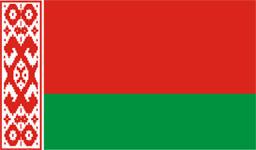 The
National Flag of the Republic of Belarus, which is a symbol of state
sovereignty of the Republic of Belarus, is a rectangular1
cloth2
consisting of two longitudinal3
stripes4:
red upper stripe and green lower stripe that are two-thirds and
one-third of the flag width5
respectively6.
A vertical red-on-white Belarusian decorative pattern, which occupies
one-ninth of the flag's length, is placed against the flagstaff7.
The flag’s ratio8
of width to length is 1:2. The flag is fixed on a flagstaff painted
golden (ochre9).
The
National Flag of the Republic of Belarus, which is a symbol of state
sovereignty of the Republic of Belarus, is a rectangular1
cloth2
consisting of two longitudinal3
stripes4:
red upper stripe and green lower stripe that are two-thirds and
one-third of the flag width5
respectively6.
A vertical red-on-white Belarusian decorative pattern, which occupies
one-ninth of the flag's length, is placed against the flagstaff7.
The flag’s ratio8
of width to length is 1:2. The flag is fixed on a flagstaff painted
golden (ochre9).
During ceremonies and other solemn10 events, the National Flag of the Republic of Belarus is used with a diamond-shaped11 top edge12 containing a five-point star. The star is analogous to the one depicted on the national Emblem of the Republic of Belarus. The top edges are made of yellow metal.
1 rectangular [rek′tæŋgjυlə] - прямоугольный
2 cloth [klθ] - ткань
3 longitudinal [‚lndZı′tju:dınl] - продольный
4 stripe [straıp] - полоса
5 width [wıdθ] - ширина
6 respectively [rıs′pektıvlı] - соответственно
7 flagstaff [′flægsta:f] - флагшток
8 ratio[′reı∫ıəυ] - пропорция, соотношение
9 ochre[′əυkə] - охра, бледный коричневато-желтый цвет
10 solemn[′sləm] - торжественный
11 diamond-shaped[′daıəmənd′∫eıpt] - ромбовидный
12 edge [edZ] – край, остриё
II. Read the following information and say in English what each colour of the National Flag means.
При создании государства люди придумывают для своей страны символы с учетом уже имеющихся флагов других стран и выбирают те цвета, которые могут рассказать о стране, о ее достоинствах.
Красный цвет - это знак отваги. Кровь проливается в борьбе за счастливую жизнь. Кроме того, красный цвет обозначает радость, счастье, это символ солнца.
Что символизирует на нашем флаге зеленый цвет? Это символ нашей богатой природы, которую мы очень ценим и бережем. Это леса, луга; они занимают большую часть территории нашей страны.
Белый цвет - это символ свободы, уважения к своему Отечеству, символ нравственной чистоты, которую ценят наши люди и стараются воспитывать у своих детей.
На нашем флаге изображен необычный рисунок. Это фрагмент наиболее типичного древнего орнамента, распространенного в народном творчестве на территории нашей страны.
Орнамент выполнен из комбинации геометрических фигур. Ромб - это символ зерна, плодородия. Этот символ обозначает, что наша страна сельскохозяйственная. Наш народ трудолюбивый, обрабатывает землю, выращивает много культурных растений.
III. Read some information about the National Emblem of the Republic of Belarus and describe it.
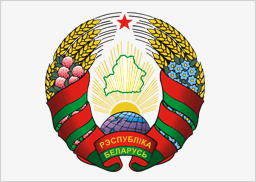 The
National Emblem of the Republic of Belarus, which is a symbol of
state sovereignty of the Republic of Belarus, represents a
green-colored contour1
of the Republic of Belarus in golden rays2
radiated3
by the sun over the globe4.
On the top of the contour is a five-pointed red star. The emblem is
set in5
a frame6
of wreath7
of golden wheat-ears8
interlaced9
with clover10
flowers on the right and flax11
flowers on the left. Wheat-ears are interlaced with a red-green
ribbon12
carrying a golden inscription13
"The Republic of Belarus" at the bottom.
The
National Emblem of the Republic of Belarus, which is a symbol of
state sovereignty of the Republic of Belarus, represents a
green-colored contour1
of the Republic of Belarus in golden rays2
radiated3
by the sun over the globe4.
On the top of the contour is a five-pointed red star. The emblem is
set in5
a frame6
of wreath7
of golden wheat-ears8
interlaced9
with clover10
flowers on the right and flax11
flowers on the left. Wheat-ears are interlaced with a red-green
ribbon12
carrying a golden inscription13
"The Republic of Belarus" at the bottom.
1 сontour[′kntəυ] – очертание, контур,форма
2 ray[reı] - луч
3radiate[′reıdııt] – расходиться лучами, испускать, распространять
4globe[′gləυb] - шар, земной шар
5setin– вставлять, вкладывать (что-либо во что-либо)
6frame[′freım] – каркас, рамка
7 wreath[ri:θ] - венок
8wheat-ear[′wi:t′ıə] – пшеничный колос
9interlace[‚ıntə(:)′leıs] – переплетать(ся)
10clover[′kləυvə] - клевер
11flax[flæks] - лён
12ribbon[′rıbən] – лента, тесьма
13inscription[ın′skrıp∫(ə)n] – надпись