ВУЗ: Не указан
Категория: Не указан
Дисциплина: Не указана
Добавлен: 12.09.2025
Просмотров: 2152
Скачиваний: 0
СОДЕРЖАНИЕ
The world around me Section I Appearance and Character
IV. Read the following dialogues and make up your own using the examples
II. Put the following words in its correct place
III. Read the following dialogues and make up your own using the examples.
V. Read the following passage. Speak about the relations in your family using the active vocabulary.
III. Answer the following questions.
II. Practise the pronunciation of the international words and translate them.
III. Read and translate the following word groups:
IV. Give possible combinations of the following verbs with adverbs.
V. Complete the sentences using the word combinations of ex. 4.
VI. Choose the appropriate word from the right-hand column to complete each of the sentences.
VIII. Before reading the text (below) try to answer the following questions.
X. Form other parts of speech from the following words:
XII. Say, which of these statements are students’ rights or duties:
III. Remember the faculties of vsu.
IX. In what context are these figures mentioned in the text.
X. Match the date and the event in the history of vsu.
XI. Answer the following questions.
XII. Continue the following sentences:
XIII. Tell your group-mates about the University you study at.
XIV. Read and reproduce the following situational dialogues.
I. Read the following proper names correctly:
II. Match the country and its capital:
III. Endings –ese, - an, - ish, -I are used to form the word denoting ‘nationality’
III. Listen to the tape and do the exercises below.
V. Make up a dialogue of your own by analogy:
In great britain and in belarus great britain
II. Match the words with their definitions:
Christmas and new year in great britain
IV. Give the English equivalents for these Russian words and word combinations:
V. Insert the words in the gaps:
VI. Put in the right prepositions:
II. Match the words with their definitions:
IV. Read and translate the text. Halloween (October, 31)
V. Write down all the irregular verbs used in the text. Give all their forms.
XI. Choose one of the topics and prepare short reports.
II. Match the words with their definitions:
IV. Read and translate the text. Guy Fawkes Day (November, 5)
V. Give the English equivalents for these Russian words and word combinations:
Candles and weather (february, 2)
XII. Answer the following questions:
XIII. Agree or disagree with the following statements:
XIV Put in the right prepositions where necessary:
XV. Choose a word from the box to put into each gap:
Youth and its place in modern society
II. Read out the following words and memorize their meaning:
III. Read out these phrases several times till you remember their meaning:
IV. Read the text and get ready to speak about the problems of teenagers: generation gap
VI. Find synonyms for the words in the frame:
Youth Organizations in Belarus
II. Read out the following words and memorize their meaning:
III. Read these international words and try to guess their meaning:
IV. Read out these phrases several times till you remember their meaning:
V. Match the English words and their Russian equivalents:
VII. Match the words with the help of the preposition of:
II. Make a little speech starting with:
I. Give words or phrases (from the glossary) for the following definitions:
VIII. Do you agree with the following proverb:
Is abortion legal in your country?
I. Form the derivatives of the words given in the chart below. Use a dictionary if necessary.
I. Explain the following words:
II. Give the comparatives and the superlatives of the adjectives:
IV. Translate the word combinations:
VI. Give synonyms to the following:
II. Guess the meaning of the words and explain their meaning.
V. Match the words with their definitions.
VI. Translate from Russian into English.
I. Listen to (read) the text and say whether the statements are true or false?
III. Complete the sentences with the missing phrases.
V. Translate form Russian into English.
VII. Listen to (read) the text and say whether the statements are true or false.
VIII. Listen to (read) the text and answer the questions.
I. Read and memorize the following words.
II. Read the following international words and word combinations and try to guess their meaning.
III. Train reading the names of the chemical elements.
V. Read and translate the following word combinations.
Destruction of the tropical forest
VII. Fill in the blanks with suitable words and word combinations from the text.
VIII. Complete the sentences with the most suitable ending.
IX. Match the definitions from the list and the words from the frame below.
X. Answer the following questions.
XI. Translate the sentences from Russian into English.
VI. Listen to the recording and mark the following statements as True or False.
VII. Put the sentences into the right order:
VIII. Choose the environmental problems from the box people will face in the future.
IX. Answer the questions after listening to each paragraph:
II. What substances are vital important for living things? What food is rich in these substances?
III. Translate from Russian into English.
V. Listen to (read) the text and say whether the statements are true or false.
Technology and its impact Technical advances affecting daily life
V. Read aloud the words listed below following the teacher’s example:
VI. Read and translate the text:
VII. Make up the definition of the term ‘invention’ from the scattered words.
VIII. Choose the most suitable variant:
IX. Give three examples of accidental discoveries and three examples of induced discoveries.
IV. Read the following words correctly:
V. Choose between accident ['xksIdqnt] and incident ['InsIdqnt].
VI. A) Translate the following sentence.
VII. Read the text and name the serendipitous discoveries mentioned there.
VIII. Fill in the blanks with the verb in the right tense-form.
IX. Fill in the blanks with the right prepositions.
X. Translate the words in brackets into English.
XI. Ask special questions to the following statements.
XII. Give a brief summary of the text. Text III
I. Learn the following derivatives and fill in the blanks with the proper one:
II. Look: at, up, up to, after, for, through, forward to, out (for), down on smb;
III. Learn the following words:
IV. A) Form the nouns using proper suffixes.
X. Fill in the gaps with a suitable preposition.
XI. Translate the words in brackets from Russian into English and read the whole sentence.
XII. Decide whether the following statements are True or False.
II. Fill in the table with the proper derivatives which are possible:
III. Find the opposites to the following words and use both words in the sentences of your own:
V. Read the text for more information.
VI. Choose the most suitable variant.
VIII. Find the key sentences in the text and use them in your retelling.
IX. Render the following text into English: Научно-технический прогресс и его влияние на нашу жизнь
X. Internet Research Project New Communications Technologies
The republic of belarus : social and political aspects
I. Read some information about the National Flag of the Republic of Belarus and describe it.
II. Read the following information and say in English what each colour of the National Flag means.
III. Read some information about the National Emblem of the Republic of Belarus and describe it.
VII. Read and memorize the following words:
VIII. Pay attention to the following word combinations.
IX. Read the following words and try to guess their meaning.
X. Read out these phrases several times till you remember their meaning.
XI. Match the word from a with its best association from b. Use the phrases in your own sentences.
XIII. Read and translate the text. Belarus state system
XIV. Fill in the right preposition.
XV. Agree or disagree with the following statements.
XVI. Complete the following sentences.
XVII. Translate the following sentences into English.
The united kingdom of great britain and northern ireland: social and political aspects
What is the British National Anthem?
I. Read and memorize the following words:
II. Pay attention to the following words.
IV. Read and translate the text.
V. Give English equivalents from the text to the words given below.
VI. Find the pairs of antonyms.
VII. Find the pairs of synonyms.
IX. Fill in the table using the information from the text.
I. Learn the parts of a letter.
Клише, выражения и предложения для деловой переписки
VI. Match the parts on the left with the parts on the right.
VII. Complete the following sentences by translating the Russian part in brackets in a column.
VIII. Translate the following sentences in English:
Surreal case of the Dalí images and a battle over artistic licence
Glasgow issues legal threats to stop poster firms and rock band illegally copying prized painting
A colossal mistake? Art world baffled by 'Goya' masterpiece
Great Works: Leviathan (1651), Abraham Bosse and Thomas Hobbes
Tests blamed for blighting children's lives
Emperor penguin 'marching to extinction by end of the century'
President Obama announces push to wean us off the gas-guzzler
Russia 'suspends Kaliningrad missile plan'
Chief Rabbinate of Israel cuts ties with Vatican over Holocaust bishop
Activists threaten to close Heathrow
Taxpayer faces bigger bill for 2012 Olympics
Brown leads global drive to close down tax havens
Israel's president asks Benjamin Netanyahu to form new government
Problems for discussion
What is (are) national language(s) in our republic? Are any other languages spoken here? Do you agree that it is necessary to have at least two languages spoken in the country? Why? Why not? Give your arguments.
You are willing to participate in the international conference “Belarus today and tomorrow”. The organizers require a short abstract. You are to represent social and political situation in our country to the international participants.
Imagine you are a teacher of History. The topic of your lesson is “The Constitution of the Republic of Belarus”. You are to tell your pupils what rights the Constitution grants every citizen.
Discuss in your group what changes you would like to introduce into the Constitution.
The united kingdom of great britain and northern ireland: social and political aspects
Warm- up
What do you know about the United Kingdom?
What is the difference between the United Kingdom and Great Britain?
How is the British flag called?
What are the British national emblems (flowers)?
Read about the British Flag and say which country is not represented on the flag of the U.K.?
The Union flag, popularly known as the ‘Union Jack’*, is the national flag of the United Kingdom. It is called the Union Flag because it symbolizes the administrative union of the countries of the United Kingdom. It is made up of the individual flags of three of the Kingdom’s countries all united under one Sovereign¹ – the countries of England, of Scotland and of Northern Ireland (since 1921 only Northern Ireland has been part of the United Kingdom; Southern Ireland is an independent republic). As Wales was not a Kingdom but a Principality² it couldn’t be included on the flag.
* ‘Union Jack’ was officially accepted as an alternative name for the Union Flag by the Admiralty³ and parliament in the early 20th century. The term ‘jack’4 refers to the flag that is flown from the bowsprit5 of a ship, often denoting6 nationality.
* Union Jack - государственный флаг Соединённого Королевства
¹ sovereign [′svrın] – монарх, правитель
² principality [‚prınsı′pælıtı] - княжество
³ admiralty [′ædm(ə)rəltı] – адмиралтейство; военно-морское министерство (Великобритании до 1964 г.)
4 jack [dZæk] – мор. гюйс, флаг
5 bowsprit [′bəυ‚sprıt] – мор. бушприт
6 denote [dı′nəυt] – показывать, обозначать
The flags that appear on the Union Flag are the crosses of three patron1 saints2 :
 This
is England's Flag.
This
is England's Flag.
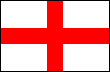
It is called the "St. Georges Flag".
The red cross of Saint George for England on the white ground.
This
is Scotland's Flag.
I t
is called the "St. Andrews Flag".
t
is called the "St. Andrews Flag".
The white diagonal cross of Saint Andrew for Scotland on the blue ground.
O n
the Union Flag, Northern Ireland is represented by the flag of St.
Patrick.
n
the Union Flag, Northern Ireland is represented by the flag of St.
Patrick.
The red diagonal cross of Saint Patrick for Ireland on the white ground.
This is Wales’s Flag.
The Welsh flag (the red dragon on the white and green ground) doesn’t appear on the Union Flag.
1 patron [′peıtr(ə)n] - покровитель, патрон, заступник
2 saint [seınt] - святой
Read the following information about national emblems and name them.
Each country also has its own floral emblem:
|
|
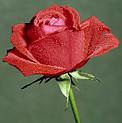
The national flower of England is the rose. The flower has been adopted as England’s emblem since the time of the Wars of the Roses - civil wars (1455-1485) between the royal house of Lancaster (whose emblem was a red rose) and the royal house of York (whose emblem was a white rose). |
|
|
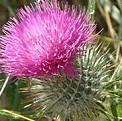
The national flower of Scotland is the thistle1, a prickly2-leaved purple3 flower which was first used in the 15th century as a symbol of defense. The Scottish Bluebell4 is also seen as the flower of Scotland. 1 thistle [′θıs(ə)l] - чертополох 2 prickly [′prıklı] – имеющий шипы, колючки 3 purple [′pə:pl] – пурпурный, фиолетовый 4 bluebell [′blu:bel] - колокольчик |
|
|
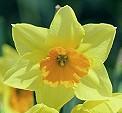
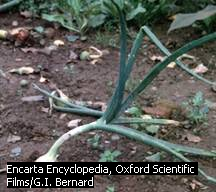
The national flower of Wales is the daffodil1, which is traditionally worn on St. David’s Day. The vegetable called leek2 is also considered to be a traditional emblem of Wales. There are many explanations of how the leek came to be adopted as the national emblem of Wales. One is that St David advised the Welsh, on the eve3 of battle with the Saxons, to wear leeks in their caps to distinguish a friend from a foe4. As Shakespeare records5 in Henry V, the Welsh archers6 wore leeks at the battle of Agincourt in 1415. 1 daffodil [′dæfədıl] – бледно-жёлтый нарцисс 2 leek [li:k] – лук-порей 3 eve [i:v] – канун, преддверие 4 foe [fəυ] – враг, противник 5record [rı′k:d] – записывать, увековечивать 6 archer [a:∫tə] – лучник |

|
|
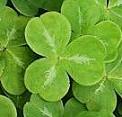
The national flower of Northern Ireland is the shamrock1, a three-leaved plant similar to clover2. An Irish tale tells of how Patrick used the three-leaved shamrock to explain the Trinity3. He used it in his sermons4 to represent how the Father, the Son, and the Holy Spirit could all exist as separate elements of the same entity5. His followers adopted the custom of wearing a shamrock on his feast6 day. 1 shamrock [′∫æmrk] - трилистник 2 clover [′kləυvə] – клевер 3 trinity [′trınıtı] - троица 4 sermon [′sə:mən] – проповедь, поучение 5 entity [′entıtı] – суть, существо, сущность 6 feast [fi:st] - торжественный |
What is the British National Anthem?
The National Anthem is God Save the Queen. The British National Anthem originated in a patriotic song first performed in 1745. It became known as the National Anthem from the beginning of the nineteenth century.
On official occasions, only the first verse is usually sung, as follows:
|
God save our gracious Queen! Long live our noble Queen! God save the Queen! Send her victorious, Happy and glorious, Long to reign over us, God save the Queen. |
An additional verse is occasionally sung:
|
Thy choicest gifts in store On her be pleased to pour, Long may she reign. May she defend our laws, And give us ever cause, To sing with heart and voice, God save the Queen. |
The British National Anthem represents the whole of the UK. However, Wales and Scotland have other songs which they sing, especially when playing against England in sport matches.
Wales - Hen Wlad Fy Nhadau (Land Of My Fathers)
Scotland - Flower of Scotland and Scotland the Brave
England too has its own song or songs. William Blake's Jerusalem and Swing Low, Sweet Chariot are often sung. Another popular song is Land of Hope and Glory, which was sung at the first England match of the 2006 Six Nations.
Read the information about British emblem and describe it.
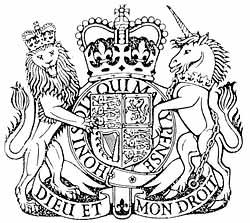 TheRoyal1
Coat of Arms2
carries the symbols representing England, Scotland and Ireland, the
Sovereign's motto3
and the lion and the unicorn4.
TheRoyal1
Coat of Arms2
carries the symbols representing England, Scotland and Ireland, the
Sovereign's motto3
and the lion and the unicorn4.
On the left, the shield5 is supported by the English Lion. On the right it is supported by the Unicorn of Scotland. (The unicorn is chained6 because in mediaeval times a free unicorn was considered a very dangerous beast7).
The
Royal Arms8
we see today have evolved9
over nine centuries, since Richard the Lionheart chose three lions to
represent England. This s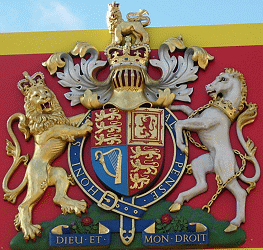 ymbol
on the King's shield would immediately identify him in the midst10
of battle.
ymbol
on the King's shield would immediately identify him in the midst10
of battle.
The full version of the Royal Coat of Arms is now used only by the Queen in her capacity11 as the Sovereign. In the version used by the government and consequently as the official coat of arms of the United Kingdom of Great Britain and Northern Ireland, the crown is shown resting directly on the shield, with the helm12, crest13 and mantling14 not displayed (like in the black and white picture above).
In the coloured photograph you see that the unicorn horn15 is missing (it may have fallen off).
The main element of the Arms is the shield which is divided into four quarters.
1 royal [′rı(ə)l] – королевский, монарший
2 Coat of Arms [′kəυt əv ′a:mz] - герб
3 motto [′mtəυ] – девиз, лозунг
4 unicorn [′ju:nık:n] - единорог
5 shield [∫i:ld] - щит
6 chain [t∫eın] – приковывать цепью
7 beast [bi:st] зверь, животное
8 arms [′a:mz] - герб
9 evolve [ı′vlv] – развивать(ся)
10 midst [mıdst] - середина
11 capacity [kə′pæsıtı] – роль, положение, должность
12 helm [helm] - шлем
13 crest [krest] – гребень шлема, украшение наверху гербового щита
14 mantling [′mæntlıŋ] – мантия на гербе
15 horn [h:n] – рог